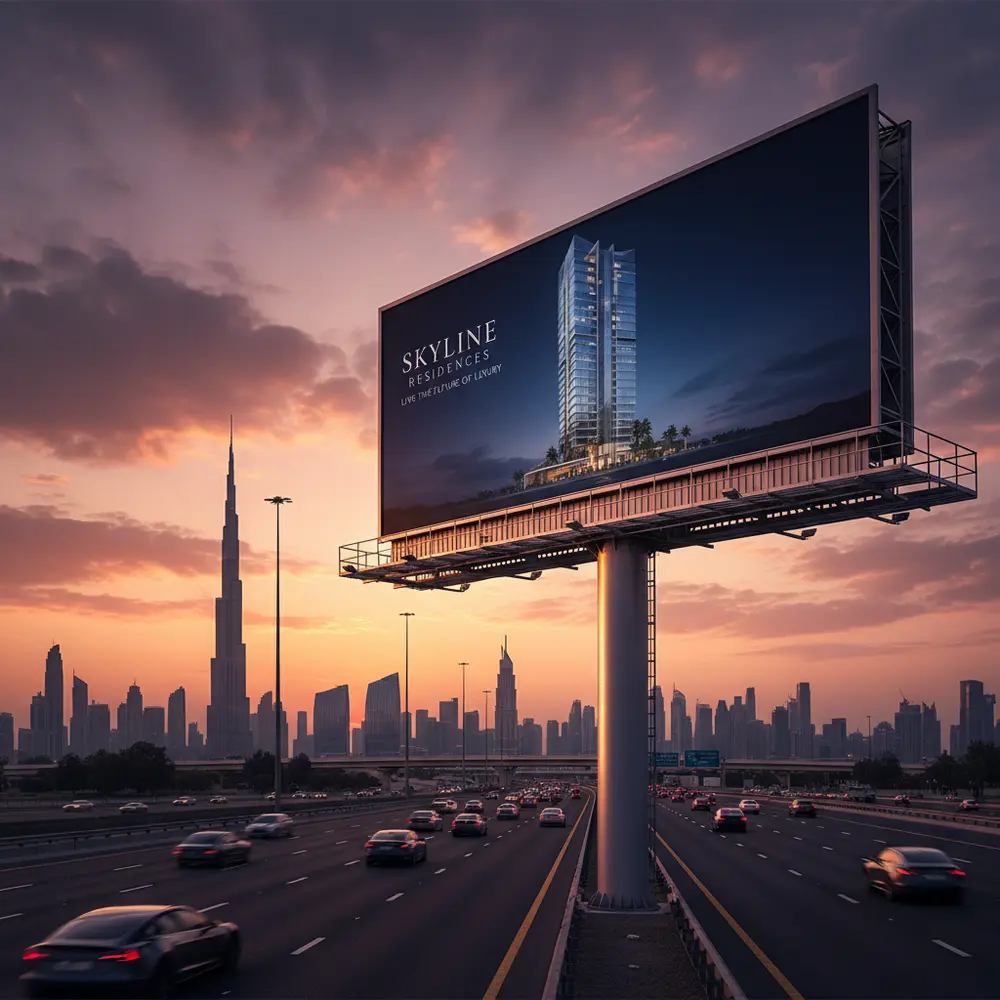
Best Billboard Design Sizes and Specs for Dubai Highways
Dubai is a city defined by its scale, ambition, and high-speed lifestyle. For businesses looking to capture the attention of millions of commuters, tourists, and residents, outdoor advertising is not just an option—it is a necessity. However, achieving visibility on busy thoroughfares like Sheikh Zayed Road or Al Khail Road requires more than just a creative idea. Understanding the Best Billboard Design Sizes and Specs for Dubai Highways is the first step toward creating a campaign that cuts through the noise and delivers a high return on investment. In the UAE’s competitive landscape, where every brand is vying for a second of attention, the technical precision of your billboard can make or break your marketing efforts.
Whether you are targeting the luxury-driven Abu Dhabi market or the industrial and family-centric Sharjah brands, your outdoor strategy must be tailored to the specific environment. Highways in the United Arab Emirates are unique; they are wide, well-lit, and characterized by fast-moving traffic. This means that font sizes, color contrasts, and overall dimensions must be optimized for long-distance readability. High-quality premium advertising solutions ensure that your message remains clear even when viewed at 100 or 120 km/h. By following the right specifications, Dubai businesses can transform a simple roadside sign into a powerful brand landmark.
Understanding Standard Billboard Sizes in the UAE
Outdoor advertising in Dubai is governed by specific categories, each with its own set of dimensions and purposes. Knowing which size fits your location is critical for budgeting and design accuracy. The most common formats you will encounter on major UAE highways include Unipoles, Megacoms, and Bridge Banners. Each of these requires a different approach to layout and resolution to ensure the best billboard design sizes and specs for Dubai highways are met.
Unipoles are perhaps the most iconic billboard type in the region. Usually standing at 14 meters by 4 meters or 12 meters by 5 meters, these massive structures are elevated high above the ground. Their height makes them visible from a great distance, but it also means that the design must be bold and uncluttered. On the other hand, Megacoms are slightly smaller, often sized at 3 meters by 4 meters. These are frequently found in urban areas and near exits where traffic tends to slow down, making them ideal for more detailed messaging. For those looking for maximum impact, Bridge Banners offer an unavoidable canvas that stretches across the entire width of the highway, demanding a panoramic design approach.
Technical Specifications: Resolution and File Preparation
When preparing files for large-scale printing, the rules of digital design change significantly. For a billboard on a Dubai highway, you are not designing for a computer screen; you are designing for a massive physical structure. Artsun advertising agency emphasizes the importance of starting with the correct aspect ratio and resolution to avoid pixelation. While a standard flyer might require 300 DPI, a billboard often uses a much lower resolution, such as 30 to 72 DPI at actual size, because the viewing distance is so great.
Color management is another critical technical spec. Most printing houses in the UAE utilize the CMYK color model. If you design in RGB, the colors you see on your screen—especially vibrant blues and oranges—may appear dull or mismatched when printed on vinyl. To maintain brand consistency across the Sharjah and Abu Dhabi market, always convert your files to CMYK and request a small-scale proof before the final print run. Using vector graphics for logos and text is also essential, as it allows for infinite scaling without loss of quality, ensuring your impactful brand identity remains sharp and professional.
The Importance of Bleed and Safe Zones
Every billboard design must account for the “bleed” and “safe zone.” The bleed is the extra area around the edges that allows for the material to be wrapped around the frame or pocketed for installation. Typically, for highway Unipoles, a 10cm to 20cm bleed is required. The safe zone is the area where all critical elements—like your call to action and website—should reside to ensure they aren’t obscured by the billboard’s frame or physical mounting hardware. Ignoring these specs can lead to cut-off text, which is a costly mistake in the fast-paced world of digital marketing in UAE.
Designing for High-Speed Readability
The “Seven-Second Rule” is the golden standard for billboard design. On a highway like the E11 (Sheikh Zayed Road), drivers have only a few seconds to absorb your message. This makes the best billboard design sizes and specs for Dubai highways irrelevant if the content itself is too complex. To maximize readability, use high-contrast color schemes—such as black text on a yellow background or white text on a deep blue background. Avoid thin, script fonts that disappear at a distance; instead, opt for bold, sans-serif typefaces.
Visual hierarchy is also key. Your headline should be the largest element, followed by a strong visual and then a minimal call to action. UAE companies often make the mistake of trying to include too much information, such as multiple phone numbers and social media handles. In reality, a single URL or a highly recognizable brand logo is far more effective. Integrating high-quality commercial photography can help tell a story instantly without the need for excessive text, making the visual the primary driver of the advertisement.
Regulatory Guidelines and RTA Approvals
In Dubai, all outdoor advertisements must comply with the regulations set by the Roads and Transport Authority (RTA) and the Dubai Municipality. These entities ensure that billboards do not distract drivers or compromise road safety. For example, there are strict rules regarding the brightness of LED digital billboards and the frequency of image changes. Animated content that is too fast-paced may be rejected if it is deemed a hazard to highway safety. This is where working with an experienced custom billboard design services provider becomes invaluable, as they are familiar with local laws.
Furthermore, cultural sensitivity is paramount in the UAE. Designs must be respectful of local traditions and values. This applies to the imagery used, the language chosen, and even the placement of certain products. Ensuring your billboard design is “RTA-ready” means more than just hitting the right dimensions; it means ensuring the content is legally and culturally appropriate for the diverse population of the Emirates. Failure to comply can result in heavy fines or the immediate removal of the advertisement, which can be a significant blow to any marketing budget.
Emerging Trends: 3D Billboards and Digital OOH
Dubai is at the forefront of the Digital Out-of-Home (DOOH) revolution. We are seeing a massive shift from traditional static vinyl to high-definition LED screens that offer dynamic content. One of the most exciting trends currently capturing the attention of Dubai businesses is the use of anamorphic 3D billboards. These designs create an illusion of depth, making it look like a product is popping out of the screen toward the highway. Artsun advertising agency has noted that these high-impact visuals generate significant social media buzz, extending the reach of the campaign far beyond the road itself.
To execute these advanced campaigns, specs become even more technical. You are no longer just dealing with DPI and CMYK; you are dealing with frame rates, aspect ratios for specific LED resolutions, and forced perspective angles. Utilizing advanced CGI video production is necessary to create the realistic textures and lighting required for 3D effects. While the cost of these digital slots is higher, the ability to rotate multiple creatives and target specific times of day provides a level of flexibility that static billboards simply cannot match.
Integrating Real Estate and Architectural Visuals
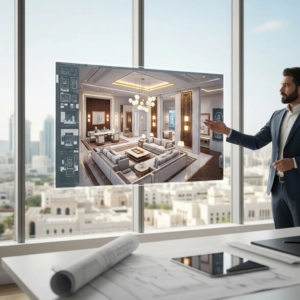
Given the booming real estate sector in the UAE, many highway billboards are dedicated to upcoming property developments. For these projects, the best billboard design sizes and specs for Dubai highways must include photorealistic renderings. Using professional 3d architectural rendering allows developers to show a completed project years before it is finished. When these images are placed on massive highway unipoles, they provide a window into the future of the city, driving high-value leads for developers in Dubai and Abu Dhabi.
The Impact of Middle East Climate on Materials
The environmental conditions in the UAE are harsh, and this must be factored into the specifications of your billboard. With temperatures exceeding 45 degrees Celsius in the summer and frequent sandstorms, the materials used for outdoor advertising must be incredibly durable. Standard vinyl may fade or crack under the intense UV radiation of the Arabian sun. High-quality UV-resistant inks and reinforced vinyl substrates are essential for maintaining the visual integrity of your design over a long-term campaign.
Furthermore, the wind loads on highways can be extreme. Billboard structures and the skins attached to them must be engineered to withstand these forces. If you are using a mesh material—often used for massive building wraps or fence branding—it must have the right “airflow percentage” to prevent it from acting like a sail and tearing. These technical considerations are just as important as the design itself when aiming for a successful outdoor presence in the UAE market. Choosing a partner like Artsun advertising agency ensures that your materials are selected specifically for the local climate.
Measuring the Success of Your Highway Campaign
In the past, outdoor advertising was difficult to track, but modern technology has changed the game. By using the best billboard design sizes and specs for Dubai highways in conjunction with data analytics, brands can now estimate reach and frequency with surprising accuracy. Many DOOH providers in Dubai now offer “impression-based” reporting, using mobile data and traffic sensors to calculate how many people actually viewed the ad. This data is vital for UAE companies looking to justify their marketing spend and optimize future campaigns.
Another way to track success is through the use of localized URLs or QR codes, though QR codes should be used with extreme caution on highways. If a QR code is included, it must be massive and placed on a Megacom or a bridge where traffic frequently stalls; otherwise, it is a safety hazard and ineffective. Most Sharjah brands find that the best way to measure “offline-to-online” conversion is through brand search lift—monitoring the increase in Google searches for the brand name during the period the billboard is live.
Key Specification Checklist for Dubai Billboards
To summarize, before sending your design to the printer, ensure you have checked the following:
1. Dimensions: Match the specific structure (Unipole, Bridge, or Megacom).
2. Resolution: 30-72 DPI at full size or 300 DPI at 1:10 scale.
3. Color Mode: CMYK for print; RGB for digital LEDs.
4. File Format: High-quality PDF or TIFF with flattened layers.
5. Fonts: Minimum 18-24 inches in height for highway readability.
Frequently Asked Questions
What is the most popular billboard size on Sheikh Zayed Road?
The most common size for major highway advertisements in Dubai is the Unipole, typically measuring 14 meters wide by 4 meters high. However, Bridge Banners are also highly popular as they provide a massive horizontal canvas that is impossible for drivers to miss.
Do I need a permit for outdoor advertising in Dubai?
Yes, all outdoor advertising requires approval from the RTA (Roads and Transport Authority) and the Dubai Municipality. This ensures the content is safe for drivers and complies with the cultural and legal standards of the UAE. Most media agencies handle this process for their clients.
How much text should be on a highway billboard?
For a highway billboard, you should aim for no more than 7 words. Drivers are traveling at high speeds and only have a few seconds to read your message. Focus on one clear headline, a striking visual, and a single point of contact like a website or a logo.
Is digital or static better for Dubai highways?
It depends on your goals. Digital billboards (DOOH) allow for multiple messages, animation, and better night-time visibility, making them great for short-term, high-impact campaigns. Static billboards are more cost-effective for long-term brand awareness and “owning” a specific location.
Conclusion: Elevate Your Brand with Precision Design
Mastering the best billboard design sizes and specs for Dubai highways is a blend of science and art. It requires an understanding of high-speed optics, local regulations, and the technical demands of large-scale production. In a region as dynamic as the UAE, where the skyline is constantly changing, your brand needs to stand tall and clear. By prioritizing readability, choosing the right materials for the climate, and adhering to the technical requirements of the RTA, you can ensure your message resonates with the millions of people traveling across the Emirates every day.
Don’t leave your outdoor advertising to chance. Whether you are a local startup or an international corporation, working with a team that understands the nuances of the Dubai, Abu Dhabi, and Sharjah markets is essential. If you are ready to take your brand to the next level with professional design and strategy, contact a creative studio in Dubai today to start your journey toward highway dominance. Let your brand be the next landmark on the road to success.