7 Menu Design Tricks for Muscat Cafes
The culinary landscape in Oman has undergone a significant transformation over the last decade. From the bustling streets of Al Khuwair to the upscale waterfront of Al Mouj, the cafe culture in Muscat is more competitive than ever. For business owners, success is no longer just about the quality of the coffee or the taste of the pastries; it is about the entire brand experience. One of the most overlooked yet powerful tools in a cafe’s arsenal is its physical or digital menu. Utilizing specific 7 Menu Design Tricks for Muscat Cafes can be the difference between a one-time visitor and a loyal regular. In a city where Muscat brands are constantly vying for attention, your menu serves as your primary silent salesperson.
Understanding the local market is essential for any establishment. Muscat businesses operate in a unique environment where traditional Omani hospitality meets modern international trends. This duality should be reflected in every aspect of your business, especially in your menu design. Whether you are a small startup or one of the established Oman companies, your menu needs to communicate value, taste, and atmosphere instantly. By applying psychological triggers and design principles tailored to the Muscat market, you can significantly increase your average check size and enhance customer satisfaction.
1. Strategic Color Palettes for the Muscat Market
Color is one of the first things a customer notices, even before they read a single word on the page. In the context of digital marketing in Oman, visual storytelling is paramount. For cafes in Muscat, the color palette should resonate with both the local environment and the psychological triggers of hunger and comfort. While red and yellow are classic “hunger” colors used globally, Muscat brands often find success with more sophisticated palettes that include deep teals, desert golds, and earthy terracotta tones. These colors reflect the natural beauty of Oman, from the shores of Qurum Beach to the sands of Sharqiya.
When choosing colors, consider the lighting of your cafe. Many Muscat cafes favor warm, ambient lighting to create a cozy refuge from the midday sun. Your menu colors should remain legible and vibrant under these conditions. Artsun advertising agency often recommends using high-contrast combinations—such as dark charcoal backgrounds with gold metallic lettering—to convey a sense of luxury and premium quality that appeals to the affluent Muscat market. Avoid overly bright neon colors unless they are part of a specific modern pop-art brand identity, as they can sometimes clash with the relaxed Omani dining aesthetic.
2. The Power of Typography: Balancing Arabic and English
In a diverse city like Muscat, bilingual menus are not just a courtesy; they are a necessity. The trick lies in how you balance Arabic and English typography without making the page look cluttered. The most successful 7 Menu Design Tricks for Muscat Cafes involve selecting fonts that share a similar visual weight and personality. If you use a sleek, modern sans-serif for your English text, pair it with a contemporary Kufi or Naskh-style Arabic font. This ensures that neither language feels like an afterthought.
Readability is the most critical factor. Muscat’s cafe-goers often include families with elderly members and international tourists, meaning your text must be clear and appropriately sized. Avoid overly decorative scripts for the main item descriptions. Instead, save those for headers or special callouts. By investing in custom logo design and cohesive typography, you create a seamless transition from your storefront sign to the handheld menu, reinforcing your brand identity at every touchpoint. Proper spacing between the two languages also prevents the “visual noise” that leads to decision fatigue.
3. Leveraging the “Golden Triangle” Layout
Eye-tracking studies have shown that when we look at a menu, our eyes typically move to the center first, then to the top right, and finally to the top left. This movement is known as the “Golden Triangle.” For Muscat businesses, this is prime real estate. You should place your high-margin items or your signature Omani-fusion dishes in these three areas. If you have a specific specialty, such as a signature saffron latte or a date-infused cheesecake, placing it in the center of the page will naturally draw the customer’s attention to it first.
To further guide the customer’s journey, use “eye magnets.” These can be subtle borders, a different background shade, or a small icon next to an item. Artsun advertising agency suggests using these techniques sparingly; if everything is highlighted, nothing stands out. In the competitive Muscat market, a clean, organized layout suggests a professional and well-managed kitchen. Using strategic menu layouts allows you to control the flow of the dining experience, ensuring that customers see your most profitable and popular items before they get overwhelmed by choices.
4. Professional Food Photography and Visual Cues
In a digital-first world, people often “eat with their eyes” on social media before they even step into your cafe. This behavior carries over to the physical menu. However, one of the most important 7 Menu Design Tricks for Muscat Cafes is the restrained use of imagery. Too many photos can make a menu look like a cheap fast-food flyer. Instead, use one or two “hero” images that represent the quality and presentation of your entire kitchen. These photos must be of the highest professional standard.
For businesses looking to stand out in Muscat, Dubai, or even Isfahan, the quality of visuals cannot be compromised. Poorly lit or unappetizing photos can actually drive customers away. Utilizing professional food photography services ensures that the textures and colors of your dishes are captured perfectly. In Muscat, where food presentation is highly valued, showing a beautifully plated dish with traditional Omani elements can create an emotional connection with the customer, justifying a premium price point. If you prefer a more minimalist look, high-quality hand-drawn illustrations can also serve as effective visual cues.
5. Narrative Copywriting and Local Localization
A menu item is more than just a list of ingredients; it is a story. Instead of just “Chicken Sandwich,” try “Slow-Roasted Herb Chicken with Local Honey Mustard on Fresh Sourdough.” This descriptive language helps justify the price and builds anticipation. For cafes in Oman, localizing your copy is a brilliant way to build rapport with the community. Mentioning that your dates are sourced from Nizwa or that your seafood is caught fresh from the Arabian Sea adds a layer of authenticity and trust that international chains often struggle to replicate.
Localization also means understanding the cultural nuances of the Muscat market. Highlighting vegetarian, vegan, or gluten-free options with clear icons is essential as health-conscious trends grow in the region. Furthermore, ensure that the tone of your writing matches your brand voice. A trendy cafe in Al Qurum might use playful, energetic language, while a luxury tea house near the Royal Opera House Muscat would opt for more formal and elegant descriptions. Integrating these elements is a core part of omnichannel marketing support, ensuring your brand speaks with one voice across all platforms.
6. Strategic Pricing Without Currency Symbols
One of the most effective psychological tricks in menu design is the omission of currency symbols. Research suggests that seeing the “OMR” or “$” sign triggers the “pain of paying” in the customer’s brain. By simply listing the number (e.g., 3.500 instead of OMR 3.500), you soften the impact of the price and encourage customers to focus on the dish rather than the cost. Additionally, avoid price columns. When prices are lined up in a straight column on the right side of the menu, customers tend to scan the prices and choose the cheapest option rather than reading the descriptions.
Instead, place the price immediately following the item description in the same font size and color. This embeds the cost into the story of the dish. For premium Muscat brands, this subtle shift can lead to a noticeable increase in the selection of higher-priced items. Always ensure that your pricing is competitive within the Muscat market but reflects the value of the experience you are providing. At Artsun Studio, we emphasize that every detail, including the placement of a decimal point, contributes to the perceived value of your brand.
7. Material Selection and Physical Experience
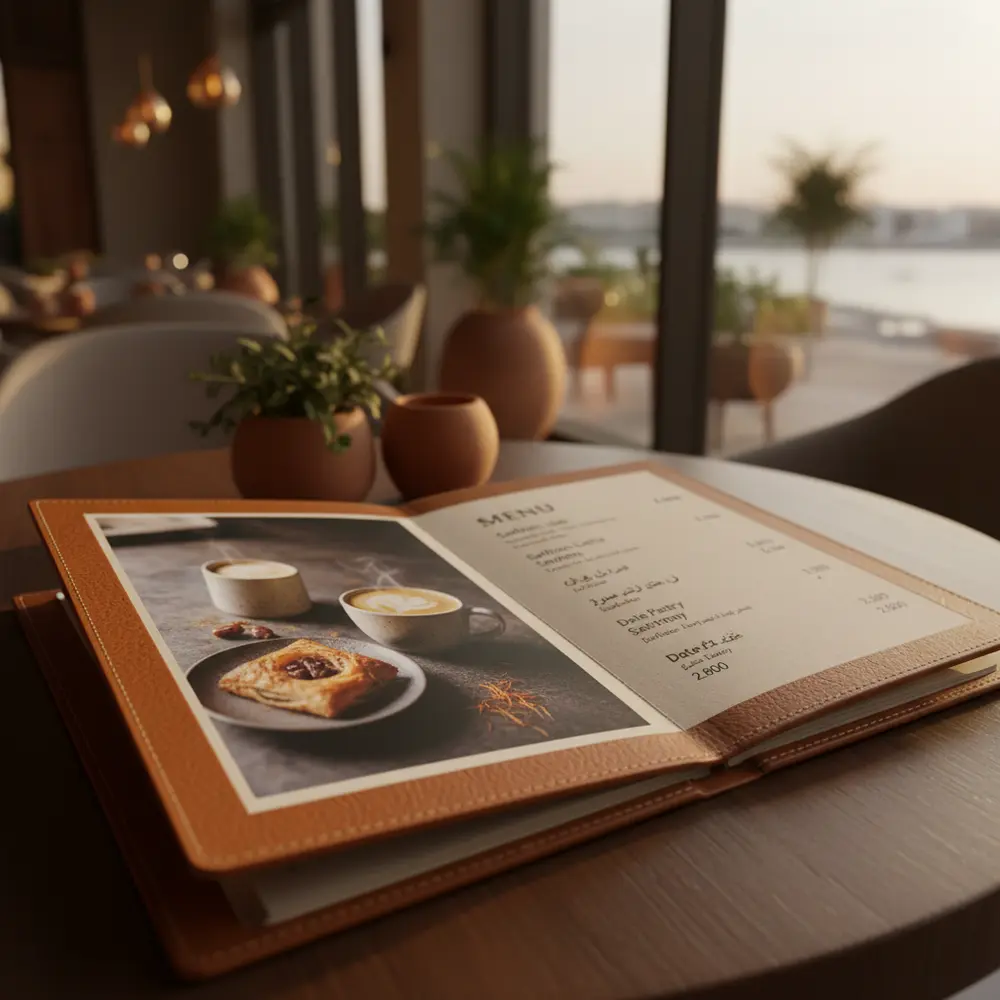
The final trick in our 7 Menu Design Tricks for Muscat Cafes is the choice of material. The tactile experience of holding a menu says a lot about your cafe. A flimsy, laminated sheet feels temporary and cheap. In contrast, a menu printed on heavy-duty textured paper, encased in a leather binder, or presented on a sleek wooden clipboard conveys durability and quality. In the warm climate of Oman, materials must also be resistant to humidity and frequent handling.
For modern cafes, digital integration is also a key material consideration. While QR code menus became popular out of necessity, they are now a staple of the “tech-forward” Muscat cafe scene. However, a simple PDF is not enough. A truly effective digital menu is mobile-optimized, easy to navigate, and visually engaging. Whether physical or digital, your menu is an extension of your cafe’s interior design. By offering innovative design solutions, you ensure that the physical touchpoint of the menu reinforces the premium feeling of your establishment, whether you are located in the heart of Muscat or expanding into the Dubai market.
Frequently Asked Questions About Menu Design
How often should a Muscat cafe update its menu design?
It is recommended to review your menu every six months. This doesn’t necessarily mean a full redesign, but you should analyze which items are selling and which aren’t. In the Muscat market, seasonal changes (such as offering more cold brews in the summer and hot Karak or specialty teas in the cooler months) provide great opportunities to refresh the visuals and keep customers interested.
Is it better to have a single-page menu or a multi-page book?
For most cafes, a single-page or two-fold menu is ideal. It prevents “choice paralysis,” where customers feel overwhelmed by too many options. A focused menu suggests that you specialize in what you do and ensures that the kitchen can maintain high quality and consistency. If you have an extensive list of beverages and food, consider separating them into two smaller menus.
Should I include calorie counts on my menu in Oman?
While not currently mandatory for all small cafes in Oman, there is a global trend toward transparency in nutrition. If your brand identity focuses on health and wellness, including calorie counts can be a significant selling point for the health-conscious Muscat market. However, if your cafe is a place for indulgence, focus more on the quality of ingredients and the “story” of the flavor.
What is the most common mistake in menu design?
The most common mistake is clutter. Many owners try to squeeze too much information into a small space. This results in small fonts, no white space, and a stressful experience for the customer. Remember that white space is a design element in itself; it gives the eye a place to rest and makes the highlighted items stand out more effectively.
Conclusion: Elevating Your Cafe Brand in Oman
Designing an effective menu is a blend of art and science. By applying these 7 Menu Design Tricks for Muscat Cafes, you are not just listing your food and drinks; you are creating an invitation for your customers to experience your brand. From the psychology of color to the strategic placement of items in the Golden Triangle, every choice you make should be intentional and focused on the needs of the Muscat market. In a city known for its hospitality and growing culinary diversity, your menu is the bridge between your kitchen’s passion and your guest’s satisfaction.
If you are ready to transform your cafe’s performance and stand out among Muscat brands, partnering with experts can make all the difference. Artsun advertising agency specializes in helping local businesses thrive through creative design, strategic marketing, and a deep understanding of the Omani consumer. Whether you need a complete brand overhaul or a professional menu refresh, the right design will pay for itself many times over in increased sales and customer loyalty. Take the first step toward a more profitable and prestigious cafe today—your menu is waiting to tell your story.