10 Food Styling Tips for Omani Restaurants
In the heart of the Middle East, the Sultanate of Oman boasts a culinary heritage as rich and diverse as its landscape. From the aromatic spices of the Muscat market to the traditional slow-cooked Shuwa, Omani cuisine is a sensory experience. However, in today’s digital age, tasting the food is often the second step; the first is seeing it. For Muscat businesses in the hospitality sector, visual presentation is the gateway to customer engagement. Whether you are running a high-end eatery in Al Mouj or a traditional café in Nizwa, mastering food styling is essential to stand out in the competitive Muscat brands landscape. This guide provides 10 food styling tips for Omani restaurants to help you elevate your visual presence and drive more foot traffic through your doors.
The culinary scene in Oman has seen a massive shift toward digital discovery. Diners now scroll through Instagram or TripAdvisor before deciding where to eat. This makes the “hero shot” of your dish your most powerful marketing tool. High-quality visuals do more than just show food; they evoke hunger, suggest a lifestyle, and build trust. By implementing these 10 food styling tips for Omani restaurants, you can ensure your dishes look as exquisite as they taste, aligning your brand with the premium standards expected by both locals and international tourists.
1. Embrace the Golden Hour and Natural Light
One of the most fundamental 10 food styling tips for Omani restaurants is the use of light. Oman is blessed with incredible natural sunlight, which is the best friend of any food stylist. Natural light brings out the true colors of Omani spices—the deep reds of chili, the vibrant yellows of turmeric, and the earthy browns of roasted meats. When shooting your menu items, try to position your setup near a large window. Soft, diffused morning light or the “golden hour” before sunset can create a warm, inviting glow that resonates with the Omani hospitality spirit.
Avoid using a direct camera flash, which creates harsh shadows and unappealing highlights that make food look greasy or flat. If the sun is too bright, use a thin white curtain to soften the light. For those looking to achieve a commercial-grade look, investing in advertising photo shoots can provide the professional equipment and lighting setups needed to make your dishes pop even in indoor settings with limited natural light.
2. Highlight the Texture of Traditional Omani Ingredients
Omani cuisine is defined by its textures—the flaky crust of a sambousek, the succulent juices of Shuwa, and the graininess of high-quality Omani Halwa. To make these elements stand out, styling must focus on macro details. Use a “hero” ingredient to create a focal point. For example, if you are styling a seafood platter featuring fresh catches from the Arabian Sea, ensure the skin of the fish looks moist and the scales (if present for styling) catch the light.
Using a brush to apply a light coating of oil can keep meat looking fresh and juicy under the lights. For salads and vegetables, a quick spritz of ice-cold water creates a “just-picked” dew effect. These small details signal freshness to the Muscat market, where quality is highly valued. Texture tells a story of preparation and care, which are hallmarks of Omani cooking traditions.
3. Use Authentic Omani Props and Tableware
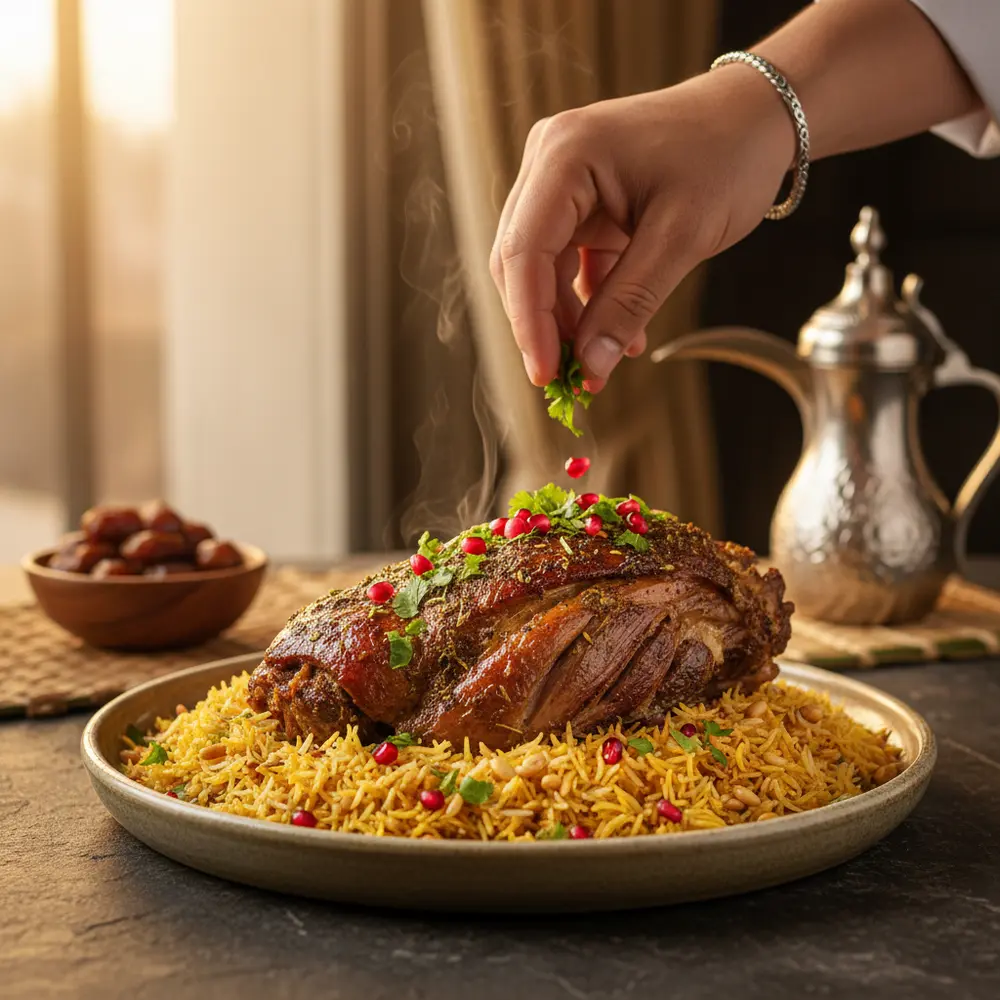
Authenticity is key when targeting Muscat brands and local consumers. Your choice of props should reflect the cultural context of the meal. Instead of generic modern plates, consider using traditional Omani pottery, intricately designed silver platters, or hand-woven palm mats (mandoos style). A traditional Dallah (coffee pot) or a small bowl of Omani dates placed strategically in the background can add layers of cultural narrative to your photo.
However, be careful not to clutter the frame. The focus should always remain on the main dish. Props should complement the food, not distract from it. If you are working with a professional creative studio, they can help you curate a prop library that balances modern minimalism with Omani heritage, ensuring your brand image remains sophisticated and culturally relevant.
4. Mastering the Art of Garnishing
Garnishing is a critical component of our 10 food styling tips for Omani restaurants. In Omani culture, food is often shared, and presentation reflects the generosity of the host. Use fresh herbs like coriander, mint, or parsley to add a burst of green that contrasts with the warm tones of rice and meat dishes. Pomegranate seeds are another excellent Omani staple that adds both a pop of ruby-red color and a hint of luxury.
When garnishing, remember that “less is more” in terms of placement, but “freshness is everything.” A wilted leaf can ruin an otherwise perfect shot. Always keep your herbs in ice water until the very moment you are ready to shoot. Precision is vital; use tweezers to place small elements like nuts or spice seeds exactly where they will be most visible to the camera lens.
5. Play with Color Theory and Contrast
The visual appeal of a dish is largely dictated by color harmony. Omani dishes often feature neutral tones—beiges from rice, browns from meat, and whites from yogurt sauces. To make these dishes visually striking, you must introduce contrast. A bright blue or deep turquoise plate can make an orange-toned curry look more vibrant. Conversely, a dark slate background can make a white-creamy dessert like Mahalabiya stand out beautifully.
Understanding color theory helps in creating a mood. Warm tones (reds, oranges, yellows) are known to stimulate appetite, making them perfect for main courses. Cool tones can suggest freshness and calm, ideal for beverages and salads. When planning your visual content for digital marketing in Oman, consider how the colors of your food will look on a social media grid. Consistency in your color palette helps in building a recognizable brand identity.
6. Focus on Composition and the “Rule of Thirds”
A well-composed photo guides the viewer’s eye exactly where you want it to go. The “Rule of Thirds” is a classic photography technique where you divide your frame into a 3×3 grid and place the most important elements along the lines or at the intersections. This creates a more dynamic and balanced image than simply placing the plate in the center. In Oman companies, professional marketing often uses this technique to create sophisticated advertisements.
Consider the angle of the shot as well. A top-down “flat lay” is excellent for table spreads and mezze platters, showing off the variety and arrangement. A 45-degree angle is usually best for dishes with height, like a stack of Omani pancakes or a tall glass of fresh lime and mint juice. If you want to capture the steam rising from a hot bowl of Harees, a side-on angle with a dark background will yield the best results.
7. Show the Process and the Human Element
Modern diners in the Muscat market love to see the “behind the scenes” of their favorite restaurants. Including a human element—like a hand pouring saffron-infused syrup or a chef sprinkling salt—adds a sense of life and action to the photo. It transforms a static image of food into a story of craftsmanship. This “action styling” is incredibly effective for social media engagement.
When showing hands, ensure they are well-groomed and fit the aesthetic of your restaurant. This human touch builds a bridge between the kitchen and the customer, emphasizing the “handmade” and “authentic” nature of your Omani recipes. For restaurants looking to scale their digital presence, incorporating social media marketing for restaurants can help in distributing these lifestyle-oriented photos to the right audience in Muscat and beyond.
8. Keep it Real but Idealized
There is a fine line between styling food to look its best and making it look fake. While some old-school styling tricks involve non-edible items (like using glue instead of milk for cereal), modern trends favor “real” food styling. Omani diners value honesty. If your photo looks like a plastic model, they may be disappointed when the real dish arrives. The goal is to present the best possible version of what the customer will actually eat.
Artsun advertising agency suggests using the freshest ingredients possible for your “hero” plate. Choose the most perfectly shaped vegetable, the most evenly browned bread, and the most vibrant piece of fruit. Clean the edges of your plates meticulously; a single stray drop of sauce can look like a mistake rather than a rustic touch. Perfection in the details reflects the quality of your kitchen’s standards.
9. Optimize for Your Menu and Website
All the food styling in the world won’t help if the images aren’t used correctly. Your styled photos should be the centerpiece of your physical and digital menus. High-quality imagery has been proven to increase the order rate of specific dishes. When designing your menu, ensure the layout allows the photos to breathe and complement the typography.
For Omani restaurants, having a professional website is a must. Your styled photos need to be optimized for fast loading without losing quality. If you are unsure how to integrate these visuals, seeking professional menu design services can ensure that your beautiful food photography translates into a functional and high-converting sales tool. Your website and menu are often the first points of contact for tourists searching for the best Omani food online.
10. Consistency is the Key to Branding
The last of our 10 food styling tips for Omani restaurants is consistency. Whether a customer sees your food on a billboard in Muscat, an Instagram ad, or your physical menu, the “vibe” should be the same. This means using similar lighting, color palettes, and prop styles across all your photography. Consistency builds brand recognition and professionalizes your image in the eyes of the Muscat market.
Developing a “style guide” for your food photography can help maintain this consistency. This guide should detail the preferred angles, background textures, and garnishing styles that define your restaurant’s brand. For many busy restaurateurs, the easiest way to achieve this is by partnering with experts in professional food photography. This ensures that every image produced meets the highest standards of the industry and contributes to a cohesive brand story.
The Role of Digital Marketing in Oman for Restaurants
Having great photos is just the beginning. To truly succeed, Muscat businesses must ensure these photos are seen by the right people. Digital marketing in Oman involves a combination of local SEO, social media management, and targeted advertising. When you post a beautifully styled photo of an Omani dish, use local hashtags and geo-tags to reach diners in specific neighborhoods like Al Khuwayr or Madinat Al Sultan Qaboos.
Search engines also value visual content. By including alt-text on your website images that includes keywords like “best Omani food in Muscat” or “traditional Omani restaurant,” you improve your chances of appearing in image searches. Artsun advertising agency specializes in bridging the gap between high-end visual content and technical SEO, ensuring your restaurant doesn’t just look good but also gets found by hungry customers.
Why Professional Food Styling Matters in the Muscat Market
The Muscat market is evolving. With an influx of international cuisines and modern dining concepts, traditional Omani restaurants are under pressure to modernize their appeal without losing their soul. Professional food styling allows you to bridge this gap. It presents traditional dishes like Paplou (fish soup) or Mashuai (roasted kingfish) in a way that appeals to the modern, visually-driven consumer.
Investment in high-quality visuals is an investment in your brand’s equity. In a city where reputation is everything, showing that you care about the presentation of your food signals that you care about every aspect of the guest experience. This attention to detail is what separates the most successful Muscat brands from the rest.
FAQs About Food Styling for Omani Restaurants
What is the most important tool for food styling?
While cameras and lights are essential, the most important “styling” tools are often small items like tweezers, cotton swabs (for cleaning plate edges), and a small brush for oil. These allow for the precision required to make a dish look perfect under a macro lens.
Can I use my smartphone for food styling and photography?
Yes, modern smartphones have excellent cameras. However, for professional use in menus or large-scale advertising in Oman, a DSLR or mirrorless camera with a dedicated macro lens is preferred to capture the depth and detail that a smartphone might miss.
How long does a typical food styling session take?
Styling a single “hero” dish can take anywhere from 30 minutes to two hours. It involves preparing the ingredients, setting the lighting, arranging the props, and making fine adjustments during the shoot to ensure every element is perfect.
Is food styling expensive for small cafés in Muscat?
While professional shoots have a cost, the return on investment is significant. One set of high-quality images can be used for years across menus, social media, and websites. Many agencies offer packages tailored to the needs and budgets of smaller Muscat businesses.
Conclusion: Elevate Your Culinary Brand Today
Mastering the visual presentation of your dishes is no longer optional; it is a vital part of running a successful restaurant in the modern era. By following these 10 food styling tips for Omani restaurants, you can transform your menu into a visual feast that captures the imagination of the Muscat market. From the right use of Omani sunlight to the strategic placement of traditional props, every detail counts in building a prestigious brand image.
If you are ready to take your restaurant’s visual identity to the next level, Artsun advertising agency is here to help. Based in Muscat and serving clients across Dubai and Isfahan, our team of experts understands the unique blend of tradition and modernity that defines Omani cuisine. We provide comprehensive services, from professional photography to digital marketing in Oman, designed to make your restaurant the talk of the town. Don’t let your delicious food go unnoticed—give it the spotlight it deserves and watch your business grow.