Best Commercial Animations Techniques for High-End Brands
Best Commercial Animations Techniques for High-End Brands
In the rapidly evolving landscape of visual communication, high-end brands are no longer satisfied with traditional advertising methods. As luxury markets in the United Arab Emirates continue to grow, the demand for sophisticated visual content has reached an all-time high. To stand out among the elite Dubai businesses and international conglomerates, companies are increasingly turning to motion design to convey their brand identity. Understanding the best commercial animations techniques is essential for any marketing director or business owner looking to capture the attention of a discerning audience in the Abu Dhabi market or the bustling commercial hubs of Sharjah.
Visual storytelling through animation offers a level of creative freedom that live-action photography often cannot match. Whether it is the sleek unveiling of a luxury timepiece or the grand presentation of a multi-million dollar real estate project, animation allows for a controlled, perfect environment. In the UAE, where excellence is the standard, employing cutting-edge techniques ensures that a brand’s message is delivered with precision, elegance, and impact. Digital marketing in UAE has shifted towards high-fidelity motion graphics as the primary tool for social media engagement and high-impact digital billboards.
The Evolution of Visual Identity for UAE Companies
The transition from static imagery to dynamic motion has redefined how UAE companies interact with their clientele. In a region known for its architectural marvels and luxury lifestyle, the visual expectations of the consumer are incredibly high. For a brand to be perceived as high-end, its visual content must reflect craftsmanship and attention to detail. This is where bespoke commercial animations play a pivotal role. By utilizing fluid motion, photorealistic textures, and cinematic lighting, brands can evoke emotions and build trust before a single word of copy is read.
High-end brands often deal with products or services that represent status, quality, and innovation. Static photos can sometimes fail to capture the intricate mechanics of a luxury engine or the atmospheric vibe of a high-end interior. Through sophisticated animation, these elements are brought to life, allowing the viewer to experience the brand in a three-dimensional space. For Sharjah brands looking to expand their reach, investing in professional animation is a strategic move to align their visual output with global luxury standards.
Best Commercial Animations Techniques for Premium Impact
When we discuss the best commercial animations techniques, we are looking at methods that prioritize visual fidelity and psychological impact. High-end brands require more than just movement; they require “premium feel.” This is achieved through several specialized sub-techniques that define the modern luxury aesthetic.
Hyper-Realistic 3D Product Visualization
One of the most effective ways to showcase a premium product is through hyper-realistic 3D rendering. This technique involves creating a digital twin of a product with such precision that it becomes indistinguishable from reality. For Dubai businesses in the jewelry, automotive, or electronics sectors, this allows for the display of features that are impossible to capture with a camera, such as internal components or micro-textures. The focus here is on lighting—using global illumination and ray-tracing to simulate how light interacts with gold, leather, or glass.
Advanced CGI and VFX Integration
The use of advanced CGI and VFX production allows brands to place their products in surreal, high-concept environments. Imagine a luxury perfume bottle emerging from a sea of liquid gold or a new electric vehicle gliding through a futuristic skyline of Abu Dhabi. These visual effects create a sense of wonder and position the brand as a pioneer of innovation. The integration of high-quality visual effects is a hallmark of elite digital marketing in UAE.
Fluid Simulations and Organic Motion
Luxury is often associated with smoothness and grace. In animation, this is represented through fluid simulations. Whether it is the pouring of a vintage beverage or the soft drape of silk fabric, organic motion adds a tactile quality to the digital experience. High-end brands use these techniques to emphasize the sensory appeal of their products, making the digital viewing experience feel almost physical.
The Role of Storytelling in Luxury Animation
While technical prowess is vital, the narrative behind the animation is what truly connects with the Abu Dhabi market and global investors. High-end brands do not just sell products; they sell dreams, lifestyles, and legacies. The best commercial animations techniques incorporate “minimalist storytelling,” where the product is the hero, and the environment supports its narrative without distraction. This often involves slow, deliberate camera pans, macro shots that highlight craftsmanship, and a color palette that aligns with the brand’s psychological positioning.
In the competitive landscape of the UAE, Artsun advertising agency has observed that the most successful campaigns are those that blend technical excellence with a deep understanding of local cultural nuances. By focusing on quality over quantity, brands can create a lasting impression. The goal is to create a visual asset that remains relevant and prestigious for years, rather than a fleeting trend. High-fidelity motion design is an investment in the brand’s long-term equity.
Why 3D Architectural Walkthroughs Are Essential
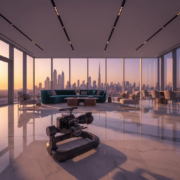
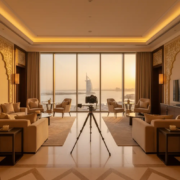
The real estate sector in Dubai and Abu Dhabi is perhaps the most frequent user of high-end animation. Before a skyscraper is even built, developers must sell the vision to investors and future residents. Utilizing 3D architectural walkthroughs is the standard for high-end developments. These animations do more than show a floor plan; they simulate the lifestyle of the residents, showing the sun rising over the balcony, the texture of the marble floors, and the ambient lighting of the interior spaces.
This technique allows developers to secure pre-sales and build anticipation. When a prospective buyer can see their future home in a cinematic, animated format, the emotional connection is much stronger than a simple 2D drawing. This level of detail is what separates a standard listing from a luxury offering in the United Arab Emirates. It is about creating an immersive atmosphere that speaks to the luxury consumer’s desires.
Technical Precision and Brand Trust
For UAE companies, the technical execution of an animation is directly tied to brand trust. If an animation is choppy, poorly lit, or uses low-resolution textures, it reflects poorly on the brand’s perceived quality. This is why high-end brands partner with specialized studios that understand the nuances of frame rates, color grading, and rendering engines. To achieve the best commercial animations techniques, studios often use industry-leading software like Cinema 4D, Houdini, and Redshift to ensure every pixel is perfect.
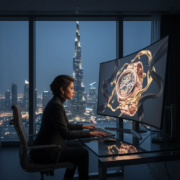
Artsun advertising agency emphasizes that the production process should be collaborative. From the initial storyboard to the final render, every movement must be intentional. For example, in the luxury watch industry, the “sweep” of the second hand must be animated with mathematical precision to reflect the quality of the movement. This level of technical obsession is what the elite market expects from high-end digital marketing in UAE.
Integrating Animation into the Marketing Mix
Creating a stunning piece of animation is only half the battle; it must be integrated into a broader strategy to reach the Sharjah brands and Dubai consumers effectively. High-end animation is versatile. A single 3D asset can be repurposed for a 30-second television commercial, a 10-second social media teaser, or a high-resolution still for print advertising. This consistency across channels ensures that the brand’s luxury status is maintained wherever the customer encounters it.
Moreover, professional video production services often combine live-action footage with animated elements to create a hybrid experience. This is particularly popular in the hospitality industry, where a video might show a real guest walking through a lobby, but use animation to highlight the hidden features of the suite or the intricate details of the culinary offerings. This “mixed reality” approach is becoming a staple of innovative marketing in the UAE.
The Future of Commercial Animation in the UAE
As we look toward the future, the integration of Artificial Intelligence and Augmented Reality is set to take commercial animation even further. High-end brands will soon offer interactive animations where customers can customize products in real-time within an animated environment. Imagine a customer in Abu Dhabi being able to change the interior leather of a car in a 3D animation before placing an order. This level of interactivity, supported by bespoke commercial animations, will be the next frontier for luxury marketing.
Furthermore, the rise of the metaverse and digital fashion means that animation is no longer just a marketing tool; it is the product itself. UAE companies that embrace these technologies early will have a significant advantage in the global market. The ability to create high-quality digital assets is becoming a core competency for any modern brand. Artsun advertising agency continues to lead the way by exploring these emerging technologies to provide cutting-edge solutions for its clients.
To see the full potential of these visual strategies, exploring a creative advertising services provider can reveal how motion design can be tailored to specific business goals. Whether it is for a product launch or a corporate rebranding, the right animation technique can elevate a brand from ordinary to extraordinary.
Frequently Asked Questions
What makes an animation look “high-end” compared to standard ones?
High-end animation is characterized by advanced lighting techniques, realistic textures (PBR materials), and sophisticated motion physics. Unlike standard animations that may use stock assets and simple movements, premium animation is custom-built, focusing on micro-details and cinematic composition to reflect the brand’s prestige.
How long does it take to produce a professional 3D commercial animation?
The timeline varies depending on complexity, but a high-quality 30 to 60-second 3D animation typically takes between 4 to 8 weeks. This includes stages for storyboarding, 3D modeling, texturing, animation, rendering, and post-production. For UAE brands, ensuring a polished final product usually requires this dedicated timeframe.
Is 3D animation better than live-action for luxury branding?
Both have their merits, but 3D animation offers total control over the environment. For luxury brands, this means no weather delays, perfect lighting every time, and the ability to show product features that are physically impossible to film. It is often more cost-effective for showing complex machinery or unbuilt architecture.
Which industries in the UAE benefit most from commercial animation?
While all can benefit, the real estate, luxury retail (jewelry and watches), automotive, and tech sectors see the highest ROI. These industries rely on visual perfection to justify premium price points, and animation is the perfect tool to showcase that value to the Abu Dhabi and Dubai markets.
How can I ensure my animation fits the local UAE culture?
Working with a local agency that understands regional aesthetics is key. This involves choosing the right color palettes, ensuring modest and respectful representation if people are included, and highlighting the themes of innovation and luxury that resonate with the UAE audience.
Conclusion: Elevating Your Brand Presence
In conclusion, the best commercial animations techniques are those that combine technical mastery with a clear understanding of the luxury consumer’s psychology. For brands operating in the competitive United Arab Emirates, high-quality animation is not a luxury—it is a necessity. It allows companies to transcend the limitations of the physical world and present their products in the best possible light. From 3D product renders to immersive architectural tours, the power of motion is undeniable.
If you are looking to transform your brand’s visual identity and capture the attention of the elite Dubai businesses and Abu Dhabi market, now is the time to invest in professional motion design. By partnering with experts who understand the nuances of high-end branding, you can ensure your message is heard loud and clear. For those ready to take the next step, viewing Artsun studio’s full portfolio can provide the inspiration needed to launch your next successful campaign. Let your brand move, inspire, and lead the way in the digital age.