
Commercial drone videography pricing and packages in Oman and Iran depend on a dual-tier cost structure: government permit clearances and local security fixers combined with daily pilot flight fees. While base daily operator rates range from OMR 40 to OMR 150+ in Oman and 5,000,000 to 8,000,000+ Tomans in Iran, official permit filings and compliance logistics account for up to 50% of total production budgets and require 3 to 8 weeks of pre-production lead time.
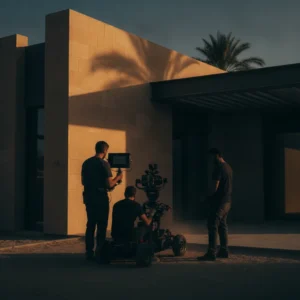
A film crew sets up along the Muscat coastline near a multi-million-dollar resort site, or positions equipment outside an industrial plant in Isfahan. The light hits the terrain during golden hour. Then security officers step in to examine flight credentials. If the operator carries only a recreational airspace pass, production stops instantly. Hardware gets impounded, project schedules break down, and marketing launch deadlines vanish. Evaluating commercial aerial filming across the Middle East requires looking beyond basic flight hour rates to calculate full regulatory and operational costs.
Drone Videography Pricing and Packages: Flight Hours vs. Government Permits
Commercial aerial filming does not follow standard ground camera billing. You cannot simply hire a operator for an eight-hour shift and expect eight continuous hours of airborne footage. The physical realities of flight dictate a completely different financial structure.
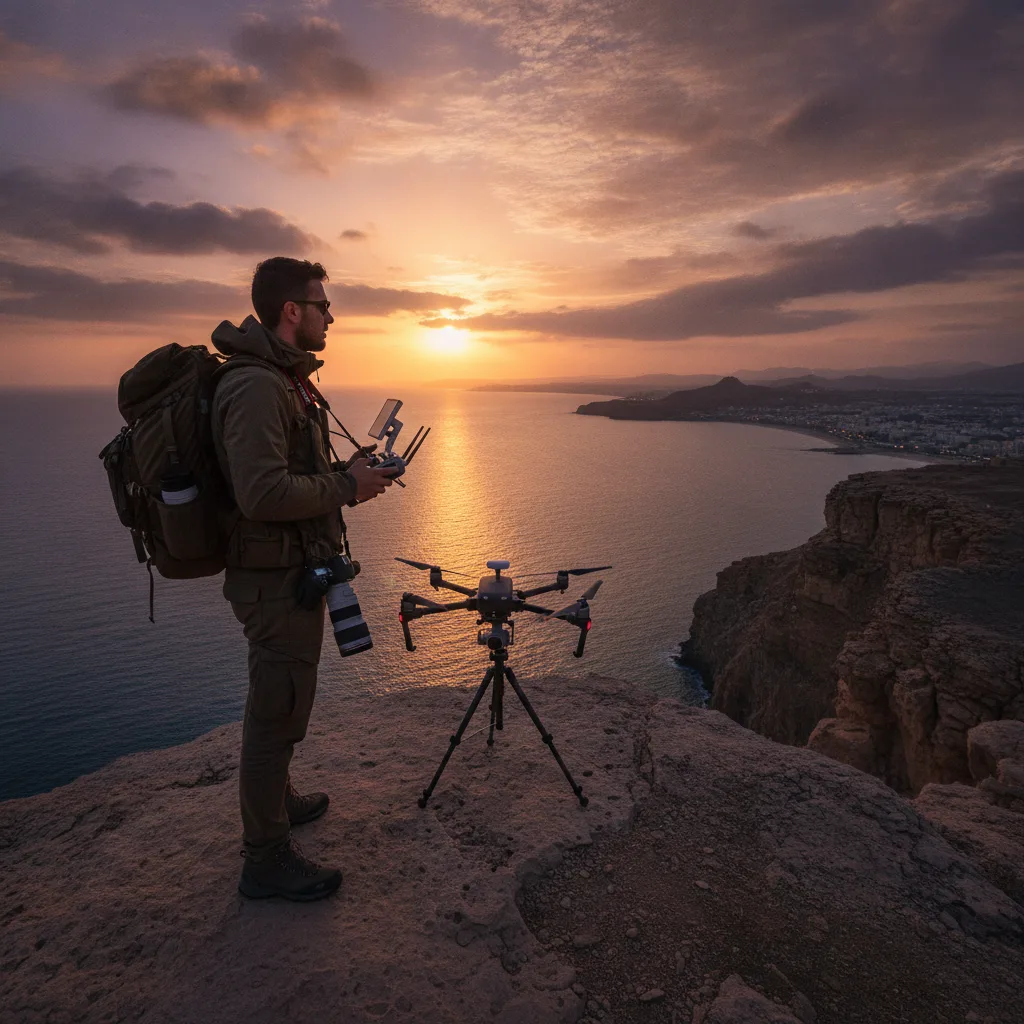
Commercial drones rely on high-drain lithium battery charge cycles that yield 15 to 30 minutes of operational flight per swap. Cinema-grade aircraft carrying heavy mirrorless or digital cinema payloads consume power even faster, especially when operating against coastal sea breezes in Muscat or high-altitude mountain air near Isfahan. Professional studios design commercial rate cards around battery flight cycles, thermal management windows, and daily project milestones rather than wall-clock hours. Knowing how to evaluate a luxury brand video production studio ensures battery cooling periods and payload balancing are properly calculated in your production estimates.
Baseline rates in Oman for simple freelance flights using small consumer-grade hardware range from OMR 40 to OMR 150+ per daily session. Comprehensive corporate projects requiring dual-operator cinema craft, dedicated gimbal operators, and high-bitrate video pipelines carry higher fixed-day rates. In Iran, standard heli shot pricing Oman and regional quotes for basic aerial commercial work start between 5,000,000 and 8,000,000+ Tomans per daily session, scaling upward when deploying specialized FPV gear or cinema series aircraft.
Commercial aerial production costs break down into two distinct operational categories:
- Tier 1: Flight Operations. Certified remote pilots, camera operators, battery charging stations, wireless client monitors, payload calibration, and raw media management.
- Tier 2: Regulatory Compliance and Security. Civil aviation filings, ministry authorizations, security escorts, local fixer management, municipal approvals, and site access clearance.
In high-security zones, historical districts, or heavy industrial corridors, Tier 2 compliance costs routinely match or exceed Tier 1 flight operations. Evaluating commercial drone videography pricing and packages requires reviewing both tiers inside a single unified proposal before approving production expenditure.
Regulatory Approvals in Muscat and Isfahan: CAA Serb and CAOI Clearance
Flying commercial drones legally in Oman and Iran requires working directly with civil aviation authorities and national security agencies. Operating without proper authorizations exposes project sponsors to severe financial penalties and legal liability.
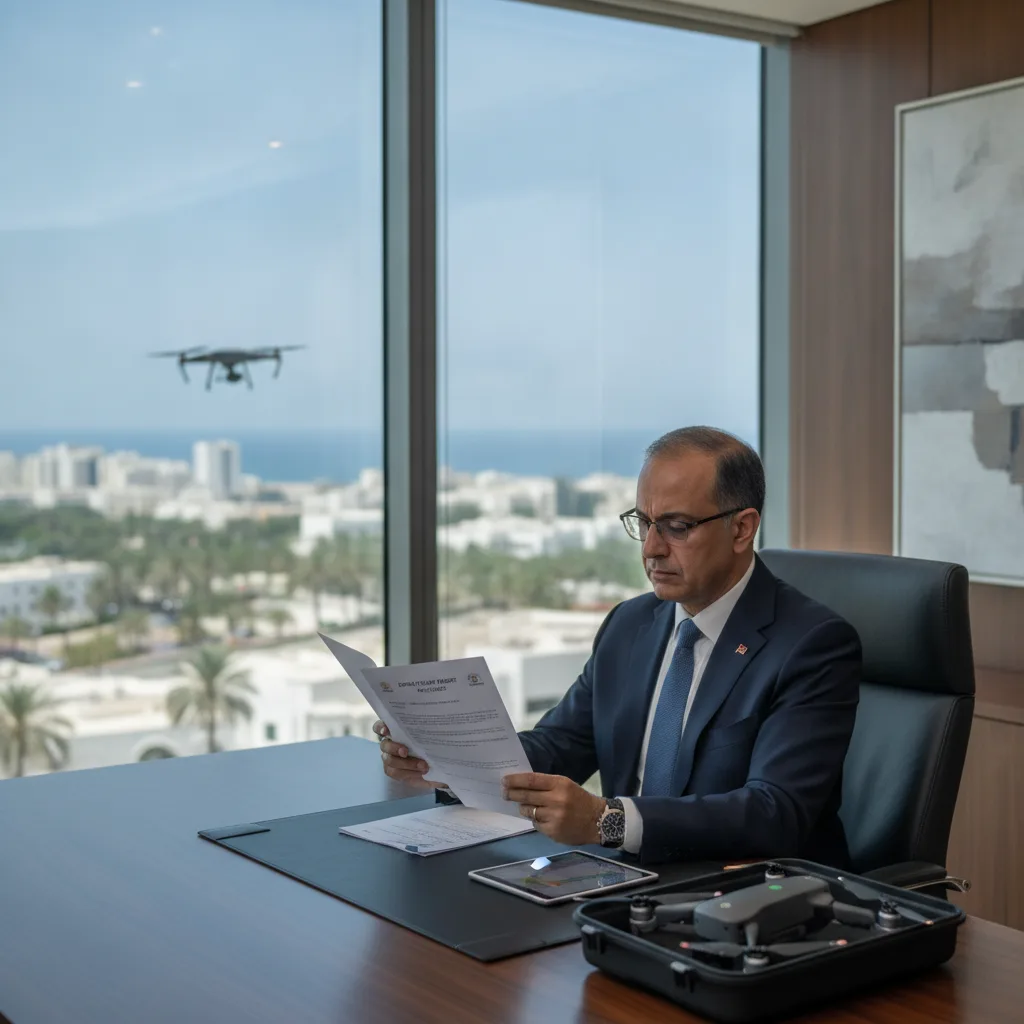
The Civil Aviation Authority (CAA) in Oman launched the Serb digital platform to govern national airspace, defining clear green zones alongside mandatory licensing procedures for commercial operators. Securing commercial filming permits in Oman requires approval from the CAA, the Ministry of Information, and regional defense authorities. This multi-agency review process takes 3 to 8 weeks to clear. Campaign schedules must incorporate this lead time long before production crews assemble on site.
Operating near Muscat International Airport airspace, royal properties, or sensitive environmental reserves like Ras al Jinz is strictly prohibited without direct military and CAA authorizations. A complete drone filming permit cost Muscat estimate must account for Serb platform drone license Oman filing procedures, administrative processing, and site-specific security monitoring.
Civilian drone flights in Iran operate under central oversight requiring CAOI registration, pilot licensing, and central flight plan approval from national defense and security bodies. Securing a CAOI drone license Iran permit for commercial shoots requires 2 to 4 weeks of processing time. Calculating the commercial aerial photography cost Isfahan projects require means budgeting for dual approvals. Executing specialized architectural videography near historic sites or conducting an industrial drone inspection cost audit over active manufacturing plants requires clearance from cultural heritage boards as well as security departments.
Indoor FPV Cinewhoops vs. Outdoor Cinema Drone Shoots
Not all aerial visual assets require wide-open outdoor airspace filings. Creative directors frequently deploy indoor FPV (First-Person View) cinewhoop platforms to capture dynamic architectural walkthroughs, luxury hotel interiors, and manufacturing lines.
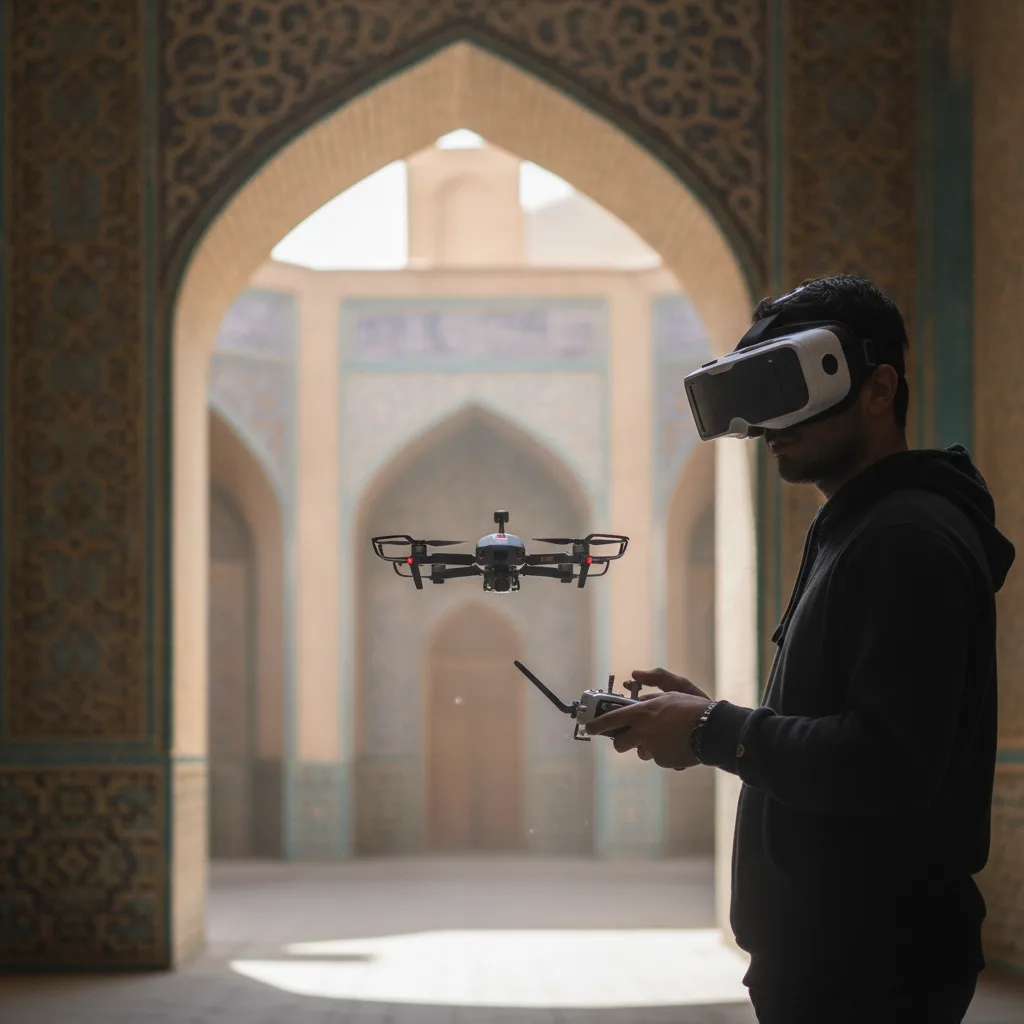
Indoor FPV ducted cinewhoops weighing under 250 grams flying inside fully enclosed structures operate under simplified permit exemptions compared to outdoor heavy cinema aircraft. Because these micro-drones utilize ducted propeller guards and lightweight frames, they present negligible risk to indoor infrastructure, artwork, or personnel. Booking an FPV indoor drone filming rate for a hotel atrium in Muscat or a textile facility in Isfahan enables crews to capture continuous fly-through footage without navigating multi-week outdoor airspace approval channels.
For wide coverage, dedicated drone aerial videography services remain essential for expansive real estate master plans, coastal resort aerials, and high-speed industrial asset tracking. Heavy drone platforms carry full-size camera packages and utilize redundant navigation systems. They also demand dual-operator teams—one pilot controlling flight paths while a dedicated cinematographer operates the camera gimbal—and carry full regulatory filing requirements in both Oman and Iran.
Indoor FPV micro-drones and outdoor cinema rigs serve completely different operational needs. The aircraft tier you select dictates your regulatory timeline, required crew size, and total package cost.
Budgeting a Multi-Day Aerial Shoot in Muscat and Isfahan
Deploying an aerial crew across commercial sites in Muscat and Isfahan requires managing regional logistics that rarely appear on standard rate sheets. International marketing departments often attempt to lower costs by sending internal crew members carrying handheld commercial drones, only to encounter severe customs friction.
Unapproved drone hardware brought into Oman through airport customs is held at entry or requires a 10% refundable deposit under temporary import regulations. Without pre-approved clearance paperwork processed by a licensed local fixer, equipment remains locked in customs storage. In Iran, attempting to clear unregistered commercial aerial gear without formal CAOI documentation results in immediate equipment impoundment by border authorities.
Thermal management presents another direct impact on daily shoot efficiency. Midday summer heat in Muscat and Isfahan regularly pushes ambient temperatures past safe operating thresholds for lithium batteries and onboard flight electronics. Rapid battery drain and thermal safety shutdowns prevent safe flying during peak heat hours. Professional crews structure multi-day production schedules around these environmental constraints:
Morning operations begin at dawn, maximizing the three-hour golden hour window before ambient temperatures spike. Midday hours shift to capturing virtual walkthroughs for Oman hotels inside climate-controlled structures where ambient heat cannot degrade battery health. Late afternoon operations resume as ground temperatures cool. Working with a studio experienced in Middle Eastern climate realities protects equipment and ensures production schedules stay on track.
Five Oversights That Inflate Commercial Drone Pricing
Controlling production budgets requires knowing where unexpected charges originate. Corporate clients routinely face cost overruns by overlooking key operational and regulatory factors:
- Assuming freelancer rates include compliance filings. Low entry-level quotes rarely cover CAA Serb or CAOI submission fees, fixer retainers, or security escort charges.
- Importing gear without local fixer documentation. Transporting commercial drones through airport customs without temporary import approvals triggers mandatory holding deposits and schedule delays.
- Scheduling outdoor flights during midday summer heat. Flying in extreme temperatures causes lithium battery degradation and thermal flight controller shutdowns, wasting paid crew time.
- Using recreational approvals for commercial projects. Flying under a recreational green-zone permit for corporate marketing violates civil aviation law and risks equipment confiscation.
- Ignoring mandatory permit lead times. Setting fixed campaign launch dates without building in the mandatory 3 to 8 week government clearance window.
Frequently Asked Questions
Can foreign companies bring commercial drones into Oman or Iran?
Foreign film crews cannot operate commercial drones in Oman or Iran without local regulatory approvals. Unapproved equipment brought through airport customs in Oman is held by customs or subject to a 10% deposit, while civilian flight in Iran requires CAOI registration and security clearance. Foreign production teams typically hire a full-service creative studio in Muscat to manage temporary import paperwork, pilot certifications, and airspace approvals.
How do permit lead times impact drone project schedules in Oman?
Commercial filming permits in Oman require sequential authorizations from the Civil Aviation Authority (via the Serb platform), the Ministry of Information, and defense agencies. This clearance workflow takes between 3 to 8 weeks to complete. Site coordinates, flight paths, and crew credentials must be finalized well before scheduled shoot dates to ensure permits issue on time.
How does summer heat in Muscat and Isfahan alter daily aerial production?
High ambient heat increases battery discharge rates and risks thermal flight controller lockouts. Professional operators restrict outdoor flying to early morning and late afternoon windows. This split-shift schedule requires structuring drone videography pricing and packages around multiple flight sessions across early morning and late afternoon hours rather than continuous midday shoots.
How to Select Drone Videography Pricing and Packages for Corporate Projects
Selecting commercial aerial services requires evaluating pilot credentials, government compliance capabilities, heat-mitigation logistics, and post-production standards. Contracting a licensed local production studio eliminates regulatory risk while keeping campaign schedules on schedule.
Working with an established studio with operational bases across the region streamlines production from day one. Businesses can lock in clear, fixed-rate proposals by partnering with specialized providers like Art Sun Studio, whose physical footprint in Muscat and Isfahan handles regulatory filing workflows directly.
Founded in 2003 in Isfahan, Iran by founder and creative director Ehsan Rezapour, Art Sun Studio brings over two decades of visual production expertise to corporate projects across the Middle East. The studio expanded its physical offices to Dubai, UAE in 2018 and established its Muscat, Oman branch in 2020. Operating with six specialized in-house teams—Design, Film, Graphic Design, Social Media, Web Design, and AI—the studio delivers 19 services under one roof, ranging from architectural videography and commercial animation to 360° visual assets and high-end advertising production.
Art Sun Studio executes every aerial shoot through a proven 6-step project process: Brief, Proposal, Concept, Production, Review, and Delivery. This disciplined workflow resolves airspace clearances upfront, manages site fixers, and eliminates unexpected permit surcharges for real estate developers, hospitality groups, and industrial manufacturing clients across Oman and Iran. Native content capabilities in English, Arabic, and Persian ensure visual assets align with regional marketing channels without cultural or legal delay.
Review your project timeline, map out your site clearance requirements, and reach out to Art Sun Studio’s production offices in Muscat or Isfahan to request a fully cleared, transparent commercial drone package quote today.