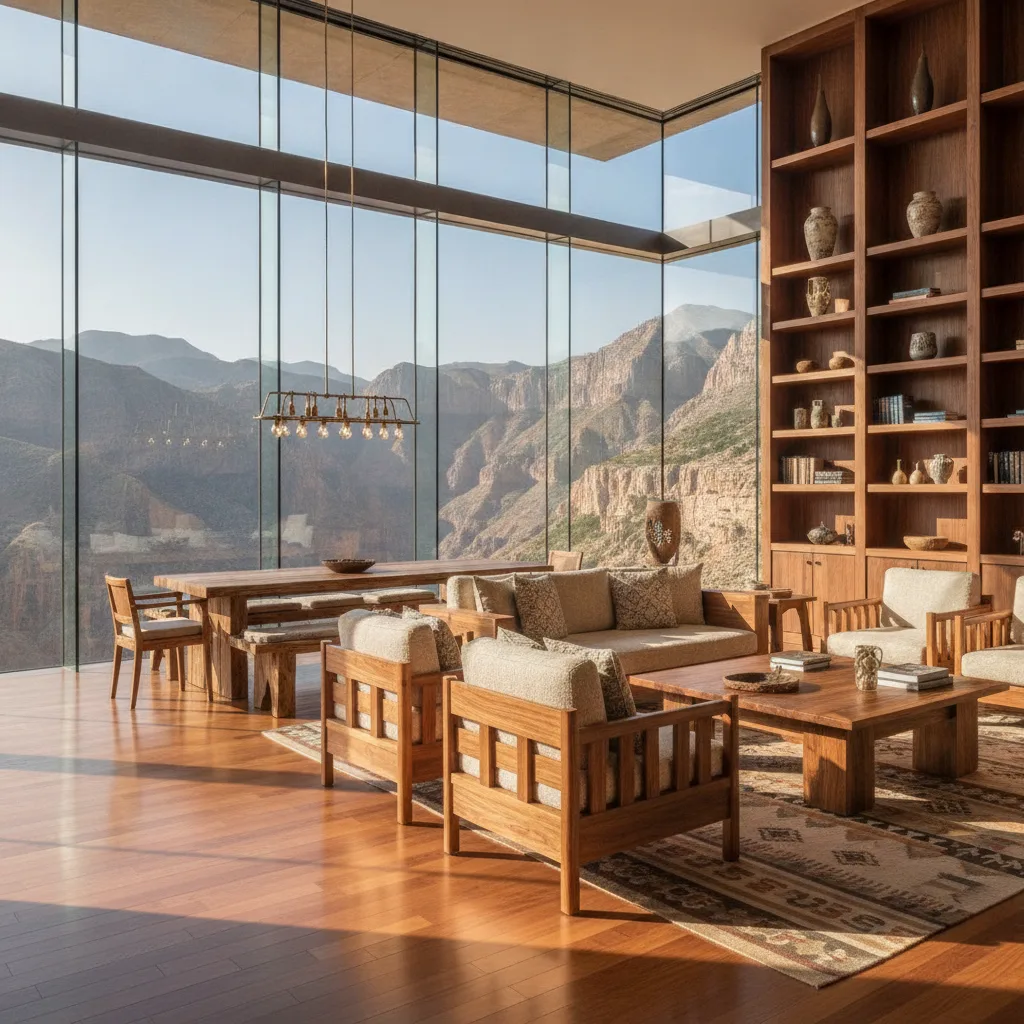
A 360 virtual tour for hotel resorts gives prospective guests the visual proof needed to book high-ADR private pool villas, suites, and event spaces directly. By embedding live reservation pop-ups inside 10K HDR panoramas and syncing virtual walkthroughs to Google Maps, luxury hospitality operators in Oman and Iran increase look-to-book conversion rates by 16% to 67% while avoiding 15% to 25% third-party OTA commission fees. This guide outlines the visual production standards, software integrations, and local search strategies required to convert immersive media into direct web bookings.
A traveler sitting in London or Riyadh compares a 400 OMR per night cliffside sanctuary in Jabal Akhdar against a beach resort in Salalah. When a property website relies on static photos, key spatial details remain uncertain, such as how far a private plunge pool sits from the main terrace, or how natural sunlight falls across a historic courtyard in Isfahan. That visual ambiguity causes guests to leave the direct website and head to online travel agencies to cross-check reviews, taking 15% to 25% of room revenue with them in third-party fees. Deploying a high-definition 360 virtual tour for hotel resorts removes that visual friction, replacing flat photo galleries with explorable media that builds confidence before credit card details are entered.
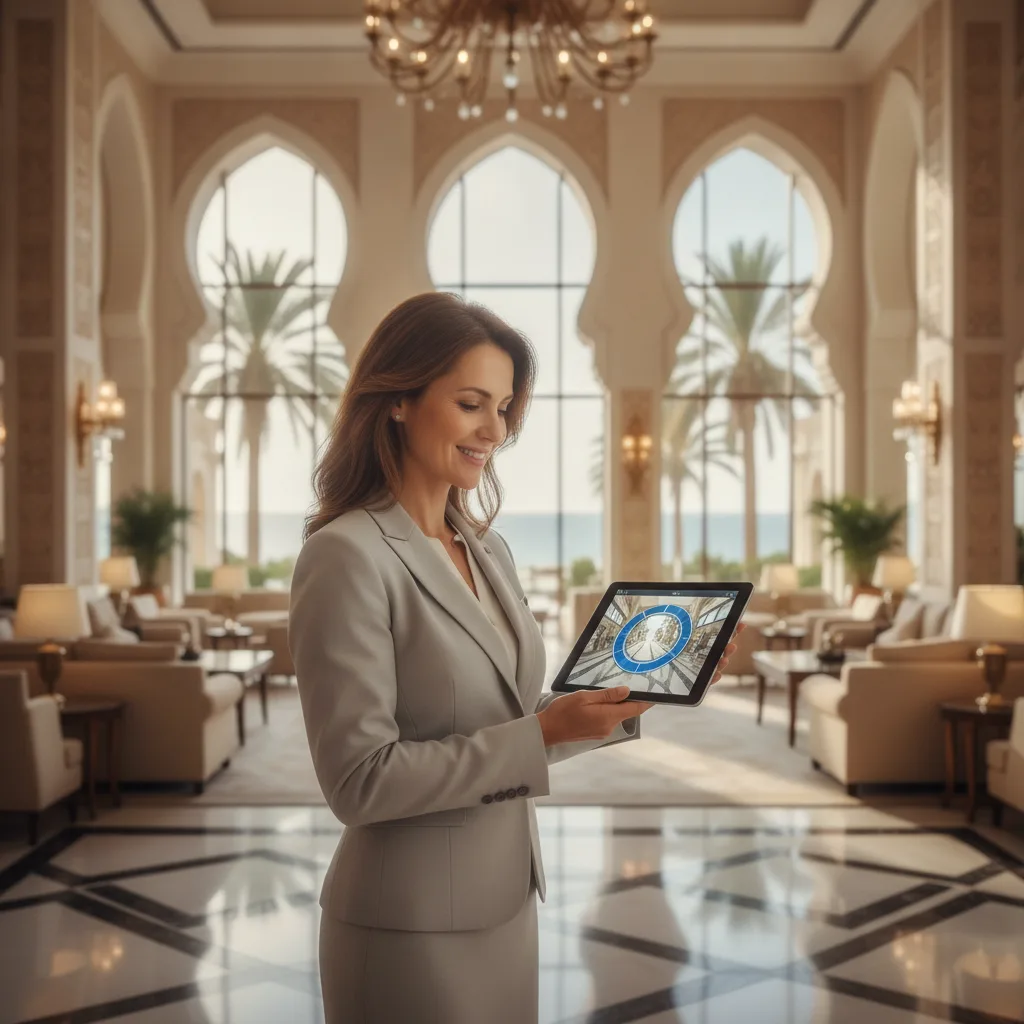
The Financial Case: Reclaiming Revenue with a 360 Virtual Tour for Hotel Resorts
Third-party OTAs charge hotel properties between 15% and 25% commission on every completed booking. For luxury resorts in Muscat, Salalah, Shiraz, or Tehran, this revenue loss accumulates rapidly. A single week-long booking in a private pool villa costing 150 to 400+ OMR per night yields substantial third-party fees, revenue lost simply because the guest relied on an aggregator for visual reassurance.
Direct booking conversion relies heavily on spatial confidence. Guests spending significant amounts on long-haul travel want to inspect every corner of a property before confirming their reservation.
Independent research commissioned by Google showed that business listings featuring a 360° virtual tour are twice as likely (a 100% increase) to generate booking reservations, with 67% of surveyed consumers explicitly wanting more businesses to offer virtual tours.
Academic research supports this shift: a 569-participant study published in the Journal of Hospitality and Tourism Technology confirmed that presenting hotels in virtual reality significantly increases a consumer’s sense of spatial presence, directly boosting online booking intention.
When Omni Hotels evaluated interactive 360° virtual tours across its digital channels, hospitality data showed an increase in online bookings and look-to-book conversion rates ranging from 16% to 67%. Enterprise implementations demonstrate even stronger returns: Radisson Hotel Group recorded up to a 135% increase in online booking revenue across properties that introduced interactive 360 virtual tours, averaging an additional $7,200 in monthly direct revenue per hotel.
Data from Gecko Digital indicates that hotel web pages featuring interactive 360° walkthroughs gain up to 87% more page views. Prospective guests spend 5 to 10 times longer on the website compared to traditional static photo galleries, turning passive site visitors into engaged shoppers.
Technical Architecture: Integrating Booking Engines into Virtual Walkthroughs
Standard virtual tours often fail to drive direct revenue because of visual isolation. Many properties publish virtual tours on a standalone gallery page, completely separated from the booking engine. If a prospective guest must close the viewer, navigate to a separate tab, and manually locate the villa category they just inspected, the conversion path breaks.
Modern visual production fixes this disconnect by embedding transactional hotspot nodes directly inside panoramic viewers. When prospective guests inspect a private pool villa or spa suite, interactive nodes trigger floating modal pop-ups connected to central reservation systems (such as Oracle Opera, SynXis, or QloApps), presenting real-time rates and direct booking buttons inside the viewer.
This immediate path to purchase is especially effective for younger demographics: research from Gecko Digital shows that travelers aged 18 to 34 are 130% more likely to complete a booking reservation when a property offers an explorable 360° virtual tour.
To ensure speed on mobile devices, panoramic assets rely on WebGL multi-resolution cube tiles. When mobile browsers load a WebGL tile stream, the rendering engine only downloads the immediate field of view at high resolution, fetching adjacent image tiles as the user pans across the space. This technical structure preserves site speed, rendering 10K images in under 2 seconds without freezing user screens on regional mobile networks.
Local SEO Strategy: Google Street View Integration in Muscat and Regional Markets
Capturing direct revenue requires engaging prospective guests early in their visual search phase on Google Maps and Google Search. When regional travelers research luxury stays in Muscat, Salalah, or Isfahan, local map packs regularly appear above organic web results.
In Oman, the Ministry of Transport, Communications and Information Technology (MTCIT) officially launched the national Google Street View project to upgrade digital tourism infrastructure across the Sultanate. Luxury properties in Muscat, Salalah, and the Al Hajar Mountains can capitalize on this initiative by syncing certified 360° panoramic paths directly to their Google Business Profile.
Publishing high-dynamic-range (HDR) panoramas to Google Street View provides critical operational advantages. Search algorithms favor business profiles with complete visual assets, helping resorts secure top local pack rankings. Pre-booking verification spikes ahead of regional travel surges, such as the winter luxury window from October to April in Muscat or the Khareef monsoon season from July to September in Salalah, when high-spending GCC travelers inspect access roads, private beach frontage, and outdoor grounds prior to committing to long stays.
For boutique heritage hotels in Iranian cultural destinations such as Isfahan, Shiraz, Kashan, and Tehran, third-party booking engine restrictions present unique operational hurdles. High-definition 360 virtual walkthroughs published on Google Business Profile, combined with direct Instagram conversion funnels and WhatsApp booking triggers, allow heritage properties to provide spatial verification of historic courtyards directly to international and domestic travelers.
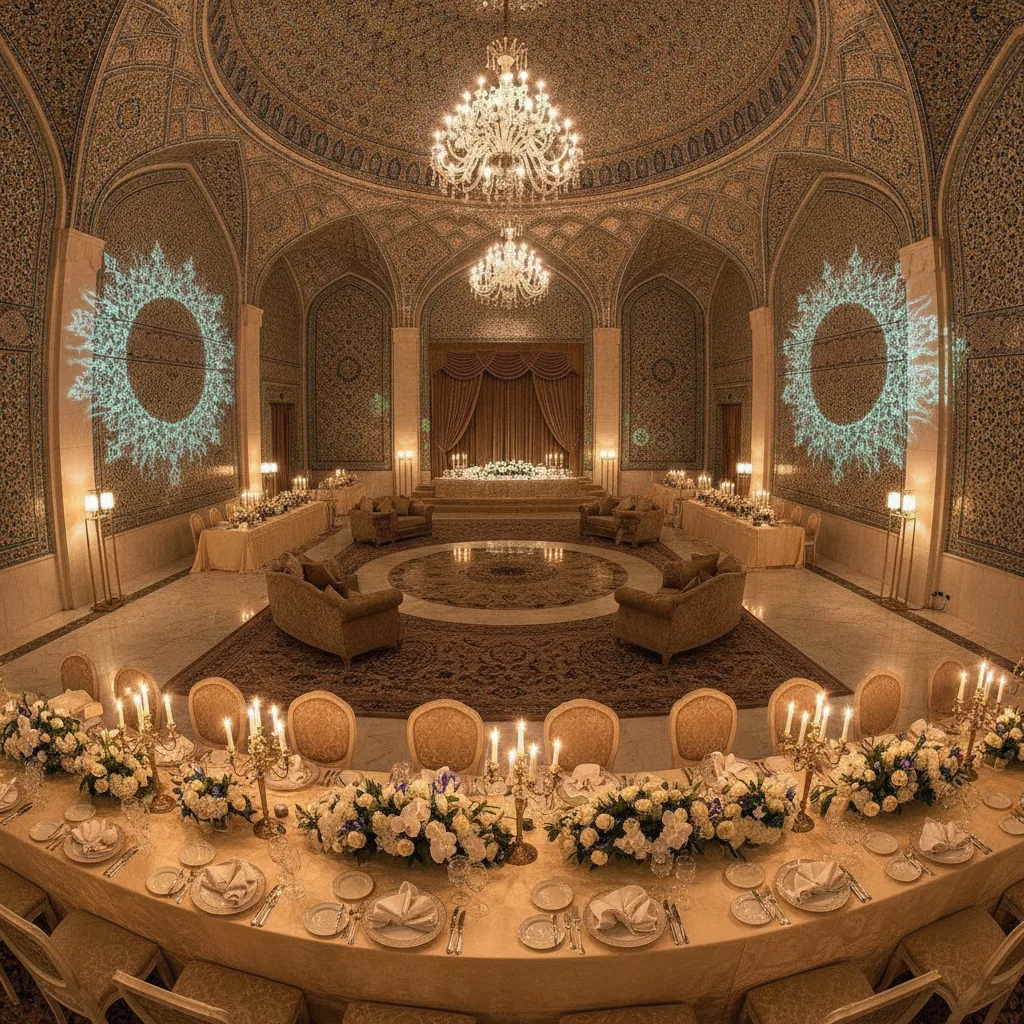
Converting MICE and Event RFPs with a 360 Virtual Tour for Hotel Resorts
High-ADR leisure stays represent only one segment of resort revenue, making it vital to choose a luxury brand video production studio capable of showcasing venue spaces. Corporate Meetings, Incentives, Conferences, and Exhibitions (MICE), combined with destination weddings, generate substantial earnings. However, event planners located in Dubai, London, or Zurich rarely have the time to complete physical site inspections in Muscat or Isfahan before issuing a Request for Proposal (RFP).
Integrating a 360 virtual tour for hotel resorts into corporate sales workflows accelerates decision-making. Enterprise hospitality research from Visiting Media reveals that hotels using 3D and 360 virtual walkthroughs achieve a 130% higher group booking probability and increase event RFP closing ratios by 25% to 39%.
Sales managers can conduct live, remote co-browsing tours during video calls. While speaking with a corporate client, the sales director guides the user through the virtual ballroom, demonstrating different spatial setups. The director can display the ballroom arranged for a 300-guest gala dinner, toggle an interactive node to show the space in a theater layout, and step out onto the adjacent terrace to highlight evening lighting capabilities. Eliminating visual doubt allows corporate planners to sign venue contracts with complete spatial confidence.
Production Standards, Regional Costs, and Creative Execution Workflows
Using improper camera setups damages property positioning. Low-resolution consumer 360 cameras produce blurry textures, dark indoor corners, and blown-out windows where bright sunlight hides exterior mountain or ocean scenery.
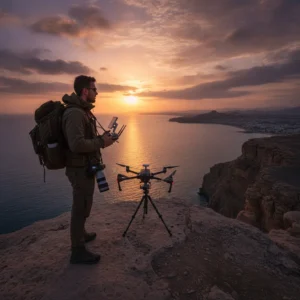
High-end resort spaces demand camera setups tailored to specific architectural requirements. For interior suites with high lighting contrast, custom DSLR or mirrorless camera setups with wide-angle fisheye lenses capture multi-bracket 10K HDR exposures. This preserves both interior room detail and bright outdoor viewports. For sprawling coastal resorts and mountain retreats, ground DSLR captures are paired with 360 aerial drone photography to give guests a clear bird’s-eye view of property layouts. For structured indoor corridors and spa facilities, Matterport Pro3 cameras provide accurate spatial floorplans alongside 3D dollhouse models.
Production pricing across regional markets reflects spatial scale, camera specifications, and custom interface coding:
Standard 360° virtual tours for boutique hotels in Oman range from 300 to 800 OMR. Complete luxury resort walkthroughs, which include 20 or more 10K HDR panoramas, aerial 360 drone photography, custom booking hotspots, and Google Street View syndication, range from 1,200 to 3,500 OMR, with turnaround times running between 10 and 21 business days. In Iran, professional 360° multimedia virtual tour production ranges from 150 million to over 500 million IRR, depending on property scale, architectural complexity, and custom UI tags, with delivery taking 5 to 15 business days.
Executing enterprise visual assets requires an organized production workflow. Founded in 2003 in Isfahan by creative director Ehsan Rezapour, Art Sun Studio expanded visual operations to Dubai in 2018 and Muscat in 2020. Operating with six specialized in-house teams covering Design, Film, Graphic Design, Social Media, Web Design, and AI, our team manages complex 360 photo and video captures through a structured six-step project process: Brief, Proposal, Concept, Production, Review, and Delivery. Providing native content writing and visual production in English, Arabic, and Persian, Art Sun Studio ensures panoramic assets align with both mobile performance requirements and regional market habits.
Frequently Asked Questions About 360 Virtual Tours for Resorts
Will embedding a 360 virtual tour slow down our mobile website load speed?
No, provided the media relies on WebGL tile-streaming technology and lazy loading scripts. Rather than downloading full 10K panoramic files immediately, tile streaming loads only the visible frame view on demand. This keeps mobile web page loading times under 2 seconds while preserving high visual resolution.
How hard is it to update individual panoramas when a suite or restaurant is renovated?
Custom 360 virtual tours built on modular frameworks are simple to update. When a resort renovates a room category or spa facility, the production crew re-shoots only that specific space. The new panoramic node replaces the old node inside the existing software setup without requiring a complete rebuild or changing your website URL.
What is the difference between a Google Street View tour and a custom branded interactive web 360 tour?
Google Street View tours reside publicly on Google Maps to increase organic search discoverability and local SEO rankings. Custom web 360 tours live directly on your hotel website, featuring custom UI branding, interactive floorplans, embedded room reservation links, and dynamic spatial setup switches.
Action Plan: Next Steps for Regional Resort Managers
Deploying an explorable 360 virtual tour shifts a hotel website from a passive visual gallery into an active direct booking engine. Take these immediate operational steps to plan your visual production:
- Audit High-Commission Inventory: Identify the specific pool villas, suites, and venue spaces that incur the highest third-party OTA commission costs.
- Prepare Booking Engine Deep-Links: Verify that your booking system supports direct room category landing URLs so virtual hotspot pop-ups open pre-loaded booking screens.
- Schedule Shoots Ahead of Peak Seasons: Complete visual production 30 to 60 days prior to major regional booking surges, such as the winter season in Muscat and Jabal Akhdar or Khareef season in Salalah.
- Syndicate Visuals Across Google and Web: Ensure your photography partner handles both high-resolution web integration and certified Google Street View publication to capture search map traffic.
To audit your property's visual positioning and evaluate interactive 360 production, contact Art Sun Studio, a full-service creative studio in Muscat, to design a custom 10K virtual tour strategy that drives direct website revenue.