
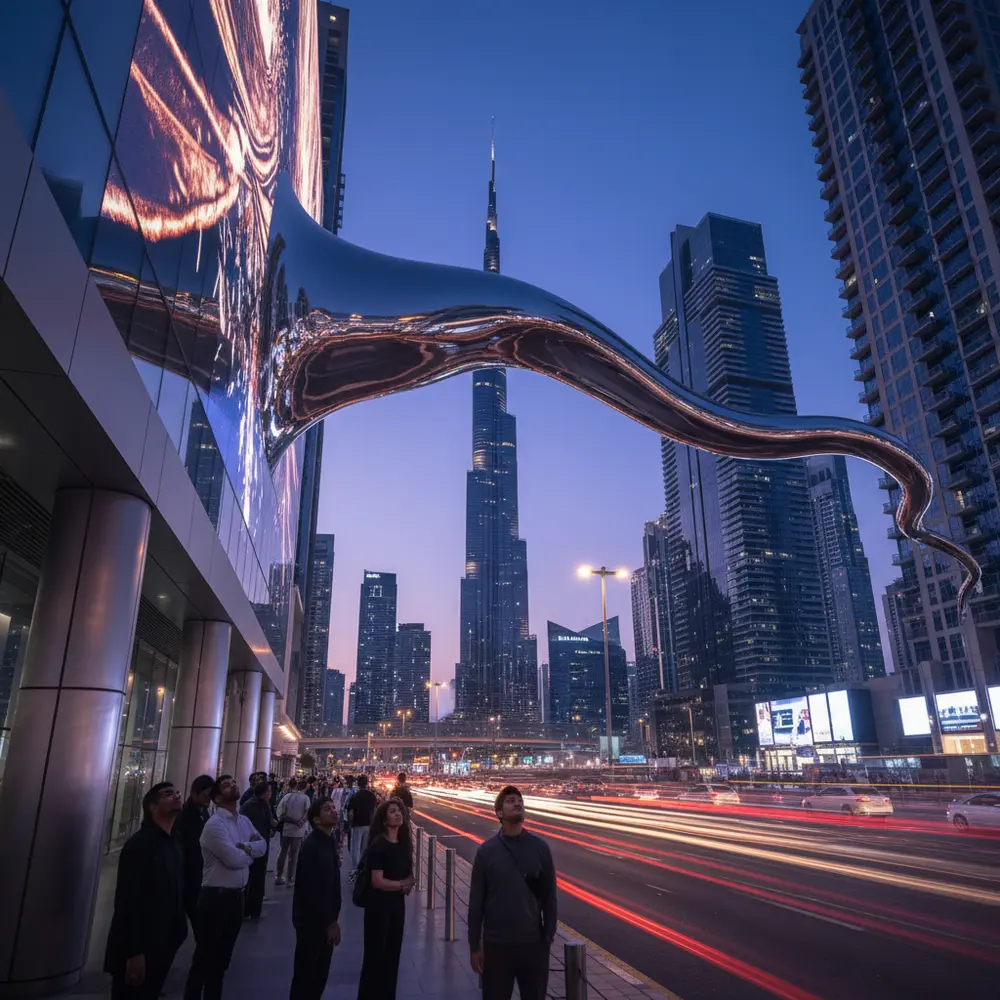
AI in OOH Advertising Across Dubai.
AI in OOH Advertising Across Dubai: Revolutionizing the UAE’s Visual Landscape
The skyline of Dubai has long been a symbol of architectural ambition and technological prowess. From the Burj Khalifa to the Museum of the Future, the city is a global stage for innovation. In recent years, this spirit of advancement has moved from the structures themselves to the screens and billboards that surround them. AI in OOH Advertising Across Dubai is no longer a futuristic concept; it is the current reality of how brands communicate with millions of residents and tourists. As the United Arab Emirates continues its journey toward becoming a global hub for artificial intelligence, the traditional billboard is undergoing a profound metamorphosis, shifting from static imagery to intelligent, data-driven ecosystems.
In the fast-paced Abu Dhabi market and the bustling streets of Dubai, the saturation of traditional media has led advertisers to seek smarter ways to capture attention. Artificial Intelligence (AI) provides the tools necessary to move beyond broad-spectrum broadcasting toward precision targeting in the physical world. This integration of technology ensures that digital marketing in UAE is not confined to smartphones and laptops but is integrated into the very fabric of the urban environment, creating a seamless experience for consumers moving through the city.
The Evolution of Out-of-Home Advertising in Dubai
Historically, out-of-home (OOH) advertising in the UAE relied on high-traffic locations such as Sheikh Zayed Road or the vicinity of major malls. While effective for brand awareness, these static displays offered no real-time interaction and very little in the way of performance measurement. Today, Dubai businesses are demanding more accountability and creativity. The transition from static posters to Digital Out-of-Home (DOOH) was the first step, but the infusion of AI has truly changed the game.
AI in OOH Advertising Across Dubai allows for dynamic content adjustment based on external triggers. Imagine a billboard near the Dubai Mall that changes its display based on the current temperature, the time of day, or even the density of traffic on the road. For UAE companies, this means that their marketing budget is utilized more efficiently, as the message is always relevant to the context of the viewer. This evolution marks a shift from “one-to-many” communication to “one-to-context” communication, where the environment dictates the narrative.
How Artificial Intelligence is Enhancing DOOH in the UAE
The core of AI’s impact on DOOH lies in its ability to process vast amounts of data in real-time. In Dubai, where diversity is a defining characteristic, understanding the audience is key. AI-powered cameras and sensors can now analyze the demographics of the crowd passing a specific screen. These systems, which prioritize privacy by using anonymous facial detection rather than recognition, can determine the age range, gender, and even the sentiment of the audience. By partnering with creative solutions in Dubai, brands can develop content that reacts to these demographic shifts instantly.
The Artsun advertising agency has observed that when a brand uses AI to tailor its message to the specific audience present at that moment, engagement rates skyrocket. For instance, a screen might display luxury fashion to a specific demographic during the evening and switch to family-oriented entertainment during weekend afternoons. This level of sophistication is what sets Sharjah brands and Dubai startups apart in a crowded marketplace, allowing them to punch above their weight through intelligent placement and timing.
The Role of Data Analytics in Targeting UAE Audiences
Data is the fuel that powers AI in OOH Advertising Across Dubai. In the UAE, the prevalence of mobile connectivity provides a rich stream of location data that, when aggregated and anonymized, helps advertisers understand movement patterns. AI algorithms can predict when certain segments of the population will be at specific transit hubs, such as the Dubai Metro or the Abu Dhabi International Airport. This allows for hyper-localized targeting that was previously impossible.
By analyzing historical data, AI can suggest the optimal times to run certain campaigns. If data shows that residents in a specific neighborhood in Sharjah are more likely to visit grocery apps on Tuesday evenings, OOH screens in that area can prioritize retail advertisements during those hours. This data-driven approach ensures that the Abu Dhabi market receives content that is not only visually stunning but also strategically sound. The integration of high-quality high-impact billboard design with these data insights creates a powerful tool for conversion.
Predictive Modeling for Future Campaigns
Beyond real-time adjustments, AI enables predictive modeling. UAE companies can now simulate the potential reach and impact of an OOH campaign before it even goes live. By feeding historical traffic patterns, seasonal trends, and even major event schedules (like COP28 or the Dubai Shopping Festival) into an AI engine, marketers can forecast the ROI of their placements. This reduces the risk associated with high-cost outdoor advertising and allows for more adventurous creative choices.
Optimizing Creative Assets via AI
AI is also being used to “pre-test” the creative elements of an advertisement. Using eye-tracking heatmaps generated by AI, designers can see which parts of an ad are likely to draw the most attention. This ensures that the brand logo, the call to action, and the main visual are positioned perfectly for maximum impact within the few seconds a commuter spends looking at a billboard. This scientific approach to design is a hallmark of modern digital marketing in UAE.
Programmatic OOH: The Future of Ad Buying in Abu Dhabi and Sharjah
One of the most significant shifts brought about by AI in OOH Advertising Across Dubai is the rise of programmatic buying. Much like how digital ads are bought on Google or social media, programmatic DOOH allows advertisers to bid for ad slots in real-time. This moves away from the traditional model of renting a billboard for a fixed month and allows for “per-impression” or “per-hour” purchasing.
This flexibility is vital for Sharjah brands that may have smaller budgets but require high-impact visibility during specific hours. Programmatic platforms use AI to decide which ad to show based on the advertiser’s criteria—such as weather conditions, traffic speed, or even live sports scores. For example, if a UAE-based sports brand wants to celebrate a victory in a local football match, AI can trigger celebratory ads across Dubai and Abu Dhabi screens the moment the final whistle blows.
Creative Innovation: AI-Generated Content and 3D Visuals
While data and buying models are important, the visual component of OOH is what ultimately captures the human imagination. AI is now assisting in the creation of content itself. From AI-generated imagery that resonates with local cultural nuances to complex animations that appear to “pop out” of the screen, the creative possibilities are endless. In Dubai, we have seen a massive trend toward anamorphic 3D billboards—screens that use perspective to create a three-dimensional effect without the need for glasses.
The creation of these assets often involves utilizing advanced CGI and VFX video production. These technologies, when combined with AI, allow for the creation of hyper-realistic environments and characters that interact with the physical world in surprising ways. Imagine an AI-driven character on a billboard in Downtown Dubai that waves at passersby or reacts to the current weather by putting on a virtual jacket. This level of immersion is what makes AI in OOH Advertising Across Dubai a global leader in the industry.
Anamorphic 3D and Sensory Engagement
As brands compete for attention, the use of 3D displays has become a benchmark for luxury and innovation. By crafting engaging commercial animations, companies can turn a simple advertisement into a landmark event. These displays are frequently shared on social media, providing “earned media” that extends the reach of the campaign far beyond the physical location of the screen. In the UAE, where social media usage is among the highest in the world, this viral potential is a key objective for many Dubai businesses.
Integrating 3D Architecture and Animation
To ensure these massive installations fit perfectly within the urban landscape, agencies are incorporating 3D architectural animation to preview urban placements. This allows advertisers to see exactly how an ad will look from various angles on the street, ensuring that the AI-driven 3D effects are optimized for the specific vantage points of the audience. This meticulous planning is essential for maintaining the high aesthetic standards expected in the UAE.
Challenges and Ethical Considerations for Dubai Businesses
With great power comes great responsibility. The use of AI in OOH Advertising Across Dubai brings up important questions regarding privacy and data security. The UAE government has been proactive in establishing frameworks for the ethical use of AI, ensuring that while technology advances, the rights of the individual are protected. For UAE companies, this means ensuring that any data collected via DOOH sensors is completely anonymous and complies with local regulations.
There is also the challenge of “creative fatigue.” With so many intelligent and moving screens, there is a risk of overwhelming the consumer. The Artsun advertising agency emphasizes the importance of balance—using AI to enhance the user experience rather than cluttering it. Quality must always take precedence over quantity. Additionally, the cost of implementing these high-tech solutions can be a barrier for smaller Sharjah brands, although the rise of programmatic buying is slowly making these tools more accessible to a wider range of businesses.
Frequently Asked Questions
How does AI improve the ROI of OOH advertising in Dubai?
AI improves ROI by ensuring that advertisements are shown to the right people at the right time. By using real-time data to trigger ads based on demographics, weather, and traffic, brands reduce wasted impressions and increase the relevance of their message, leading to higher engagement and conversion rates for Dubai businesses.
Is the data collected by AI billboards in the UAE private?
Yes. The AI systems used in DOOH in the UAE typically use “computer vision” to categorize the audience (e.g., identifying a group of adults vs. a family) without storing personal identifiable information. These systems are designed to be privacy-compliant, focusing on aggregate data rather than individual tracking.
Can small businesses in the UAE afford AI-driven OOH?
While large-scale 3D anamorphic displays are expensive, programmatic OOH allows smaller UAE companies to buy ad space on digital screens for shorter durations or during specific times of the day. This “pay-as-you-go” model makes AI-enhanced advertising much more accessible to startups and local brands in Sharjah and Abu Dhabi.
What is the difference between DOOH and AI-powered OOH?
DOOH (Digital Out-of-Home) refers to the hardware—the digital screens themselves. AI-powered OOH refers to the software and intelligence that controls what is shown on those screens. While DOOH can show a simple rotating loop of videos, AI-powered OOH changes the content dynamically based on external data and audience analytics.
Conclusion: The Future of UAE Advertising
The integration of AI in OOH Advertising Across Dubai is not just a trend; it is a fundamental shift in how the physical and digital worlds interact. For UAE companies, the opportunity to reach consumers through intelligent, responsive, and visually stunning media is unprecedented. From the high-traffic corridors of Dubai to the cultural centers of Sharjah, the landscape is being redefined by the power of algorithms and the brilliance of creative technology. As the Abu Dhabi market continues to grow and diversify, the demand for sophisticated advertising solutions will only increase.
Success in this new era requires a partner who understands both the technology and the local nuances of the Emirati market. Whether it is through programmatic buying, 3D animations, or data-driven strategy, the future belongs to those who embrace innovation. If you are looking to elevate your brand’s presence in the physical world, consulting with trusted advertising experts in the UAE is the first step toward creating a campaign that doesn’t just sit in the background but actively engages with the heartbeat of the city.
The Artsun advertising agency remains at the forefront of this revolution, helping brands navigate the complexities of AI and OOH to deliver results that are as impactful as they are innovative. As Dubai continues to lead the world in smart city initiatives, your advertising should be just as smart. The time to transition from static to intelligent is now, ensuring your message is heard, seen, and felt across the ever-evolving landscape of the United Arab Emirates.

