
Best Restaurant Menu Design Layouts for High-End Dining
Best Restaurant Menu Design Layouts for High-End Dining
In the world of fine dining, the experience begins long before the first course is served. It starts with the ambiance, the service, and most importantly, the tactile and visual presentation of the menu. For luxury establishments, a menu is not just a list of dishes and prices; it is a critical marketing tool and a reflection of the brand’s soul. Selecting the Best Restaurant Menu Design Layouts for High-End Dining requires a sophisticated understanding of consumer psychology, aesthetic balance, and local market expectations. Whether you are catering to the elite Dubai businesses scene or the culturally rich Abu Dhabi market, your menu layout dictates how guests perceive the value of your offerings and influences their ordering behavior.
The culinary landscape in the United Arab Emirates is one of the most competitive in the world. With international Michelin-starred chefs and local avant-garde concepts vying for attention, a generic menu layout simply will not suffice. To stand out, UAE companies must invest in bespoke designs that communicate exclusivity and quality. High-end dining layouts often lean toward minimalism, focusing on white space, premium typography, and a clear narrative flow that guides the guest through a curated gastronomic journey. This article explores the nuances of luxury menu engineering and how professional design can elevate a brand from a mere eatery to a landmark destination.
The Psychology of Menu Engineering in Luxury Settings
High-end menu design is as much a science as it is an art. Menu engineering involves strategically placing items to maximize profitability while enhancing the guest’s ease of choice. In a luxury setting, the goal is often to reduce “choice overload.” Instead of presenting forty different options, elite venues often limit their selection to a few signature masterpieces. This curated approach is one of the hallmarks of the Best Restaurant Menu Design Layouts for High-End Dining, as it signals confidence in the chef’s expertise.
One of the most effective techniques used by experts at Artsun advertising agency is the concept of the “Golden Triangle.” Research indicates that when a guest opens a menu, their eyes typically move to the middle first, then the top right, and finally the top left. By placing high-margin or signature dishes in these zones, restaurants can subtly influence selection without the guest ever feeling pressured. In the UAE, where luxury is expected, the layout must also consider the bilingual nature of the audience. Balancing English and Arabic text within these “power zones” requires meticulous planning to ensure that the visual weight remains balanced for all readers.
Furthermore, price nesting is a vital component of luxury layouts. In casual dining, prices are often listed in a column, which encourages guests to compare costs. In high-end dining, prices are usually tucked away at the end of the dish description without currency symbols (like AED or $). This minimizes the “pain of paying” and keeps the focus on the ingredients and the culinary story. For those looking to master this art, utilizing specialized restaurant menu design services ensures that these psychological triggers are integrated seamlessly into the aesthetic.
Essential Elements of Luxury Restaurant Menu Layouts
A luxury menu layout must feel intentional. Every line, every margin, and every font choice contributes to the overall narrative of the brand. For Dubai businesses, where opulence is a standard, the physical and visual “weight” of the menu is paramount. One of the most common mistakes is overcrowding. In high-end design, white space—or negative space—is your best friend. It allows the eyes to rest and gives each dish the “breathing room” it deserves, making the menu feel more like a gallery of options rather than a grocery list.
Typography also plays a leading role. High-end layouts often use a combination of a sophisticated serif font for headings and a clean, legible sans-serif for descriptions. The contrast between these styles helps establish a clear visual hierarchy. For example, the name of a dish might be bold and elegant, while the provenance of the ingredients (e.g., “Hand-dived scallops from the coast of Scotland”) is written in a lighter, more delicate weight. This level of detail is exactly what the Artsun advertising agency focuses on when crafting identities for premium hospitality clients.
Another essential element is the use of borders and dividers. In luxury layouts, these are often subtle—perhaps a thin gold foil line or a blind-embossed texture. These elements help categorize the menu without creating harsh barriers. When considering the Best Restaurant Menu Design Layouts for High-End Dining, the flow from “Aperitifs” to “The Final Note” should feel like a seamless transition, mirroring the pacing of a well-orchestrated dinner service.
The Minimalist Single-Panel Layout
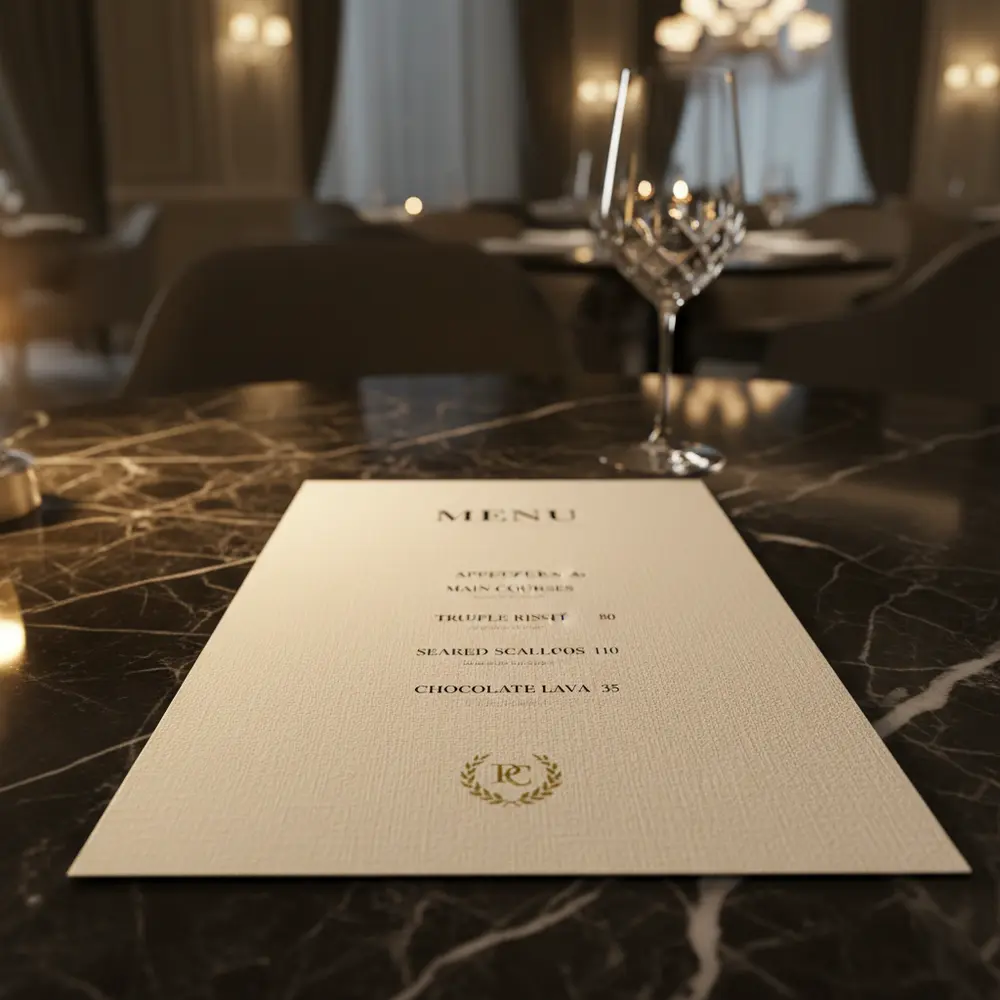
The minimalist single-panel layout is a favorite among modern fine-dining establishments in the UAE. This layout communicates a “less is more” philosophy. Often printed on heavy, textured cardstock, it presents a degustation or prix-fixe menu. By limiting the choices, the restaurant asserts its authority on what constitutes a perfect meal. This style is highly effective for venues that change their menu seasonally, allowing for frequent updates without losing the brand’s premium feel.
The Classic Bi-Fold and Tri-Fold Elegance
For more traditional luxury venues, particularly those in grand hotels within the Abu Dhabi market, the bi-fold or tri-fold layout offers a sense of ceremony. Opening a menu that feels like a heavy book adds a layer of anticipation to the dining experience. These layouts allow for a more expansive storytelling approach, often including a brief history of the restaurant or a note from the executive chef on the first page. This structural depth supports a wide variety of offerings while maintaining a structured, easy-to-navigate interface.
Visual Hierarchy and Typography in Elite Menu Design
Visual hierarchy is the arrangement of elements in a way that implies importance. In the context of the Best Restaurant Menu Design Layouts for High-End Dining, this means guiding the guest’s attention toward the most prestigious offerings. Large headings, increased tracking (space between letters), and strategic use of bolding are common tools. However, in high-end design, these tools must be used with extreme restraint. Over-bolding can make a menu look cluttered or “cheap.”
Color palettes in luxury menus often lean toward the classic: charcoal and gold, cream and forest green, or deep navy and silver. These combinations evoke a sense of timelessness and stability. For Sharjah brands looking to appeal to a sophisticated local and international demographic, the use of color should be used to highlight categories rather than individual prices. A subtle change in background color for the “Chef’s Specials” section can draw the eye without being loud or distracting. Using distinctive logo design principles ensures that the restaurant’s mark is integrated into the menu in a way that feels organic and prestigious.
Typography also must account for readability in low-light environments. Most high-end restaurants dim their lights in the evening to create a romantic or exclusive atmosphere. Therefore, the contrast between the text and the paper must be high enough to read comfortably without the guest needing to use their phone flashlight, which would break the immersion of the experience. This functional aspect of design is a core component of digital marketing in UAE, where user experience (UX) extends from the screen to the physical table.
The Role of Professional Imagery in High-End Menus
A common debate in the world of high-end dining is whether or not to include photographs of the food. In casual dining, photos are standard. In ultra-luxury settings, the trend has historically been to avoid photos entirely, relying instead on evocative descriptions to spark the guest’s imagination. However, this is changing. Modern high-end menus sometimes use artistic, high-fashion style photography that focuses on the texture and color of the ingredients rather than a literal “plate shot.”
If photography is used, it must be of the highest caliber. Low-quality images can instantly devalue a premium brand. For restaurants in Dubai and Abu Dhabi, investing in high-quality food photography is essential. These images aren’t just for the physical menu; they are also used across social media and the restaurant’s website to build desire. In a menu layout, a single, stunning image of a signature ingredient can serve as a visual anchor, drawing the guest into the page and setting the tone for the entire meal.
When images are omitted, the “weight” of the layout falls entirely on the typography and the quality of the paper. This is where the Best Restaurant Menu Design Layouts for High-End Dining truly shine—they use the absence of imagery to create a sense of mystery and sophistication. The guest is invited to trust the chef’s vision, making the eventual reveal of the dish even more impactful.
Integrating Branding with Physical Menu Materials
The physical feel of a menu is just as important as the layout on the page. For a menu to be considered “high-end,” it must be printed on premium materials. This includes high-GSM (grams per square meter) paper, linen-textured sheets, or even unconventional materials like leather, wood, or metal. The tactile experience of holding the menu reinforces the brand’s position in the luxury market. Many UAE companies now opt for sustainable yet luxurious materials to align with global trends toward eco-conscious fine dining.
Customization is key. Hand-stitched leather covers, embossed logos, and silk-lined interiors are the types of details that guests at top-tier Dubai establishments notice. These physical elements should be treated with the same care as a premium catalog design for a luxury jewelry or automotive brand. The goal is to make the guest feel as though they are holding something of significant value.
The Artsun advertising agency emphasizes that the menu’s physical form must match the restaurant’s interior design. If the restaurant features marble and brass accents, the menu should reflect those textures through gold leaf foiling or smooth, cool-toned paper. This cohesion ensures that the brand identity is consistent at every touchpoint. Furthermore, for those interested in exploring more about premier creative solutions, it becomes clear that the marriage of material and layout is what creates a truly memorable brand presence.
Digital Transformation: QR and Online Menus for High-End Venues
While the physical menu remains the gold standard for luxury dining, the digital age has introduced new requirements. Even the most exclusive venues in Sharjah brands and Dubai districts must have a digital version of their menu that is easily accessible and beautifully designed. This is not just about a PDF on a website; it is about a mobile-optimized experience that mirrors the elegance of the physical menu.
During and after the global pandemic, QR codes became a necessity. However, for high-end dining, a basic black-and-white QR code can feel out of place. Luxury venues are now integrating these codes into elegant holders or incorporating them subtly into the table setting. The digital layout must follow the same rules of the Best Restaurant Menu Design Layouts for High-End Dining: ample white space, sophisticated fonts, and high-quality imagery. A seamless digital experience is a vital part of the expert advertising services provided to modern hospitality brands, ensuring that the luxury journey starts the moment a guest looks up the restaurant on their smartphone.
Moreover, digital menus allow for storytelling that isn’t possible on paper. A guest can click on a wine pairing to see a short video about the vineyard or read about the specific farm where the organic vegetables were grown. This level of transparency and detail is increasingly valued by the modern, tech-savvy diner in the UAE.
Key Layout Considerations for Multi-Language Menus
In the UAE, menus must often cater to both Arabic and English speakers. This presents a unique layout challenge. Since Arabic is read from right to left and English from left to right, the layout must be mirrored or carefully stacked to ensure neither language feels like an afterthought. High-end designs often use a “side-by-side” approach with centered headings to maintain symmetry. This attention to detail is crucial for maintaining a premium feel for all guests, regardless of their native tongue.
Consistency Across the Beverage and Dessert Menus
The main menu often gets the most attention, but the beverage, wine, and dessert menus are equally important for driving revenue. These secondary menus should be distinct yet cohesive with the main layout. For example, the wine list might be even more minimalist to emphasize the rarity of the vintages, while the dessert menu might use slightly more whimsical typography to reflect the “sweet” conclusion of the meal. Consistency in paper quality and branding elements across all menus is non-negotiable for high-end establishments.
Frequently Asked Questions
What is the most popular layout for Michelin-starred restaurants?
Most Michelin-starred restaurants prefer a minimalist, single-panel layout or a simple bi-fold. This focuses the guest’s attention on a limited number of high-quality dishes, emphasizing the chef’s curation and reducing “choice fatigue.”
How important is paper weight in high-end menu design?
Extremely important. The weight and texture of the paper provide the first tactile impression of the brand. Heavy, textured paper (typically 300gsm or higher) suggests stability, luxury, and quality, which are essential for high-end dining.
Should prices be included in a high-end menu?
Yes, but they should be “nested” subtly. In luxury dining, prices are usually placed at the end of the dish description without currency symbols. This keeps the focus on the culinary experience rather than the financial transaction.
Can a digital menu ever feel “high-end”?
Yes, if designed correctly. A high-end digital menu should be mobile-optimized, load quickly, and feature the same sophisticated typography and high-quality imagery as the physical menu. It should feel like an extension of the restaurant’s luxury brand, not a functional afterthought.
How do you handle bilingual menus without cluttering the layout?
The best approach is to use a mirrored layout or a clear vertical stack where each language has its own dedicated space and font style. Using professional translators and designers who understand both scripts is essential for maintaining aesthetic balance.
Conclusion
Designing the Best Restaurant Menu Design Layouts for High-End Dining is a multifaceted challenge that requires a deep understanding of luxury branding and guest behavior. In the competitive UAE market, from the bustling streets of Dubai to the cultural hubs of Sharjah, your menu is a silent ambassador for your kitchen’s excellence. By focusing on minimalist aesthetics, strategic hierarchy, and premium materials, you can create a menu that not only informs but also inspires. Remember, a menu is the only piece of marketing that every single guest will interact with—make sure it tells a story of quality, exclusivity, and passion. If you are ready to elevate your restaurant’s presentation, consider partnering with experts who understand the intersection of art and commerce in the luxury hospitality sector. Let your menu be the first taste of the unforgettable experience you provide.

Leave a Reply
Want to join the discussion?Feel free to contribute!