Digital menu engineering for restaurants combines sales data and contribution margin analytics with mobile UX design to position high-profit items where smartphone users focus first. By replacing static PDFs with interactive bilingual vertical layouts and automated modifier prompts, operators in Muscat and Isfahan can boost total profitability by 10% to 15% without adding extra table capacity. Strategic item positioning, automated upselling, and instant price updates remove ordering friction while raising the average transaction value on every guest visit.
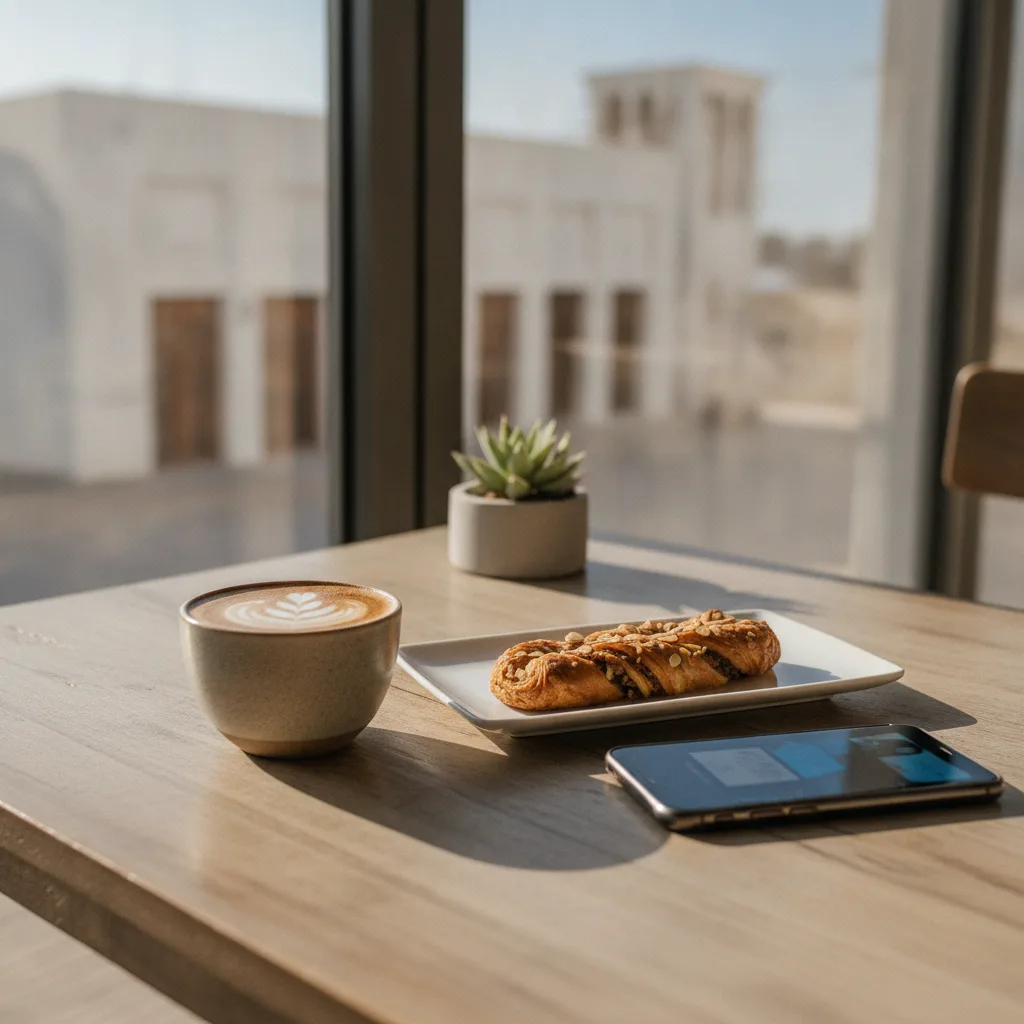
A customer sits at a sunlit table in Al Mouj in Muscat, or along the tree-lined avenues of Chaharbagh in Isfahan. They open their smartphone camera, scan the QR code sticker on the table, and wait. An unoptimized, heavy PDF file loads slowly over mobile data. The guest pinches the screen to zoom into microscopic text, panning back and forth across wide columns of beverages and breakfast platters. Frustrated by the awkward interface, they skip the house-specialty saffron cardamom latte and simply walk to the counter to order a basic black coffee. Every single day, hospitality venues across Oman and Iran lose high-margin sales to this exact point of friction.
Static PDF files kill digital menu conversion.

Why Static PDFs Fail: Mobile Digital Menu Engineering for Restaurants
For decades, graphic designers built menus based on how the human eye moves across a folded piece of paper. On traditional trifold print menus, eye-tracking studies showed that diners followed a reading pattern known as the Golden Triangle. Guests started looking in the middle of the physical page, jumped to the top right corner, and then swept across to the top left. Thousands of printed restaurant menus were designed around this print rule.
That layout logic breaks completely on a smartphone screen. Modern eye-tracking and screen-viewport research shows that mobile diners do not read in triangles. When viewing an interactive web menu on a phone, users scroll vertically down a single column. Visual focus concentrates heavily on the top 30% of the screen—a zone known as the Digital Header Zone. If your highest-margin items sit halfway down a multi-page PDF, the vast majority of your guests will scroll right past them without registering their presence.
Linking table QR codes to static PDF files creates severe operational friction compared to using a dynamic digital menu platform. Static PDFs force guests to pinch, zoom, and pan across rigid multi-column layouts. PDF files do not support interactive modifier prompts, eliminating opportunities to offer extra espresso shots, specialty milks, or side pastries during ordering. Furthermore, large uncompressed PDF files consume unnecessary mobile data and render slowly on weak cellular connections, driving impatient guests away before the menu fully loads.
Shifting to mobile menu visual hierarchy means abandoning the printed page layout entirely. Interactive digital menus allow venues to control the guest’s visual path, highlighting signature items dynamically as the user scrolls.
Classifying Your Menu with the Kasavana & Smith Matrix
Setting up an effective layout requires evaluating the exact profitability and popularity of every item on your menu. In 1982, researchers Michael Kasavana and Donald Smith at Michigan State University established the menu engineering framework. Their model categorizes items into four distinct quadrants based on two metrics: contribution margin and sales volume.
Many cafe managers make the mistake of engineering menus around food cost percentage alone. A dish with a 20% food cost percentage might seem superior to one with a 40% food cost percentage. However, if your 20% food cost item is a basic filter coffee selling for 1 OMR with a raw cost of 0.20 OMR, your contribution margin is 0.80 OMR. If your 40% food cost item is a specialty avocado tartine selling for 5 OMR with a raw cost of 2.00 OMR, your contribution margin is 3.00 OMR. You deposit cash into your bank account, not percentages. Calculating the exact contribution margin—Selling Price minus Raw Food Cost—is essential for accurate classification.
Once you calculate margins and track item sales over a 30-day period, map your offerings into the Kasavana & Smith matrix:
- Stars (High Margin, High Popularity): These are your flagship revenue drivers. In Muscat, this might be a signature pistachio Spanish latte; in Isfahan, a house-specialty saffron ice cream waffle. Keep these items front and center in your Digital Header Zone. Protect their quality fiercely and never change their core recipe without testing.
- Plowhorses (Low Margin, High Popularity): Items that guests order constantly but yield low gross profit, such as basic Americanos, plain croissants, or traditional black tea. Apply strategic micro-pricing adjustments by increasing the price by small increments that guests rarely resist, or bundle them with high-margin side items into premium combo deals.
- Puzzles (High Margin, Low Popularity): High-profit dishes that simply do not sell in high volume, often because they are hidden deep in the menu or carry unfamiliar names. Rename the item with descriptive sensory language, add high-quality photography, and move it into a prominent slot within the top 30% viewport.
- Dogs (Low Margin, Low Popularity): Dishes that consume kitchen prep time and inventory holding costs without generating profit or volume. Remove them from your menu entirely. Eliminating low-performing items reduces decision fatigue for the guest and speeds up kitchen operations.
Designing the Vertical-Scroll Bilingual Matrix for Muscat and Isfahan
Designing a digital menu for Middle Eastern markets introduces visual challenges that global software templates fail to address. In Oman and Iran, menus must serve both native Arabic or Persian speakers and international English-speaking guests. Misaligned dual-language text ruins visual hierarchy and creates a cluttered screen interface.
When applying digital menu engineering for restaurants in regional venues, your layout must balance Right-to-Left (RTL) and Left-to-Right (LTR) reading patterns. Placing Arabic or Persian text on the right and English on the left of the same text container often leads to awkward line breaks when viewed on narrow screens. A cleaner approach stacks the primary local language on top with larger font weight, placing the secondary English text immediately below in a lighter, muted tone. This maintains vertical flow while ensuring both audiences scan the menu effortlessly.
Visual assets play a decisive role in driving orders of high-margin items. Adding professional food photography and clear dietary callouts—such as vegan, gluten-free, or chef’s choice badges—significantly increases orders of signature dishes compared to plain text listings. A guest in Qurum or Muttrah might hesitate to spend 4.50 OMR on a signature breakfast skillet based on text alone, but a clear, high-resolution photo demonstrating portion size and presentation validates the price point instantly.
Position your top Stars and newly optimized Puzzles inside the top 30% of your mobile viewport. When a customer opens the menu on their device, the first three items visible without scrolling should always be high-margin signature offerings.
Automated Upselling Triggers: How Digital Menu Engineering for Restaurants Boosts Check Size
Relying solely on floor staff to suggest extra toppings or side pastries often leads to inconsistent results during high-volume coffee rushes. Busy baristas and servers in cafes across Muscat frequently skip verbal add-on pitches, which is why top food and beverage marketers in Muscat recommend automated upsells. Interactive digital menus eliminate this operational variable by embedding automated upselling techniques directly into the guest ordering experience.
Strategic coffee shop upselling through size upgrades, specialty milks, and side pastry prompts can increase average transaction value from $5–$7 to $9–$10 per guest. When an interactive menu platform presents a contextual pop-up prompt at the precise moment of item selection, conversion rates rise without feeling pushy to the guest.
Triggering targeted modifier screens upon item selection allows you to capture extra revenue effortlessly. Tapping a core beverage like an iced cappuccino should open a clean modal offering size upgrades, extra espresso shots, or specialty milks like oat, almond, or coconut. Similarly, selecting a hot flat white can prompt a contextual cross-sell suggesting a warm almond croissant or a slice of saffron cake.
Keep modifier choices focused to avoid decision paralysis. Restricting options to a maximum of four targeted add-ons per item prevents overwhelming the user. Displaying milk swaps and syrup choices with visual thumbnail buttons rather than dropdown text lists further drives conversion on mobile touchscreens.
Costs, Local Integrations, and Real-Time Price Adjustments
Executing digital menu engineering for restaurants requires selecting software that integrates with local payment systems and handles micro-pricing adjustments smoothly.
In Muscat, digital QR menu software and POS integration solutions typically cost between 19 OMR and 75 OMR per month, or 119 OMR to 179 OMR annually, subject to the local 5% Value Added Tax (VAT). System setup and table QR placement generally take between 1 and 2 weeks. Oman platforms must support transparent 5% VAT calculations at checkout and integrate with local payment gateways including OmanNet, Apple Pay, and standard credit cards for contactless table ordering.
In Isfahan, digital menu SaaS subscriptions range from 5,000,000 IRR to 25,000,000 IRR per year (~$10–$50 USD), with setup completed within 3 to 7 days. In heritage districts like Jolfa, rapid ingredient cost shifts make paper menu reprinting financially wasteful. Digital menu infrastructure allows venue managers to execute micro-price adjustments in Rials instantly across the system without throwing away physical printed stock. Furthermore, platforms operating in Iran must integrate smoothly with local point-of-sale software like Mahak, Sepidar, and Holo, while maintaining sync with delivery platforms such as SnappFood.
When an in-house menu update is insufficient and a complete overhaul of recipe costing, layout structure, and food photography is required, partnering with a full-service agency becomes necessary. Comprehensive menu engineering and visual redesign services from Art Sun Studio range from 300 OMR to 1,200 OMR in Oman, or the local equivalent in Iran, taking 2 to 4 weeks from audit to deployment. Founded in 2003 by creative director Ehsan Rezapour, Art Sun Studio is a full-service creative studio in Muscat with active offices in Dubai and Isfahan. Our six specialized in-house teams handle recipe costing analysis, professional food photography, graphic design, and mobile UX deployment under one roof through a structured 6-step project process: Brief, Proposal, Concept, Production, Review, and Delivery. Working with Art Sun Studio ensures your visual layout directly supports your kitchen’s highest-margin items while matching regional diner habits.
Frequently Asked Questions About Digital Menu Engineering for Restaurants
Will digital QR menus frustrate older guests or non-tech-savvy diners?
Modern interactive digital menus operate directly inside mobile web browsers without requiring guests to download an application. The user simply points their camera at the table QR code and the menu loads instantly. For guests who prefer paper, keeping a small count of beautifully formatted physical menus on hand ensures every diner feels comfortable, while the vast majority of smartphone-literate guests enjoy the speed of quick QR ordering.
How often should a restaurant review and re-engineer its digital menu matrix?
You should review your sales volume and contribution margin matrix quarterly. In addition, whenever local supplier costs for key ingredients like coffee beans, dairy, or imported meats shift significantly, re-run your margin calculations immediately to adjust pricing or re-position affected items on the screen.
Can digital menu systems sync with existing local POS software in Oman and Iran?
Yes. Contemporary QR ordering software connects directly via API or local integration plugins with popular regional point-of-sale platforms, including Mahak, Sepidar, and Holo in Iran, as well as cloud POS solutions used throughout Muscat. This sync ensures that when an item sells out in your kitchen, it automatically turns off on your digital menu in real time.
Executing Your Menu Engineering Audit
Applying digital menu engineering for restaurants is an ongoing operational discipline rather than a one-time setup. By pairing precise recipe costing with mobile UX visual hierarchy, restaurant and cafe operators in Muscat and Isfahan can convert passive menu browsing into active, high-margin sales. Moving away from sluggish static PDFs allows you to capitalize on mobile scrolling habits, present clear bilingual visual hierarchy, and automate add-on prompts on every transaction.
Review your POS sales reports from the past month, calculate the actual contribution margins of your top twenty selling items, and map them into the Kasavana & Smith matrix. Once your Stars and Puzzles are identified, partner with Art Sun Studio for professional restaurant menu design, photographing your signature offerings and deploying a system that increases average check size.