
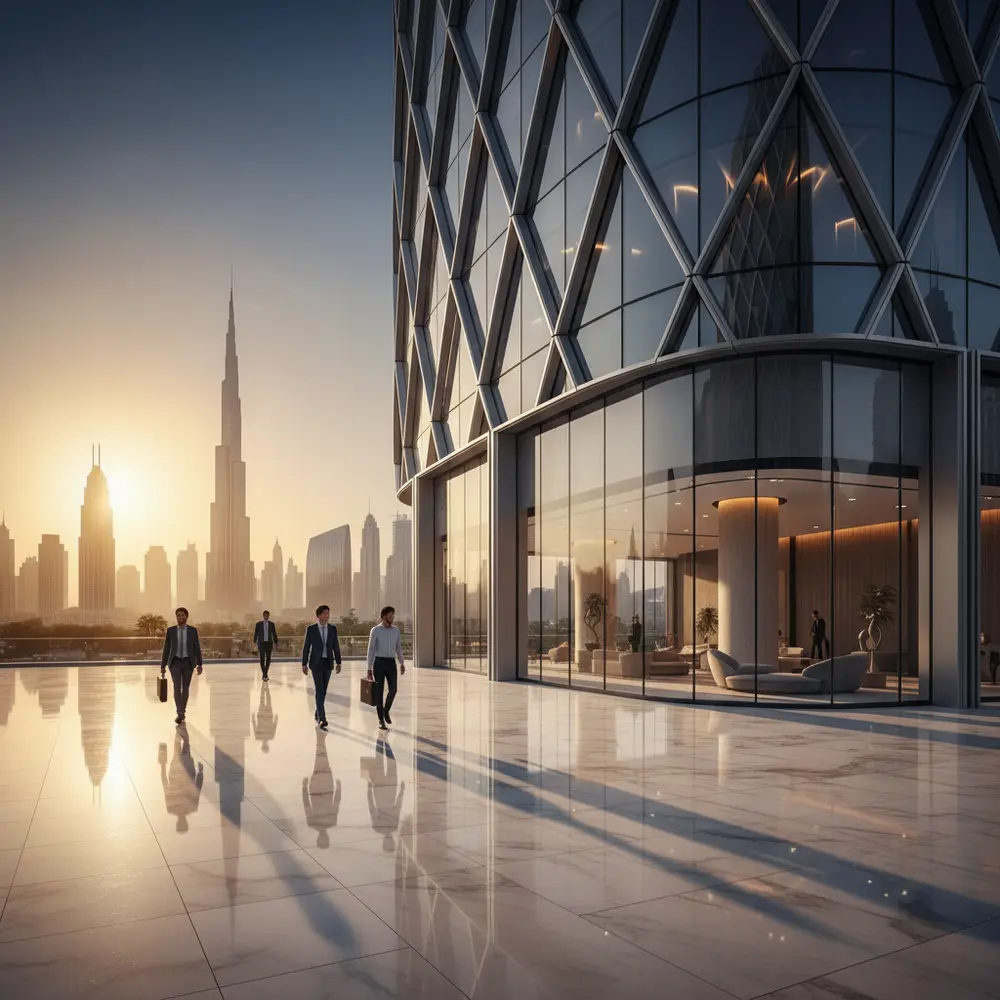
High-Impact 3D Renderings for UAE Commercial Projects.
High-Impact 3D Renderings for UAE Commercial Projects
The skyline of the United Arab Emirates stands as a testament to human ambition, architectural ingenuity, and the power of visual storytelling. From the shimmering glass towers of Downtown Dubai to the cultural landmarks of Abu Dhabi, the competition to secure investment and attract tenants in the commercial sector is fiercer than ever. In this high-stakes environment, High-Impact 3D Renderings for UAE Commercial Projects have transitioned from being a luxury to an absolute necessity. These digital visualizations serve as the bridge between a conceptual blueprint and the physical reality, allowing stakeholders to experience a space long before the first stone is laid. For developers, architects, and marketers, the ability to present a project with photorealistic precision is the key to unlocking global capital and local interest.
As the UAE continues its trajectory toward becoming a global hub for business and tourism, the demand for sophisticated visual assets has skyrocketed. Investors are no longer satisfied with simple floor plans or 2D elevations. They require an immersive experience that conveys the atmosphere, the scale, and the luxury of a commercial development. High-Impact 3D Renderings for UAE Commercial Projects provide exactly this, offering a level of detail that includes realistic lighting, accurate material textures, and contextually relevant surroundings. Whether it is a luxury office park in Sharjah or a retail destination in the heart of Dubai, high-quality rendering ensures that the vision is communicated clearly and persuasively.
The Evolution of Commercial Presentation in the UAE Market
Historically, commercial projects in the region relied on physical models and artistic sketches. While these methods had their charm, they lacked the flexibility and the “wow factor” required in the modern digital age. Today, Dubai businesses are at the forefront of digital transformation, adopting advanced CGI technologies to stay ahead of the curve. The shift toward high-impact rendering has been driven by the need for speed and accuracy. In a market where multi-billion dollar decisions are made daily, having a precise visual representation of a commercial lobby, a shopping mall, or a skyscraper can significantly reduce the time spent in the approval phase. UAE companies now leverage these visuals not just for internal review, but as the core of their entire marketing funnel.
Moreover, the integration of 3D technology has allowed for better collaboration between international design firms and local developers. With high-impact 3D renderings for UAE commercial projects, every detail—from the way the sunlight hits the marble floor at noon to the reflection of the city lights on the facade at night—can be simulated. This level of realism helps in managing expectations and ensuring that the final build matches the initial promise. In the Abu Dhabi market, where cultural heritage and modern luxury often intersect, 3D rendering allows architects to demonstrate how new structures will harmonize with existing landmarks, fostering a sense of community and continuity.
Strategic Benefits for Real Estate Developers and Investors
One of the primary advantages of utilizing High-Impact 3D Renderings for UAE Commercial Projects is the significant boost in pre-sales and leasing activity. In the competitive real estate landscape of the Emirates, selling a vision is the first step toward project success. When a developer can showcase a photorealistic view of a future corporate headquarters, complete with sustainable green spaces and state-of-the-art amenities, it builds an emotional connection with potential buyers. This is particularly crucial for Sharjah brands looking to expand their footprint, as high-quality visuals signal professionalism and reliability.
In addition to sales, these renderings play a vital role in the regulatory landscape. Navigating the approvals process with municipalities and urban planning departments requires clarity. Detailed visualizations help government officials understand the impact of a project on the surrounding infrastructure and skyline. By presenting professional 3D architectural rendering, developers can address potential concerns before they become costly delays. This proactive approach is a hallmark of the most successful projects in the UAE, ensuring that timelines are met and budgets are respected. Furthermore, these assets can be repurposed across various platforms, from massive billboards on Sheikh Zayed Road to immersive virtual reality tours at international property expos.
The Role of Artsun Advertising Agency in Visual Excellence
In the realm of high-end visualization, the expertise of a specialized partner is invaluable. Artsun advertising agency has established itself as a leader in delivering premium visual content for the commercial sector. By combining technical proficiency with a deep understanding of the local market, they help developers transform abstract ideas into compelling narratives. Their approach goes beyond just creating a picture; it involves crafting an atmosphere that resonates with the target audience. In the context of digital marketing in UAE, such high-quality assets are the foundation of successful lead generation campaigns and brand positioning strategies.
Integrating 3D Visualization into UAE Digital Marketing Strategies
Digital marketing in UAE has evolved into a multi-channel powerhouse where visual content reigns supreme. For a commercial project to stand out, it must have a strong presence on social media, search engines, and professional networks like LinkedIn. High-Impact 3D Renderings for UAE Commercial Projects provide the high-octane fuel for these marketing engines. A single high-resolution render can be adapted into various formats, ensuring a consistent and premium brand image across all touchpoints. When potential investors search for new opportunities in Dubai or Abu Dhabi, the quality of the imagery they encounter often determines their level of interest.
Furthermore, the use of dynamic 3D architectural animation takes the marketing strategy to the next level. Instead of a static image, stakeholders are taken on a cinematic journey through the property. They can see the movement of elevators, the flow of people in a retail space, and the transition from day to night. This level of immersion is incredibly effective in closing deals, as it removes the guesswork for the client. By working with a creative design firm in Dubai, developers can ensure that their marketing materials are not only beautiful but also strategically aligned with their business goals. This holistic approach ensures that every pixel serves a purpose, whether it is to showcase luxury, efficiency, or innovation.
Maximizing Engagement with Commercial Motion Graphics
Beyond traditional rendering, the use of compelling commercial animations allows for a more focused delivery of specific selling points. For instance, an animation can highlight the structural integrity of a building, its energy-efficient features, or its proximity to key transport hubs. For Sharjah brands and UAE companies, these tools are essential for cutting through the noise in a saturated market. They provide a concise yet powerful way to communicate value propositions to a busy audience. Artsun advertising agency specializes in these types of high-impact visual communications, ensuring that commercial projects receive the attention they deserve from the right demographics.
The Technical Pillars of High-Impact Rendering
To achieve the level of photorealism required for High-Impact 3D Renderings for UAE Commercial Projects, several technical elements must converge. The first is lighting. In the UAE, where the sun is a dominant force, accurately simulating how light interacts with different surfaces is critical. This includes the harsh midday glare, the soft hues of a desert sunset, and the intricate artificial lighting of an interior office space. Advanced global illumination algorithms allow artists to recreate these conditions with stunning accuracy, adding a layer of depth and realism that is palpable.
The second pillar is material accuracy. Commercial projects often use high-end materials such as Italian marble, brushed steel, and specialized glass. Each of these has unique reflective and refractive properties. High-impact rendering requires the use of physically based rendering (PBR) materials to ensure that these surfaces look identical to their real-world counterparts. Finally, the environment plays a huge role. Placing a commercial building within an accurate 3D model of the Dubai Marina or the Abu Dhabi Corniche provides necessary context. It shows the project not in isolation, but as a living part of the city. To capture these environments with even more precision, developers often integrate professional video production services into their workflow, blending real-world footage with CGI for a seamless hybrid experience.
Advancements in Real-Time Rendering for Commercial Use
The future of 3D visualization lies in real-time rendering. This technology allows users to interact with the 3D environment, changing materials, lighting, or furniture layouts on the fly. For a commercial tenant looking to lease several floors of an office building, the ability to “walk” through the space virtually and customize the layout is a powerful sales tool. This level of interactivity is becoming increasingly common in the Dubai real estate market, where “smart” sales centers use touchscreens and VR headsets to showcase projects that are still under construction. This innovation ensures that High-Impact 3D Renderings for UAE Commercial Projects remain at the cutting edge of global design trends.
Enhancing the Investor Pitch in Abu Dhabi and Dubai
When presenting to a board of directors or a group of private equity investors, the clarity of the presentation can make or break the deal. In the Abu Dhabi market, where large-scale infrastructure projects are common, high-impact renderings are used to demonstrate the long-term viability and aesthetic appeal of a development. These visuals help in quantifying the ROI by showing how the space will be utilized effectively. For example, a rendering can show the potential for high-density retail or the premium nature of a penthouse office suite, directly linking the design to the revenue model.
Dubai businesses also use these renderings to secure international partnerships. When a local developer wants to attract a global hotel brand or a multinational corporation as a primary tenant, the presentation must be of an international standard. High-Impact 3D Renderings for UAE Commercial Projects provide that “gold standard” of presentation. They show that the developer is committed to quality and has a clear vision for the project. By partnering with an expert marketing agency, developers can ensure that their pitch decks are supported by the best visual assets available in the industry today. This synergy between design and strategy is what defines the most successful commercial ventures in the region.
Frequently Asked Questions
Why are 3D renderings important for commercial projects in the UAE?
3D renderings are essential because they provide a realistic preview of a project, helping to secure investor funding, obtain government approvals, and drive pre-leasing or pre-sales activity. In the UAE’s competitive market, they are a vital tool for standing out and communicating luxury and scale.
How long does it take to create high-impact 3D renderings?
The timeline varies depending on the complexity of the project, the number of views required, and the level of detail. Generally, a high-quality commercial rendering can take anywhere from a few days to several weeks. Working with an experienced agency ensures that the process is efficient and meets international standards.
Can 3D renderings be used for digital marketing in the UAE?
Absolutely. High-impact renderings are the cornerstone of digital marketing for real estate. They are used on websites, social media platforms, search engine advertisements, and in digital brochures to engage potential clients and generate high-quality leads for UAE companies.
What is the difference between a standard render and a high-impact render?
A standard render provides a basic idea of the design, while a high-impact render focuses on photorealism, emotional storytelling, and technical precision. High-impact renders use advanced lighting, high-resolution textures, and realistic environmental context to create a truly immersive and persuasive visual experience.
Conclusion: Setting a New Standard for Commercial Excellence
The role of High-Impact 3D Renderings for UAE Commercial Projects will only continue to grow as the region’s architectural ambitions reach new heights. For developers and stakeholders in Dubai, Abu Dhabi, and Sharjah, these visual tools are no longer optional—they are the language of modern commerce. By investing in top-tier visualization, UAE companies can ensure their projects are understood, appreciated, and ultimately successful. The ability to see the future today is a powerful advantage that drives growth and innovation across the entire Emirates.
Whether you are launching a new retail complex, a corporate tower, or a mixed-use development, the quality of your visual presentation will define your brand’s perception in the market. To stay competitive, it is crucial to partner with experts who understand both the art of rendering and the nuances of the local business environment. Take the next step in your project’s journey and elevate your vision with world-class 3D assets that command attention and deliver results. Contact Artsun today to transform your architectural concepts into breathtaking realities that resonate across the UAE and beyond.

