
How to Create the Best Restaurant Menu Design for Delivery Apps
How to Create the Best Restaurant Menu Design for Delivery Apps
In the rapidly evolving landscape of the food and beverage industry, delivery apps have transitioned from a luxury to a necessity. For Dubai businesses and entrepreneurs across the UAE, the digital storefront is now just as important as the physical dining room. When a customer opens an app like Talabat, Deliveroo, or Noon Food, your menu is the only tool you have to capture their attention, entice their appetite, and secure a sale. Creating the best restaurant menu design for delivery apps requires a strategic blend of psychology, visual artistry, and data-driven marketing. In a market as competitive as the United Arab Emirates, where options are virtually limitless, your digital presentation must be flawless to convert browsing users into loyal customers.
The shift toward digital-first dining has fundamentally changed how consumers interact with menus. Unlike a physical menu where a guest might linger over a beautifully printed card, app users scan quickly. They are often hungry, potentially impatient, and looking for specific cues that signal quality and value. To succeed, UAE companies must optimize every element of their digital presence. This involves more than just listing dishes; it requires a comprehensive approach to bespoke restaurant menu design that prioritizes user experience and mobile responsiveness. By understanding the nuances of the Abu Dhabi market and the preferences of Sharjah brands, restaurant owners can tailor their offerings to meet local demands while maintaining a global standard of excellence.
Understanding the Psychology of the Digital Diner
Designing for an app is vastly different from designing for a tabletop. On a mobile screen, space is premium, and attention spans are short. The digital diner follows a specific scanning pattern, often looking at the top-rated items or the “hero” images first. This behavior is heavily influenced by “decision fatigue.” When presented with too many options without clear categorization, users are likely to close the app and choose a competitor. Therefore, the structure of your menu must guide the customer through a logical journey, starting from appetizers and moving toward signature mains and high-margin add-ons.
In the context of digital marketing in UAE, personalization and local relevance play a huge role. For instance, a menu in Dubai might need to highlight vegan or organic options more prominently, whereas a menu in a different demographic might focus on family-sized platters. Artsun advertising agency understands that the goal of a digital menu is to reduce the friction between “hunger” and “checkout.” This is achieved by using clear typography, concise descriptions, and an intuitive hierarchy that highlights your most profitable items without overwhelming the user. By focusing on the customer’s mental model, you can create a layout that feels natural and encourages higher order values.
The Impact of Professional Photography on Conversion Rates
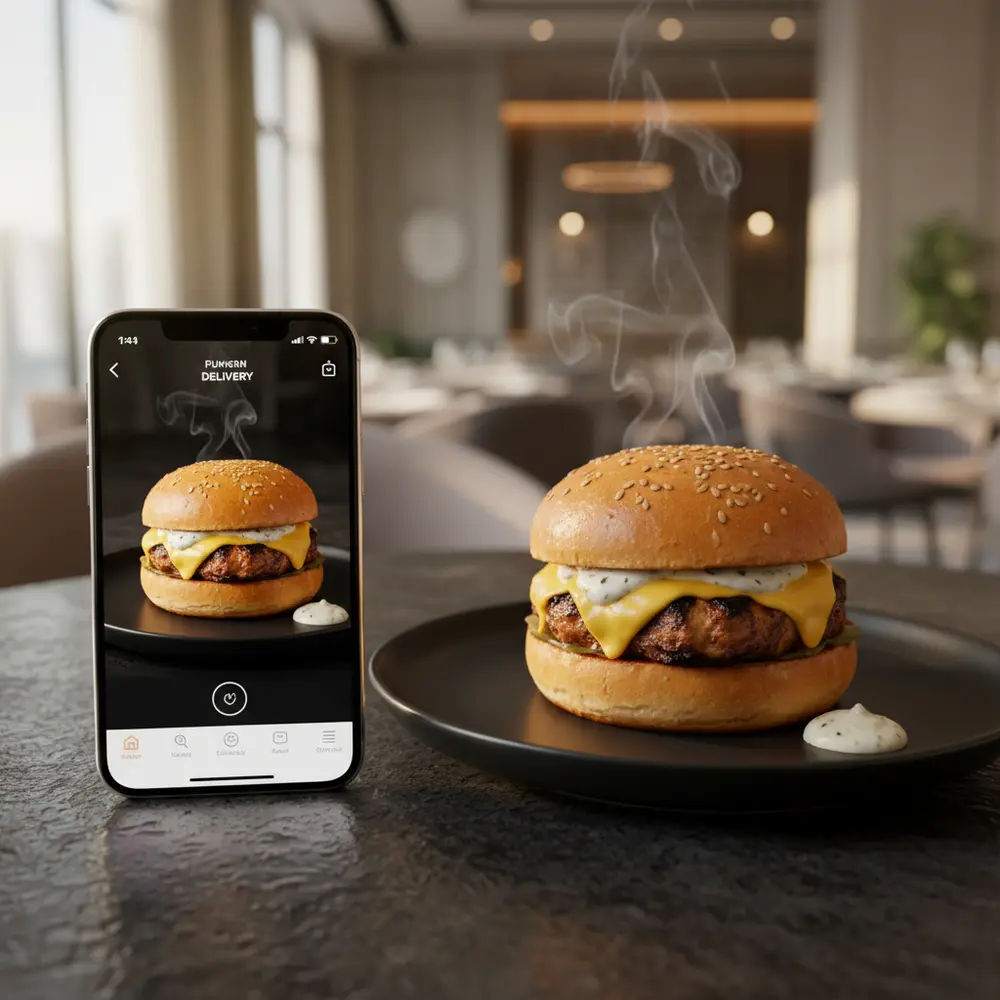
In the world of delivery apps, people eat with their eyes first. A menu without photos, or with poor-quality images, is a recipe for low conversion. High-resolution, professional imagery acts as a silent salesperson, conveying the texture, freshness, and portion size of a dish. For many successful Dubai businesses, investing in professional food photography is the single most effective way to increase click-through rates on delivery platforms. When a user sees a vibrant, well-lit image of a signature dish, it triggers a sensory response that text alone cannot replicate.
When capturing images for delivery apps, consistency is key. All photos should have a similar aesthetic—lighting, background, and styling—to create a cohesive brand image. This consistency builds trust with the consumer, signaling that the restaurant is professional and pays attention to detail. In the Abu Dhabi market, where luxury and quality are highly valued, subpar visuals can actively damage a brand’s reputation. It is not just about the food itself; it is about the environment you create around it. Artsun advertising agency emphasizes the importance of “app-ready” photos, which are optimized for small screens, ensuring that the food remains the focal point even when viewed on a five-inch display.
Optimizing Image Specs for App Performance
Beyond the artistic quality, there are technical considerations for your visuals. Each delivery platform has specific aspect ratios and file size requirements. Ignoring these can lead to cropped images or slow loading times, both of which frustrate users. High-quality visuals should be optimized to load instantly. Furthermore, using “hero” images for your top-selling categories can help anchor the user’s attention. For example, a Sharjah brand specializing in desserts should have an irresistible, high-definition shot of its flagship cake right at the top of the menu to entice immediate interest.
Crafting Compelling Descriptions That Sell
While photos grab attention, descriptions close the deal. A great menu description does more than just list ingredients; it tells a story and evokes emotion. Instead of “Chicken Burger,” consider “Flame-grilled corn-fed chicken breast, topped with artisanal melted cheddar and our secret house-made truffle aioli on a toasted brioche bun.” The latter uses sensory language that helps the customer imagine the taste and texture. In the diverse UAE market, it is also crucial to provide clarity on dietary requirements, such as Gluten-Free, Vegan, or Halal, to cater to the multicultural population.
Effective descriptions also play a role in SEO within the app. Using keywords that customers are likely to search for—such as “healthy,” “spicy,” or “traditional”—can improve your visibility in search results. UAE companies should also consider the “paradox of choice.” While you want to be descriptive, you must also be brief. Bullet points or short sentences work best for mobile users who are scanning while on the move. Your descriptions should answer the customer’s unspoken questions: What is it? What does it taste like? Is it enough for one person? By addressing these points, you remove the barriers to purchase.
Strategic Menu Engineering and Pricing
Menu engineering is the practice of evaluating your menu items’ profitability and popularity to determine how they should be placed. On a delivery app, you have limited “above the fold” space. This space should be reserved for your “Stars”—items that are both high in profit and high in popularity. By placing these items at the very top under a “Chef’s Specials” or “Most Popular” category, you ensure that the first thing a customer sees is your best offering. This is a common strategy used by top-tier creative marketing agency specialists to drive revenue.
Pricing strategy is equally vital. In the competitive Dubai market, customers are sensitive to both price and value. However, delivery apps often involve commissions and delivery fees, which can squeeze margins. Restaurants must find a balance where prices are competitive yet sustainable. Psychological pricing, such as ending prices in .95 or .00, can also influence perception. Additionally, offering “bundles” or “meal deals” is a highly effective way to increase the average order value. For Sharjah brands looking to grow, creating family bundles or “lunch specials” can attract a different segment of the market that prioritizes value for money.
The Role of Modifiers and Add-ons
One of the biggest advantages of delivery app menus is the ability to use modifiers. These are the “add-ons” like extra cheese, a side of fries, or a drink. From a design perspective, these should be easy to navigate. A well-designed modifier flow can significantly boost profit margins. If a customer is buying a pizza, the app should naturally prompt them to add a dipping sauce or a beverage. This “upselling” should feel helpful, not intrusive. When done correctly, it enhances the customer’s meal while increasing the restaurant’s bottom line.
Brand Identity and Consistency
Your delivery app menu is an extension of your physical brand. It should look, feel, and sound like your restaurant. This is where logo design services and overall branding come into play. If your restaurant is a high-end steakhouse, your digital menu should reflect that through sophisticated language and minimalist design. If you are a trendy cafe, your tone might be more casual and energetic. The brand identity must remain consistent across all platforms to build recognition and loyalty.
Many UAE companies make the mistake of using a generic template provided by the delivery app. To stand out, you need to infuse your brand’s personality into the digital space. This includes the use of custom colors (where the app allows), a unique voice in descriptions, and a recognizable logo. Consistency across your social media, website, and delivery profile ensures that when a customer sees your brand on Deliveroo, they immediately associate it with the positive experience they had elsewhere. Artsun advertising agency specializes in creating these cohesive brand narratives that resonate with local audiences in Sharjah, Abu Dhabi, and beyond.
Leveraging Digital Marketing in the UAE
Having a great menu is only half the battle; you also need to drive traffic to it. Digital marketing in UAE is highly sophisticated, with a heavy emphasis on social media and search engine visibility. For restaurants, this means using platforms like Instagram and TikTok to showcase menu items and then linking directly to the delivery app. Influencer partnerships in the Abu Dhabi market can also be a powerful way to generate buzz. When a popular local influencer shares a video of your signature dish, having a perfectly designed menu ready to receive those customers is crucial for conversion.
Furthermore, your online presence should be supported by a strong technical foundation. This includes having a website that is optimized for local search. Investing in high-performance web design ensures that if a customer searches for your restaurant on Google, they find a professional site that directs them to your delivery options. Local SEO techniques, such as optimizing your Google Business Profile, can also help Dubai businesses capture “near me” searches, which are a major source of delivery orders. The integration of your offline and online marketing efforts creates a seamless ecosystem that supports long-term growth.
Adapting to the UAE Local Market Trends
The UAE market is unique due to its diverse population and high standards for service. Trends can shift quickly, and the best restaurant menu designs are those that are agile. For example, there has been a significant rise in demand for “Cloud Kitchens” in Sharjah and Dubai. These businesses exist solely for delivery, meaning their menu design is their entire brand. For these entities, every pixel of the menu must be optimized for performance. Staying ahead of trends—such as the rise of plant-based diets or the demand for sustainable packaging—can give your brand a competitive edge.
Customer feedback is another invaluable tool for menu optimization. Delivery apps provide a wealth of data, from which items are most frequently viewed to which ones have the highest abandonment rate. By analyzing this data, UAE companies can continuously refine their menu. If a certain dish is getting clicks but no orders, perhaps the price is too high or the photo isn’t appetizing enough. Conversely, if an item is frequently ordered but receives poor reviews, the recipe or packaging may need adjustment. This iterative process of refinement is what separates the top-performing restaurants from the rest. Artsun Studio provides the strategic oversight needed to interpret this data and turn it into actionable design changes.
The Importance of Speed and Reliability
In the digital world, speed is everything. This applies not only to delivery times but also to how quickly a customer can navigate your menu. Avoid over-complicating the categories. A user should be able to find what they want within three taps. If your menu is too long or disorganized, the user will likely bounce. Reliability also matters; ensure that your menu is always up to date. There is nothing more frustrating for a customer than ordering a dish only to be told it is out of stock. Real-time menu management is a critical component of a successful delivery strategy.
Frequently Asked Questions
1. How many items should I include on my delivery app menu?
While it is tempting to offer your full dine-in menu, it is often better to curate a “best of” selection for delivery. Aim for a balanced menu that covers all categories (appetizers, mains, desserts, drinks) without overwhelming the user. Typically, 15–25 items are sufficient for most concepts to maintain quality and operational efficiency.
2. Do I really need professional photos for every item?
Ideally, yes. Research shows that menu items with photos can see up to a 70% increase in orders compared to those without. If you cannot photograph every item, prioritize your high-margin “Star” items and category headers. However, for the best results in the competitive UAE market, a full professional shoot is recommended.
3. How often should I update my digital menu?
You should review your menu performance at least once a quarter. Update it to reflect seasonal availability, remove underperforming items, and adjust pricing based on ingredient costs. Regular updates also keep your brand appearing fresh and active to both the app’s algorithm and its users.
4. Should I use different descriptions for delivery apps than my physical menu?
Yes. Digital descriptions should be more concise and “scan-friendly.” While your physical menu can afford to be more poetic, your digital menu should focus on clarity, key ingredients, and enticing adjectives that work well on mobile screens.
5. Is it worth paying for “Featured” placement on delivery apps?
Paid placement can be very effective for new restaurants or during special promotions. However, it only works if your menu is already optimized. If you pay to drive traffic to a poorly designed menu with no photos, you will likely see a low return on investment. Always optimize your design first.
Conclusion
Creating the best restaurant menu design for delivery apps is an ongoing process of refinement, creativity, and strategic thinking. For Dubai businesses and UAE companies, the stakes are high, but the rewards for a well-executed digital presence are substantial. By focusing on professional photography, strategic menu engineering, and clear, compelling descriptions, you can turn your delivery profile into a high-converting sales engine. Whether you are a Sharjah brand looking to expand or an established Abu Dhabi market leader, the principles of digital menu design remain the same: prioritize the user, stay true to your brand, and never stop optimizing based on data.
If you are ready to take your restaurant’s digital presence to the next level, Artsun advertising agency is here to help. From stunning visual content to strategic branding and digital marketing, we provide the expertise needed to thrive in the competitive UAE food scene. Let us help you design a menu that doesn’t just list food, but creates an experience that keeps customers coming back for more. Contact us today to start your journey toward digital excellence.


Leave a Reply
Want to join the discussion?Feel free to contribute!