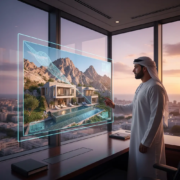
5 Reasons Your Oman Business Needs CGI Videos
5 Reasons Your Oman Business Needs CGI Videos
The Sultanate of Oman is currently undergoing a significant digital transformation as part of its Vision 2040 initiative. As a result, the competitive landscape for Muscat businesses has shifted from traditional print and radio to immersive, high-tech digital content. In an era where attention spans are shorter than ever, “5 Reasons Your Oman Business Needs CGI Videos” has become a central topic of discussion for marketing executives across the GCC. Whether you are operating in the heart of Muscat or expanding your reach into the Dubai market, Computer-Generated Imagery (CGI) offers a level of creative freedom that traditional filming simply cannot match. From hyper-realistic product demos to architectural walkthroughs that haven’t been built yet, CGI is the bridge between imagination and consumer reality.
In regions like Muscat and Dubai, where luxury and innovation are highly valued, the visual standard for advertising is exceptionally high. Oman companies are increasingly realizing that to stand out in the crowded Muscat market, they must adopt tools that offer both prestige and precision. CGI is not just a trend; it is a fundamental shift in how brands communicate their value proposition. By utilizing advanced 3D modeling and animation, businesses can present their products in the most flattering light possible, controlled down to the last photon. This level of control is essential for digital marketing in Oman, where brand reputation is built on trust and the perceived quality of service.
1. Overcoming Geographical and Physical Limitations
One of the primary 5 Reasons Your Oman Business Needs CGI Videos is the ability to transcend physical constraints. In traditional video production, you are often limited by weather conditions, location availability, and the logistics of transporting equipment. For Muscat brands, this might mean waiting for the perfect light in the Al Hajar Mountains or dealing with the intense summer heat that can damage sensitive camera gear. With CGI, these obstacles disappear. You can create a pristine, controlled environment within a digital workspace, allowing for year-round production regardless of the climate in Muscat or Dubai.
Furthermore, CGI allows you to showcase things that are physically impossible to film. For example, if you are an oil and gas firm in Oman, you might want to show the internal workings of a deep-sea drill or the molecular structure of a new lubricant. Traditional cameras cannot go inside heavy machinery or capture microscopic details with cinematic flair. By investing in CGI and VFX video production, your business can visualize the invisible, providing customers with a deeper understanding of your technical expertise. This is particularly effective for Muscat businesses in the industrial and manufacturing sectors that need to explain complex processes to stakeholders or potential investors.
Unlocking the Power of Unreal Environments
CGI allows for the creation of “impossible” scenarios that captivate the viewer’s imagination. Imagine a luxury car driving through a futuristic version of Muscat, or a real estate project in Dubai that is presented in a fantasy setting. These visuals are highly shareable on social media platforms, which is a cornerstone of modern digital marketing in Oman. When you remove the boundaries of the physical world, your brand becomes synonymous with innovation and forward-thinking, which are highly desirable traits in the Omani corporate culture.
2. Cost-Effectiveness and Long-Term Asset Value
Many people mistakenly believe that CGI is only for big-budget Hollywood movies. However, for many Oman companies, it is actually more cost-effective than traditional videography in the long run. When you commission a live-action shoot, you pay for crew, talent, location permits, catering, and equipment rental. If you need to change a single detail in the product six months later, you have to re-shoot the entire sequence. This is where the 5 Reasons Your Oman Business Needs CGI Videos becomes financially clear: digital assets are infinitely modifiable.
Once a 3D model of your product or building is created, it becomes a permanent asset for your company. If your product’s packaging changes or you want to release a new color variant, the digital artist simply updates the texture and re-renders the video. This flexibility is a game-changer for the Muscat market, where businesses need to be agile and responsive to changing consumer trends. Furthermore, these 3D assets can be repurposed for print ads, social media snippets, and even augmented reality (AR) experiences. By working with premium creative solutions, businesses can ensure that their initial investment in CGI continues to pay dividends for years.
Scalability for Growing Brands
For a startup in Muscat or an established brand in Isfahan, scalability is key. CGI allows you to start with a simple product spin and gradually build into a full-scale commercial as your budget grows. You don’t need to reinvent the wheel every time you launch a campaign. The consistency provided by using the same digital assets across various media formats helps in building strong brand recognition, which is vital for competing with international firms entering the Omani market.
3. Enhancing Real Estate and Architectural Pre-Sales
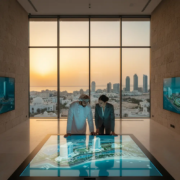
The real estate sector in Oman, particularly in Muscat and Salalah, is booming. Developers are constantly looking for ways to sell properties before the first stone is even laid. This leads us to another of the 5 Reasons Your Oman Business Needs CGI Videos: the power of pre-visualization. High-quality CGI walkthroughs allow potential buyers to experience a space, feel the lighting, and understand the layout long before construction is complete. This is far more effective than 2D floor plans or static sketches.
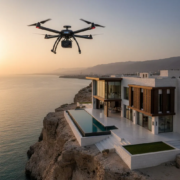
In the competitive Muscat market, luxury developers use high-end 3D architectural rendering to create emotional connections with buyers. When a client can “walk” through their future villa or office space, the likelihood of a sale increases dramatically. This technology is also essential for obtaining government approvals and attracting international investors from Dubai and beyond. It provides a level of professionalism that signals the project’s viability and quality. Artsun advertising agency has seen firsthand how high-quality architectural CGI can transform a developer’s sales trajectory in the GCC region.
Interior Design and Customization
CGI doesn’t just show the building; it shows the lifestyle. You can fill a digital room with high-end furniture, simulate the view from the window at sunset, and even show how the space looks under different lighting conditions. For Oman companies involved in interior design or furniture retail, this allows them to showcase their products in a “real-world” context without the need for an expensive physical showroom. This digital-first approach is the future of retail and real estate in the Muscat market.
4. Precision, Perfection, and Brand Consistency
In a traditional photoshoot, there are always minor imperfections—a speck of dust on the product, a slight reflection from a studio light, or a shadow that shouldn’t be there. In the world of luxury Muscat brands, these tiny flaws can detract from the premium feel of the product. One of the compelling 5 Reasons Your Oman Business Needs CGI Videos is the ability to achieve absolute perfection. Every reflection, shadow, and texture can be tweaked until it is flawless.
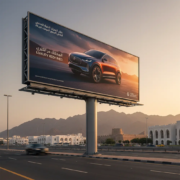
This precision ensures that your brand image remains consistent across all platforms. Whether a customer sees your video on a massive billboard in Muscat or on their smartphone in Dubai, the product looks exactly the same. Artsun advertising agency emphasizes that brand consistency is the bedrock of consumer trust. When your visuals are sharp, clean, and professional, it reflects the quality of your actual products and services. This is especially important for digital marketing in Oman, where consumers are becoming increasingly sophisticated and discerning about where they spend their money.
To further enhance this professional image, businesses should consider how their video content integrates with their overall online presence. Utilizing strategic website SEO ensures that once your high-quality CGI video is produced, it actually reaches your target audience in Muscat, Dubai, and Isfahan. High-quality video content also improves “dwell time” on your website, which is a positive signal to search engines like Google, helping your business rank higher in local search results.
5. Storytelling that Breaks Through the Noise
The final entry in our list of 5 Reasons Your Oman Business Needs CGI Videos is the unparalleled storytelling potential. We live in an attention economy. To capture the interest of the Muscat market, you need to do more than just show a product; you need to tell a story. CGI allows for dynamic camera movements, creative transitions, and visual metaphors that are impossible with a physical camera. You can fly through the eye of a needle or zoom out from a single atom to a galaxy in seconds.
For Oman companies, this means they can create “viral” style content that stands out on Instagram, TikTok, and LinkedIn. In an era where digital marketing in Oman is becoming more saturated, the “wow factor” of a well-executed CGI video can be the difference between a lead and a scroll-by. Whether it is a whimsical animation for a confectionery brand or a sleek, high-tech video for a Muscat-based fintech startup, CGI provides the tools to craft a narrative that resonates emotionally with the audience. By leveraging professional video production services, brands can ensure their storytelling is backed by technical excellence.
Integrating CGI into the Marketing Funnel
CGI videos aren’t just for the “awareness” stage of the marketing funnel. They are incredibly effective at the “consideration” and “decision” stages as well. An exploded-view CGI video that shows the internal components of a luxury watch or a high-performance engine provides the technical reassurance that a customer needs to make a high-value purchase. In the Muscat market, where high-ticket items require a significant amount of trust, these detailed visuals provide the transparency and evidence that close the deal.
The Role of Artsun Advertising Agency in Oman’s Creative Scene
As a leading creative force, Artsun advertising agency has been at the forefront of bringing these advanced technologies to the region. We understand the unique cultural and business landscape of the Middle East, from the traditional values of Muscat to the futuristic ambitions of Dubai. Our team of specialists works closely with Muscat businesses to identify which aspects of CGI will provide the highest return on investment. By combining local insight with international technical standards, we help Oman companies tell their stories in ways that were previously unimaginable.
Whether you are looking to create a 3D commercial, an architectural walkthrough, or a complex industrial animation, the expertise found at the Artsun official website provides a roadmap for success. Our focus is not just on making “pretty pictures” but on creating strategic visual assets that solve business problems, increase sales, and build long-term brand equity in the competitive Muscat market and beyond.
Frequently Asked Questions
Is CGI video production expensive for small businesses in Muscat?
While there is an initial investment, CGI is often more cost-effective over time because the digital assets can be reused, updated, and repurposed without the need for expensive re-shoots. For small Muscat businesses, starting with high-quality 3D product renders can be a very affordable way to compete with larger brands.
How long does it take to create a CGI video?
The timeline varies depending on the complexity of the project. A simple product animation might take 2-3 weeks, while a complex architectural walkthrough or a detailed commercial with VFX can take several months. However, because CGI isn’t dependent on weather or travel, the schedules are often more predictable than live-action shoots.
Can CGI look realistic enough for my luxury brand?
Absolutely. Modern “photorealistic” rendering engines can simulate light, shadows, and textures with such accuracy that it is often impossible for the human eye to distinguish between a CGI image and a real photograph. This is why many luxury Muscat brands prefer CGI—it allows for a level of “perfection” that photography cannot always achieve.
Do I need a separate agency for my CGI and my SEO?
While some agencies specialize in only one area, a holistic approach is usually best. Your CGI video needs to be seen to be effective. Integrating your video strategy with digital marketing in Oman, including SEO and social media management, ensures that your investment reaches the right audience at the right time.
Conclusion: The Future is Digital
As we have explored in the 5 Reasons Your Oman Business Needs CGI Videos, the move toward digital imagery is not just about aesthetics—it’s about strategy, efficiency, and staying relevant in a rapidly changing world. For Muscat businesses and Oman companies, the ability to present products and services with total clarity and creative flair is no longer a luxury; it is a necessity. The Muscat market is evolving, and those who embrace the power of CGI will be the ones leading the charge into the next decade of commerce.
From the streets of Muscat to the business hubs of Dubai and the artistic centers of Isfahan, the demand for high-quality visual content is universal. By investing in CGI today, you are not just creating a video; you are building a versatile digital library that will serve your brand for years to come. Don’t let your business be left behind in the traditional past. It is time to embrace the future of storytelling and visual communication.
Are you ready to elevate your brand with world-class CGI? Contact us today to discuss how we can bring your vision to life. Let us help you dominate the Muscat market with visuals that inspire, inform, and convert. Visit our website to see our portfolio and learn more about our comprehensive creative and marketing services designed for the modern Omani business landscape.