An effective menu design aligns visual hierarchy, mathematical contribution margin analysis, bi-directional typography, and item capping to direct guest choices toward high-profit dishes. By controlling layout geometry, removing currency symbols, and limiting sections to five to seven items, hospitality operators can increase overall profitability by 10% to 15% without raising baseline prices. In dining hubs like Al Mouj in Muscat or the historic Jolfa district in Isfahan, a menu is not a decorative price list; it is a venue’s most effective quiet salesperson.
Consider a crowded weekend dinner service at a coastal restaurant in Shatti Al Qurum. Guests sit down, open a multi-panel leather folder, and quickly scan the pages. When dishes are listed haphazardly or connected to prices by long dotted lines, diners naturally scan straight down the right-hand margin to find the lowest number. That single visual layout choice instantly compresses check averages across every table in the dining room. Hospitality managers often treat designing a menu as purely graphic styling—selecting elegant fonts, inserting food photography, and arranging entries in neat rows. True profitability requires engineering the menu around guest psychology, visual scanning mechanics, and strict food margin physics.
1. Visual Hierarchy and the Golden Triangle in Menu Design
Watch how a guest interacts with a newly opened menu spread. Their eyes do not move linearly like a reader following a standard book page from top-left to bottom-right. Research conducted by the Cornell University School of Hotel Administration in 2016 demonstrated that diners reviewing single-page or two-panel layouts follow a specific movement pattern known as the Golden Triangle. The eye sequence starts near the optical center of the spread, jumps up to the top-right corner, and then moves across to the top-left.
Placing low-margin side items or low-yield starters in these prime focal zones squanders valuable real estate. Signature items with strong profit margins belong in these exact high-visibility hotspots. Leaving clean negative space around a featured dish—rather than crowding it against eight competing entries—creates a natural visual focal point that draws the eye immediately.
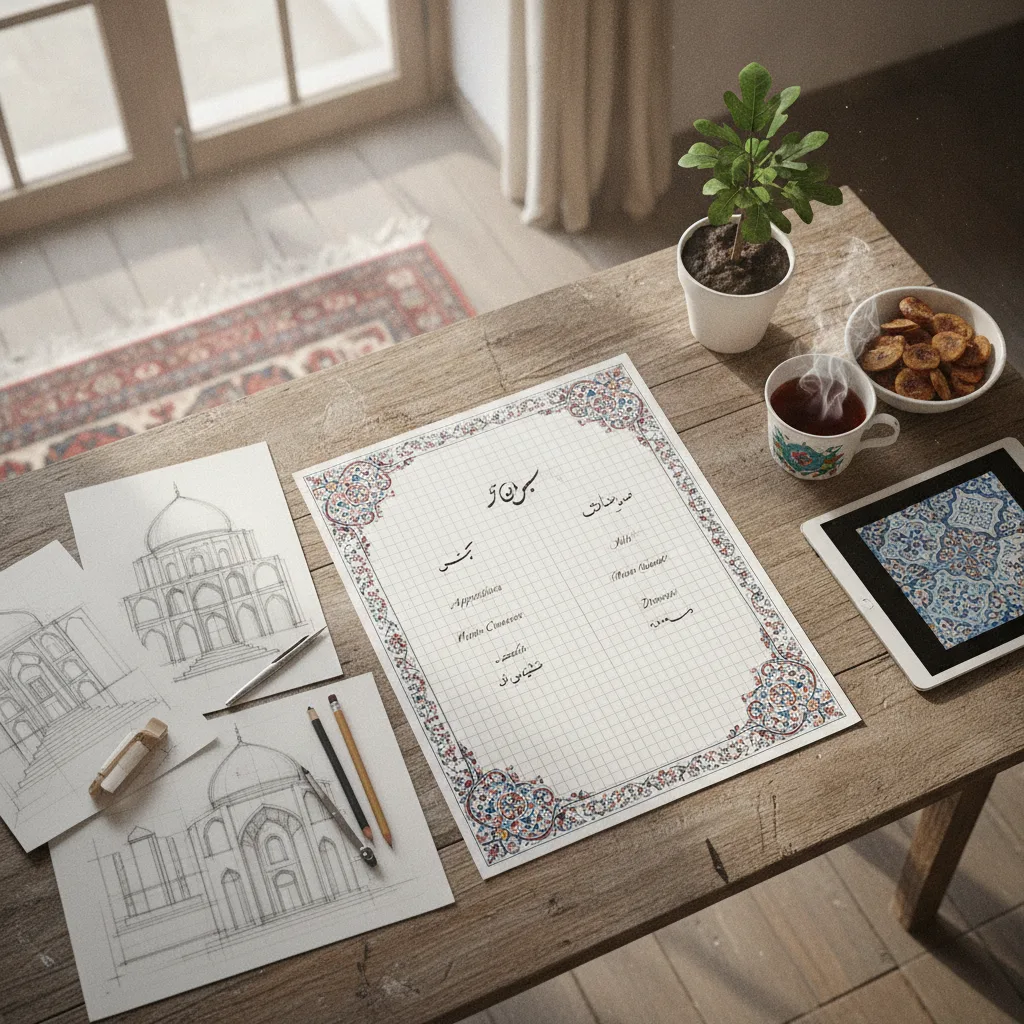
Visual anchors guide guests across the layout. Custom borders, subtle background shading, and deliberate font weight adjustments highlight high-priority items. However, moderation is vital. Decorating ten different dishes with visual frames destroys their graphic weight, leaving guests overwhelmed and unable to choose.
2. Menu Engineering: Categorizing Dishes into the 4-Quadrant Matrix
Before opening a graphic layout canvas or picking paper stock, you must analyze actual sales volume and food costs. Scientific menu engineering relies on a four-quadrant matrix adapted from the Boston Consulting Group matrix by Michael Kasavana and Donald Smith at Michigan State University in 1982. Every item on your menu sits in one of four distinct categories based on sales volume and contribution margin, which measures gross profit per unit sold:
- Stars (High Profitability, High Popularity): Flagship revenue drivers that demand prime real estate within the primary visual focal points of your menu design. Standardize recipes strictly to maintain quality across every shift.
- Plowhorses (Low Profitability, High Popularity): High-demand dishes that generate low profit per unit due to costly raw ingredients or intensive kitchen labor. Keep these items on the menu, but subtly re-engineer ingredient proportions, adjust portion presentation, or modestly raise prices while moving them out of primary focal zones.
- Puzzles (High Profitability, Low Popularity): Margin champions that sell infrequently. These items require sensory descriptor rewrites, repositioning into prime visual hotspots, or name changes tailored to local taste profiles.
- Dogs (Low Profitability, Low Popularity): Dishes that drain kitchen prep resources, increase inventory spoilage, and return negligible profit. Eliminate these entries entirely to clean up page space for high-performing dishes.
Applying formal menu engineering principles to dish placement, pricing structure, and layout hierarchy increases overall venue profitability by 10% to 15%, according to Lightspeed Hospitality Research (2026). Achieving these gains requires disciplined category capping. Research on decision theory—highlighted by Barry Schwartz’s Paradox of Choice and backed by 2026 data from Carte AI—proves that offering more than seven options per category causes cognitive overload. When faced with sixteen competing pasta choices, diners fall back on the cheapest or most familiar option on the page. Keeping each menu section capped at five to seven items clarifies guest decisions and speeds up table turns.
3. Mastering Bilingual Arabic, Persian, and English Typography
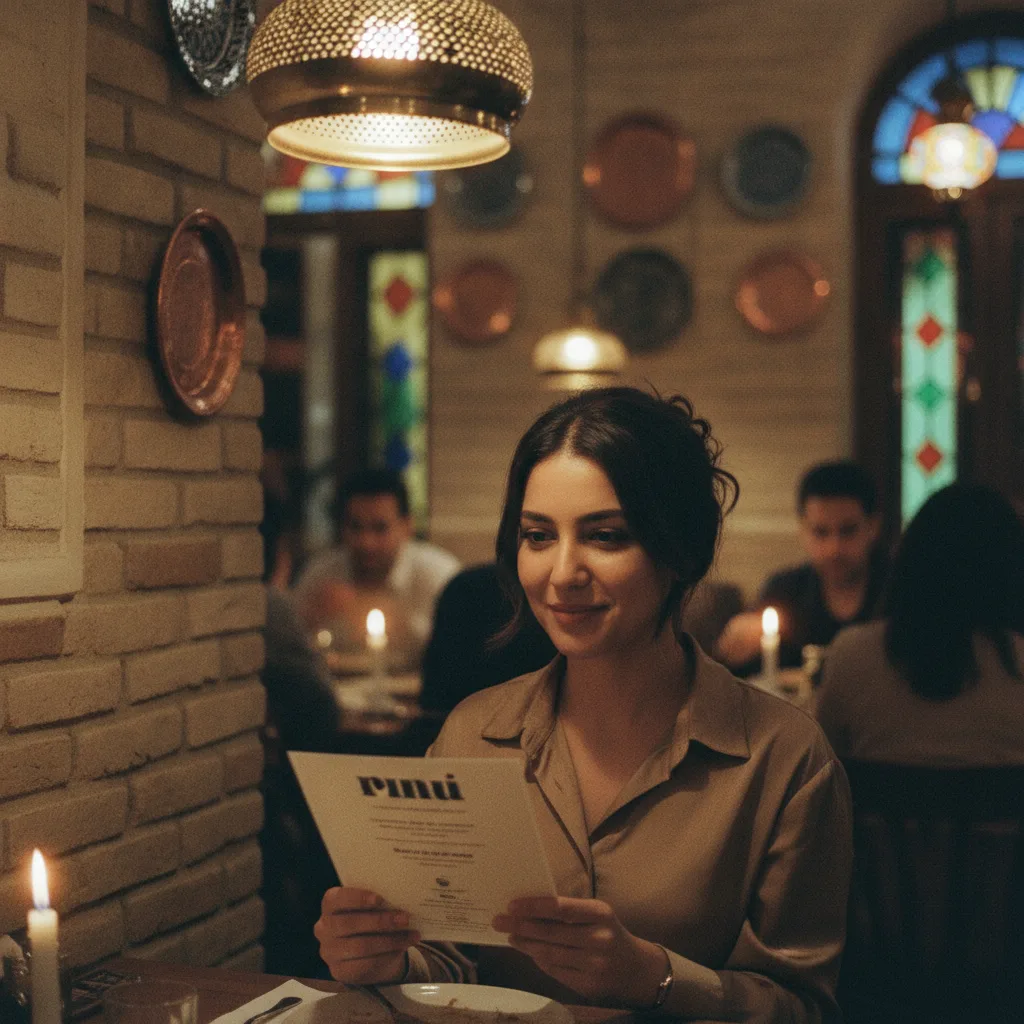
Walk through an upscale restaurant in Al Khuwair or a heritage café near Naghsh-e Jahan Square. You will see tables hosting international tourists alongside local families. Delivering an exceptional dining experience in Oman and Iran demands careful bilingual typography.
Flipping an English left-to-right layout into right-to-left Arabic or Persian is far more complex than flipping text alignment buttons in a layout program. Standards established by the World Wide Web Consortium (W3C) for complex script layouts specify that numerical values embedded within Arabic and Persian right-to-left script run left-to-right inside the line. Without explicit layout rules, multi-column pricing breaks, causing digit sequences to reverse or misalign between languages.
Arabic and Persian scripts rely on cursive, interconnected letterforms with variable heights and intricate diacritics. Setting Arabic text at the same point size and line height used for Latin English text makes the script look squeezed and illegible. Typefaces such as Cairo or IBM Plex Sans Arabic require larger point sizes and expanded line spacing to match the visual weight of Latin body copy.
Machine translations undermine operational credibility. Translating dish descriptions through automated tools produces awkward phrasing and ungrammatical line breaks. Regional menus require original copywriting from native speakers who understand regional culinary terms and cultural nuance.
4. Menu Pricing Strategy: Eliminating Currency Markers and Visual Friction
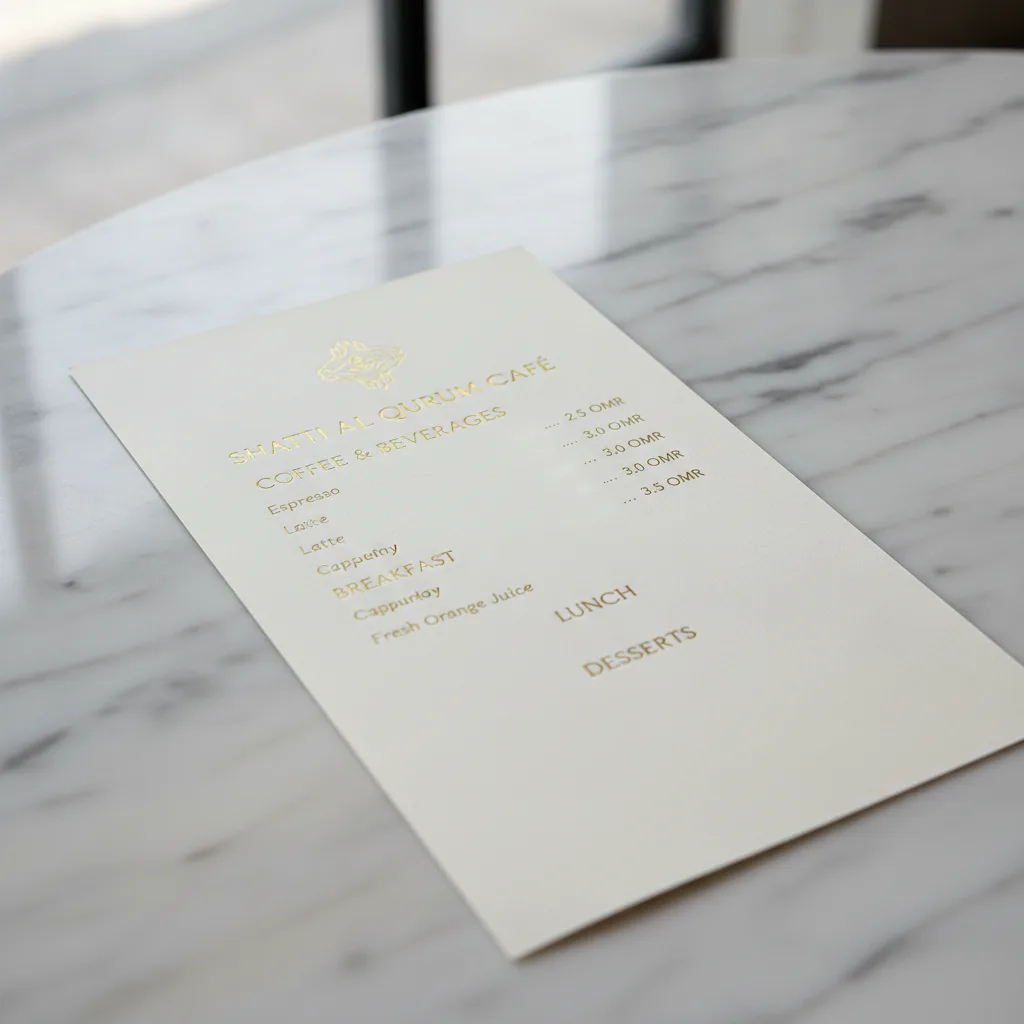
How you print a numeric price dictates how guests think about spending money. Research from Cornell University and Black Box Intelligence shows that removing currency markers—such as OMR, Rial, Toman, or dollar signs—reduces a guest’s friction around spending. Listing a price simply as “4.5” rather than “OMR 4.500” or “4,500 Toman” softens the immediate perception of cost and increases average check values.
Connecting dish titles to prices using dotted leader lines running across the page is a common layout mistake in restaurant menu design. This design pattern encourages guests to read vertically down the pricing column like a balance sheet, seeking the lowest number before ever reading dish descriptions. Positioning the price two spaces after the end of the item description—matching the font weight, size, and color of the descriptive text—keeps the guest’s focus entirely on flavor, ingredients, and preparation methods.
Formatting Western numbers (1, 2, 3) alongside Eastern Arabic (١, ٢, ٣) or Persian digits (۱, ۲, ۳) requires strict mathematical alignment. Prices must remain identical across language columns so guests and service staff refer to the exact same figures. Prices should sit naturally at the end of the description block in both left-to-right and right-to-left reading orientations.
5. Physical vs Digital QR Menu Design in Muscat and Isfahan
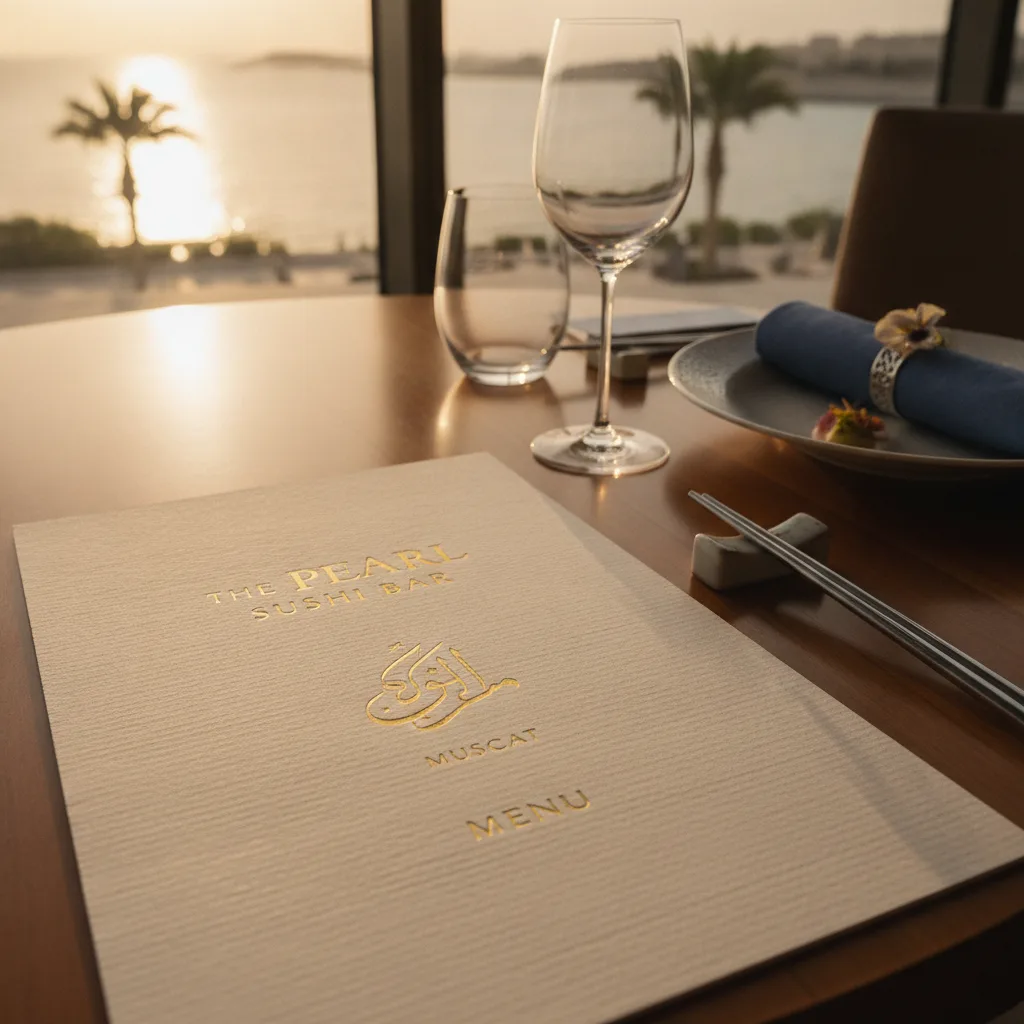
In Muscat’s luxury coastal developments like Al Mouj, guests expect weight, texture, and physical craftsmanship. High-grade cardstock, tactile linen, embossed leather bindings, and warm regional color palettes—terracotta, desert gold, and deep teal—convey prestige. Yet relying exclusively on printed hardbound books creates operational friction when ingredient costs fluctuate rapidly.
Cafés and restaurants in Isfahan’s Jolfa district navigate rapid economic shifts that demand dynamic pricing flexibility. Reprinting custom leather menu covers every few months creates an unnecessary financial burden. A modular hybrid system solves this operational dilemma: a premium outer cover holding high-grade paper inserts, or a responsive digital QR menu layout. Using interactive digital QR menu setups allows managers to update daily specials, hide sold-out items, and adjust prices instantly while preserving visual presentation standards.
Hospitality analytics from Yumpingo and Black Box Intelligence recommend reviewing menu performance every 6 to 12 months. Periodic reviews ensure profit margins stay protected against shifting supply costs while keeping the dining offering fresh for repeat patrons.
How Art Sun Studio Engineers High-Converting Menus
Art Sun Studio was founded in 2003 in Isfahan, Iran by creative director Ehsan Rezapour. Expanding operations to Dubai in 2018 and opening our Muscat, Oman office in 2020, our agency brings over 25 years of creative production experience to regional hospitality brands. We operate six specialized in-house teams across Design, Film, Graphic Design, Social Media, Web Design, and AI, offering 19 integrated services under one roof.
Our approach to menu design pairs mathematical contribution margin analysis with native trilingual copywriting in English, Arabic, and Persian. We guide every project through our structured 6-step process:
- Brief: We analyze sales reports, kitchen throughput capacity, target guest demographics, and brand positioning.
- Proposal: We establish exact project scope, delivery schedules, margin analysis frameworks, and print or digital deliverables.
- Concept: Our team develops custom page layouts, selects regional typography paired with native scripts, and maps out visual hierarchy focal points.
- Production: We handle native bilingual copywriting, direct food photography, calibrate print proofs, and build dynamic digital QR architectures.
- Review: We conduct collaborative review sessions with your team to fine-tune dish placements, numeral alignments, and visual contrast.
- Delivery: We deliver print-ready production files, oversee custom binding selection, and launch interactive digital QR menus.
Project timelines and investments reflect the depth of engineering required. A basic layout reframing and typographic refinement takes 3 to 5 working days, costing between OMR 150 and 350 in Oman, or equivalent localized rates in Iran. Comprehensive menu engineering engagements—including contribution margin analysis, native bilingual copywriting, print setup, and digital QR integration—take 2 to 3 weeks, ranging from OMR 450 to 1,200+ depending on venue scale. Custom physical binding and material production require an additional 7 to 10 business days following proof approval.
Frequently Asked Questions
What are the mandatory structural elements of an effective menu design?
An effective menu relies on clear visual hierarchy using the Golden Triangle scan pattern, category blocks capped at 5 to 7 dishes, evocative sensory descriptions, discrete pricing without currency symbols, and native bilingual typography set with appropriate line height.
How does menu engineering improve profit margins without raising prices?
Menu engineering categorizes dishes into a four-quadrant matrix based on popularity and contribution margin. Placing high-margin Star dishes into primary visual focal points and rewriting descriptions for low-volume Puzzle items guides guest selections toward offerings that generate higher gross profit per table.
Should I remove currency symbols like OMR, Rial, or Toman from my menu?
Yes. Omitting currency symbols and country codes reduces spending awareness among diners, keeping guest focus on flavor descriptions and contributing to higher average check values.
Is a digital QR menu better than a physical menu for my restaurant?
Neither format suits every operational model. Fine-dining venues and luxury resorts in Oman benefit from physical covers, while high-turnover establishments or venues in changing economic environments like Isfahan rely on dynamic QR menus or modular insert sheets. A hybrid approach often balances brand prestige with operational agility.
How often should a restaurant update its menu layout and pricing structure?
Hospitality analysis recommends auditing item popularity and contribution margins every 6 to 12 months. This schedule allows management to adjust to ingredient cost fluctuations, remove underperforming items, and realign menu structures with shifting guest preferences.
Next Steps for Your Hospitality Brand
Gather your sales reports from the last quarter and categorize your top twenty revenue items into Stars, Plowhorses, Puzzles, and Dogs. If high-margin dishes sit buried at the bottom of long text blocks or line up against dotted price trails, your current layout is sacrificing profit on every bill. Contact Art Sun Studio to schedule a menu audit and layout consultation with our design teams in Muscat or Isfahan.