
Gamified 3D Web Design Trends for 2025: Engaging Users in Dubai, Abu Dhabi, and Sharjah
The digital landscape is in a constant state of evolution, and as we look ahead to 2025, one of the most exciting shifts on the horizon is the integration of gamification into immersive 3D web environments. Gone are the days of static, flat websites; today’s users, especially those in dynamic markets like Dubai, Abu Dhabi, and Sharjah, demand engaging, interactive, and memorable experiences. This comprehensive guide delves into the cutting-edge
Gamified 3D Web Design Trends for 2025
, exploring how these innovations are set to transform user interaction, brand loyalty, and online presence across various industries. From virtual product showcases to interactive learning platforms, the synergy of gaming principles and three-dimensional interfaces promises a future where websites are not just accessed, but truly experienced.
The Rise of Immersive Experiences: Why Gamification and 3D?
In a world saturated with digital content, capturing and retaining user attention has become the ultimate challenge. Traditional web design, while functional, often falls short in creating emotional connections or fostering deep engagement. This is where the powerful combination of gamification and 3D web design steps in. Gamification, the application of game-design elements and game principles in non-game contexts, injects an element of fun, challenge, and reward into user journeys. When coupled with 3D environments, these experiences transcend mere information delivery, transforming websites into interactive worlds that users can explore, manipulate, and personalize.
The demand for such immersive experiences is particularly pronounced in forward-thinking regions like Dubai, Abu Dhabi, and Sharjah, where businesses are constantly striving to differentiate themselves and offer unparalleled digital interactions. From luxury real estate virtual tours that allow prospective buyers to “walk through” properties before construction even begins, to retail platforms offering virtual try-ons and interactive product customizers, the potential is boundless. These aren’t just novelties; they are strategic tools designed to increase dwell time, improve conversion rates, and build stronger brand loyalty. By making interaction feel less like a chore and more like an adventure, businesses can create digital footprints that are not only effective but also inherently memorable.
Key Gamified Elements Driving 3D Web Design in 2025
As we anticipate the
Gamified 3D Web Design Trends for 2025
, it’s clear that certain gamified elements will take center stage, leveraging the unique capabilities of 3D environments to create unparalleled user engagement:
Interactive Narratives and Quests
Instead of presenting information linearly, websites will increasingly incorporate narrative-driven experiences. Users might embark on a “quest” to learn about a product, collecting virtual items or solving puzzles that unlock deeper content. This approach transforms browsing into an exploratory adventure, fostering curiosity and active participation. Imagine an educational platform in Sharjah where students navigate a virtual ancient city, completing historical challenges to earn knowledge points.
Customizable Avatars and Virtual Spaces
Personalization goes beyond merely tailoring content; it extends to allowing users to create and control their own digital representations (avatars) within 3D web environments. These avatars can then interact with virtual spaces, like a branded metaverse or a product showroom. This not only enhances a sense of ownership but also encourages self-expression, making the digital experience feel more personal and engaging. Businesses might offer virtual showrooms where customers in Abu Dhabi can design and furnish a virtual living room with their products.
Points, Badges, and Leaderboards (PBLs) in 3D
The classic gamification mechanics of points, badges, and leaderboards will be seamlessly integrated into 3D interfaces. Users earn points for completing tasks, unlock unique 3D badges for achievements, and see their progress reflected on visually rich leaderboards. These elements provide clear goals, instant feedback, and a sense of accomplishment, encouraging users to delve deeper into the website’s offerings. A finance app, for instance, could gamify financial literacy through a 3D interface, rewarding users with badges for completing investment simulations.
Dynamic Rewards and Progress Tracking
Beyond simple points, 2025 will see more sophisticated reward systems. These could include access to exclusive 3D content, virtual discounts applicable in the real world, or unique digital collectibles. Real-time progress tracking, visually represented within the 3D environment, will keep users informed of their journey and motivate them to continue interacting. For businesses seeking cutting-edge web design expertise, implementing these dynamic systems can significantly boost user retention.
Technological Underpinnings: Tools and Platforms for 2025
The realization of these sophisticated
Gamified 3D Web Design Trends for 2025
is heavily reliant on advancing web technologies and development tools. The infrastructure supporting these immersive experiences is becoming more robust and accessible, paving the way for widespread adoption:
WebXR and Browser-Based 3D Frameworks
WebXR, an umbrella term for WebVR and WebAR, is at the forefront, enabling virtual and augmented reality experiences directly within web browsers without the need for dedicated apps. Frameworks like Three.js and Babylon.js continue to evolve, offering powerful and efficient ways to render complex 3D graphics and animations seamlessly across devices. These tools allow developers to create rich, interactive 3D worlds that are easily accessible to a global audience, from Dubai to the rest of the world.
AI-Powered Personalization and Procedural Generation
Artificial intelligence will play a crucial role in enhancing gamified 3D experiences. AI can personalize challenges, adapt narratives based on user behavior, and even procedurally generate unique 3D content or levels to keep experiences fresh and tailored. This means a website can dynamically adjust its 3D environment and gamified elements to suit individual user preferences, maximizing engagement and relevance.
Cloud Rendering and Performance Optimization
Delivering high-fidelity 3D graphics and complex gamified interactions efficiently across diverse devices, especially mobile, remains a challenge. Cloud rendering technologies will become more prevalent, offloading intensive processing to remote servers and streaming optimized content to the user’s browser. This ensures smooth performance, faster loading times, and a consistent experience, critical for attracting and retaining users in markets like Abu Dhabi where high-speed internet is the norm.
Low-Code/No-Code Platforms for 3D Gamification
To democratize the creation of gamified 3D web experiences, expect to see the rise of more user-friendly, low-code, and no-code platforms. These tools will empower designers and marketers without extensive coding knowledge to build and deploy interactive 3D content, accelerating innovation and reducing development costs. Agencies specializing in digital marketing solutions will find these platforms invaluable for rapid prototyping and deployment.
Industry-Specific Applications and Case Studies
The impact of
Gamified 3D Web Design Trends for 2025
will reverberate across numerous sectors, transforming how businesses engage with their customers and deliver value. Here are a few examples:
E-commerce: Virtual Showrooms and Product Configurators
For online retail, 3D gamification means much more than just product images. Customers can enter virtual showrooms, explore products in 3D, and even “try on” clothes or visualize furniture in their own homes using AR. Interactive configurators allow users to customize products (e.g., a car, a piece of jewelry) in a 3D environment, seeing changes in real-time and earning points for exploring different options. This significantly enhances the online shopping experience, reducing uncertainty and driving purchase intent, especially for luxury goods in Dubai.
Education and Training: Immersive Learning Worlds
Educational platforms can transform lessons into interactive quests within 3D environments. Students could explore a virtual human body to learn anatomy, navigate historical events through a timeline, or conduct virtual experiments. Gamified elements like quizzes, challenges, and rewards would reinforce learning, making education more engaging and effective. Think of a medical training portal in Sharjah where future doctors practice surgical procedures in a realistic 3D simulation.
Real Estate: Interactive Property Tours and Design Tools
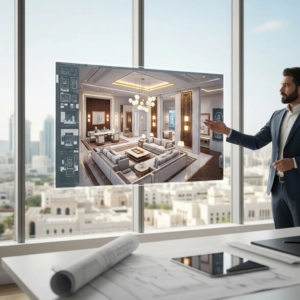
The real estate sector, particularly vibrant in Dubai, stands to benefit immensely. Beyond static virtual tours, 3D gamified websites will allow prospective buyers to virtually “walk through” properties, customize layouts, change finishes, and even place virtual furniture to visualize their future home. Earning badges for exploring different neighborhoods or unlocking exclusive property details adds a layer of engagement that traditional listings cannot match. Companies like Artsun advertising agency are already exploring how to leverage these trends for property developers.
Healthcare: Gamified Health and Wellness Apps
Healthcare providers can use gamified 3D web design to make health management more engaging. Apps could feature a virtual avatar that represents the user’s health journey, with progress bars for fitness goals, badges for healthy habits, and interactive 3D visualizations of personalized health data. This can motivate users to stick to wellness routines and better understand complex medical information.
Tourism and Hospitality: Virtual Destination Exploration
Imagine exploring the iconic landmarks of Abu Dhabi or the bustling markets of Dubai from your browser, completing virtual challenges to unlock hidden facts or planning your itinerary within an immersive 3D map. Tourism websites can offer gamified experiences that allow potential visitors to “pre-experience” destinations, stimulating interest and facilitating booking decisions. For organizations seeking custom web development for these kinds of immersive platforms, the future is now.
Challenges and Considerations for Implementing Gamified 3D Web Design
While the potential of
Gamified 3D Web Design Trends for 2025
is immense, implementing these sophisticated experiences comes with its own set of challenges that businesses in Dubai, Abu Dhabi, and Sharjah must consider:
Performance Optimization and Loading Times
Rich 3D graphics and complex interactivity can be resource-intensive. Ensuring fast loading times and smooth performance across a wide range of devices and internet speeds is crucial to prevent user frustration and abandonment. Optimization techniques, including efficient asset management, progressive loading, and leveraging cloud rendering, will be key.
Accessibility and Inclusivity
Designing immersive 3D experiences that are accessible to users with disabilities is paramount. This includes providing alternative input methods, ensuring clear visual hierarchies, and offering options for reducing motion sickness or cognitive overload. An inclusive approach ensures a broader audience can enjoy the benefits of gamified 3D design.
Content Creation and Maintenance Complexity
Developing high-quality 3D assets, compelling narratives, and engaging gamified mechanics requires specialized skills and resources. The ongoing creation of new content and maintenance of these dynamic environments can be more complex and costly than traditional web design. Partnering with an innovative design agency can mitigate these challenges.
Cost Implications and ROI
The initial investment in gamified 3D web design can be higher than for conventional websites due to specialized development, design, and content creation. Businesses need a clear strategy to measure the return on investment (ROI) through metrics like increased engagement, conversion rates, and brand loyalty to justify these expenditures.
User Experience (UX) Design Principles
Even with advanced technology, poor UX can ruin an immersive experience. Designers must prioritize intuitive navigation, clear feedback mechanisms, and a balance between challenge and reward to ensure users find the gamified 3D environment enjoyable and easy to use. Expert user experience (UX) design services are critical for success.
Future-Proofing Your Digital Presence with Gamified 3D
The trajectory towards more interactive, immersive, and engaging web experiences is undeniable. For businesses in competitive markets like Dubai, Abu Dhabi, and Sharjah, embracing the
Gamified 3D Web Design Trends for 2025
isn’t just about being cutting-edge; it’s about future-proofing their digital presence and securing a leadership position in their respective industries.
Staying ahead of the curve means not only understanding these trends but actively integrating them into your digital strategy. This involves a commitment to innovation, a willingness to experiment with new technologies, and a focus on delivering genuinely valuable and enjoyable user experiences. Measuring the effectiveness of gamified elements through robust analytics will be crucial for continuous improvement and demonstrating clear ROI.
Ultimately, the goal is to create a digital ecosystem where users are not passive recipients of information but active participants in a brand’s story. By fostering deep engagement, loyalty, and a sense of community, businesses can build stronger relationships with their audience and unlock new avenues for growth. Artsun advertising agency, for example, is at the forefront of helping businesses in the UAE navigate these emerging trends and build future-ready digital platforms.
FAQ: Gamified 3D Web Design Trends for 2025
Q1: What exactly is gamified 3D web design?
Gamified 3D web design combines principles of game design (like points, badges, quests, and rewards) with three-dimensional interactive web environments. It transforms a website from a flat, informational space into an immersive, engaging, and often exploratory experience where users actively participate and interact with content in a 3D setting, accessible directly through a web browser.
Q2: Is gamified 3D web design suitable for all types of businesses?
While the benefits are widespread, the suitability depends on the business goals and target audience. It’s particularly impactful for industries that benefit from strong visual presentation, user engagement, and storytelling, such as e-commerce, real estate, education, tourism, and entertainment. However, even B2B companies can leverage elements of gamification in 3D for interactive product demos, training, or client onboarding. A tailored strategy is key.
Q3: What are the main benefits of adopting these trends for businesses in Dubai, Abu Dhabi, and Sharjah?
For businesses in the UAE, the benefits are significant: increased user engagement and dwell time, enhanced brand loyalty, stronger differentiation in a competitive market, improved conversion rates through interactive experiences (e.g., virtual try-ons), better data collection on user behavior, and a cutting-edge reputation. It positions brands as innovators in a region that values progress and luxury experiences.
Q4: How important is mobile compatibility for these 3D gamified designs?
Extremely important. A significant portion of web traffic comes from mobile devices. Therefore, any gamified 3D web design must be optimized for mobile performance, responsive layouts, and touch-screen interactions. While desktop offers the richest experience, mobile accessibility ensures a wider reach and consistent user experience across platforms. Developers often use cloud rendering and optimized assets to achieve this.
Q5: Where can businesses in Dubai, Abu Dhabi, or Sharjah find expertise for these advanced web design trends?
Businesses in the UAE looking to implement
Gamified 3D Web Design Trends for 2025
should seek out specialized digital agencies with a proven track record in innovative web development, 3D design, and user experience (UX). Agencies like Artsun advertising agency, with their focus on cutting-edge digital solutions, can provide the necessary expertise from strategy and design to development and deployment, ensuring a seamless and impactful implementation for your brand.
Conclusion
The digital frontier of 2025 is poised for a dramatic transformation, driven by the immersive power of
Gamified 3D Web Design Trends for 2025
. These innovations represent more than just aesthetic upgrades; they signify a fundamental shift in how users interact with and perceive online brands. By blending the engagement of gaming with the visual richness of three-dimensional environments, businesses can create unparalleled digital experiences that captivate, educate, and convert.
For forward-thinking enterprises in Dubai, Abu Dhabi, and Sharjah, embracing these trends is not merely an option but a strategic imperative. It’s about building a future-ready online presence that resonates with a demanding, digitally-savvy audience, fostering deeper connections and standing out in a crowded marketplace. The era of passive browsing is ending; the age of active participation and immersive exploration has truly begun. It’s time to build digital worlds, not just websites.
Ready to transform your digital presence and leverage the power of gamified 3D web design? Contact our experts today to explore how these cutting-edge trends can elevate your brand and engage your audience in Dubai, Abu Dhabi, and Sharjah like never before.