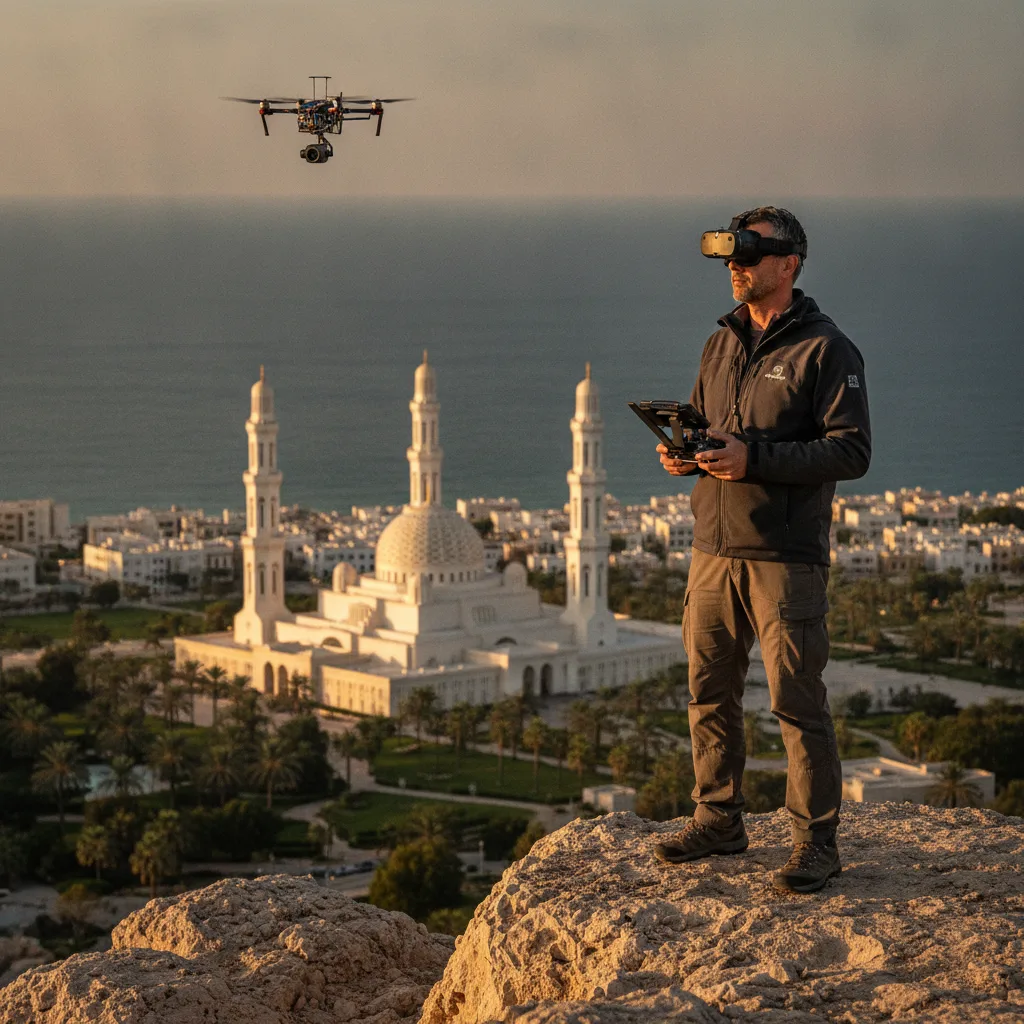
Deciding between fpv drone vs cinematic drone videography comes down to spatial maneuverability, regulatory clearance, and visual momentum. FPV cinewhoop drones use ducted propellers and manual flight controls to navigate interior spaces, threading through active factory floors or hotel lobbies without requiring outdoor airspace permits. Traditional cinematic drones rely on multi-satellite GPS position holding and motorized gimbals to capture ultra-stabilized 6K or 8K exterior landscapes, establishing shots, and master real estate developments.
For commercial directors, venue managers, and corporate communications teams in Oman and Iran, selecting the right platform shapes your shoot calendar, crew allocation, and post-production workflow. Understanding where each technology excels prevents costly flight delays, safety incidents, and visual misalignments on screen.
Technical Differences: FPV Drone vs Cinematic Drone Videography
The technical difference between FPV (First-Person View) platforms and traditional cinematic drones comes down to flight physics, camera stabilization, and how the operator controls the aircraft in space. Using the wrong system for a specific location leads to flat imagery or severe safety hazards on set.
Traditional cinematic platforms, such as the DJI Mavic 3 Cine or the DJI Inspire 3, rely on multi-satellite GPS positioning and onboard sensor arrays. They hold their position in the sky automatically, fighting off wind vectors to maintain a perfectly static hover or a steady path. These systems operate with a dual-operator crew: a licensed drone pilot handles aircraft movement while a dedicated camera operator controls a 3-axis motorized gimbal. This division of labor allows for slow, sweeping reveals, precise vertical climbs, and optical zoom adjustments from a safe distance. Equipped with 1-inch or Full-Frame sensors, cinema drones used in drone aerial videography services capture 10-bit D-Log footage in Apple ProRes up to 8K resolution, giving colorists maximum dynamic range for television broadcasts, commercial brand films, and large digital displays.
FPV cinewhoops operate without GPS holding or automated levelling. The pilot wears video goggles displaying a low-latency feed from the front of the aircraft, controlling the drone manually across six axes of motion. An FPV drone rolls, pitches, dives, and leans into turns without attempting to keep its camera level with the horizon. Instead of watching a scene from a distance, the camera becomes an active participant in the space, gliding past structural columns, under machinery, or through tight doorways in continuous camera movements.
To remain lightweight and nimble indoors, cinewhoops carry specialized action camera payloads set to record high-bitrate video. While large outdoor FPV rigs can carry cinema cameras like a RED Komodo or Sony FX6, lightweight ducted cinewhoops are the standard tool for commercial indoor projects. The result is kinetic visual storytelling that guides viewers through a physical environment far more dynamically than static camera setups.
Matching Drone Platforms to Locations in Oman and Iran
Matching the aerial platform to the physical environment is critical for visual quality and site safety. Production locations in Muscat, Sohar, Duqm, and Isfahan present vastly different spatial conditions that dictate which setup to choose.
Industrial Warehouses in Sohar and Duqm
Manufacturing plants, processing sulates, and logistics hubs in Sohar or Duqm feature dense interiors filled with overhead cranes, moving forklifts, suspended electrical conduits, and high-value machinery. Traditional cinematic drones struggle in these spaces because structural steel blocks GPS signals, while exposed propellers pose severe risks near workers and equipment.
A compact, ducted FPV cinewhoop excels in an industrial warehouse drone videography project. Built with soft plastic propeller guards, a cinewhoop safely navigates active production floors. The pilot can enter through a loading bay door, drop down to fly two meters above an automated packing line, thread between support columns, and climb up to a mezzanine control room in a single take. This continuous movement reveals facility scale, operational flow, and technical infrastructure far more effectively than static ground cameras.
Boutique Hotels and Heritage Showrooms in Isfahan
Historic boutique hotels, handicraft workshops, and luxury showrooms across Isfahan feature delicate plasterwork, hand-painted tiles, internal courtyards, and narrow vaulted passageways. Flying heavy or unshielded drone gear inside these heritage spaces risks permanent structural damage.
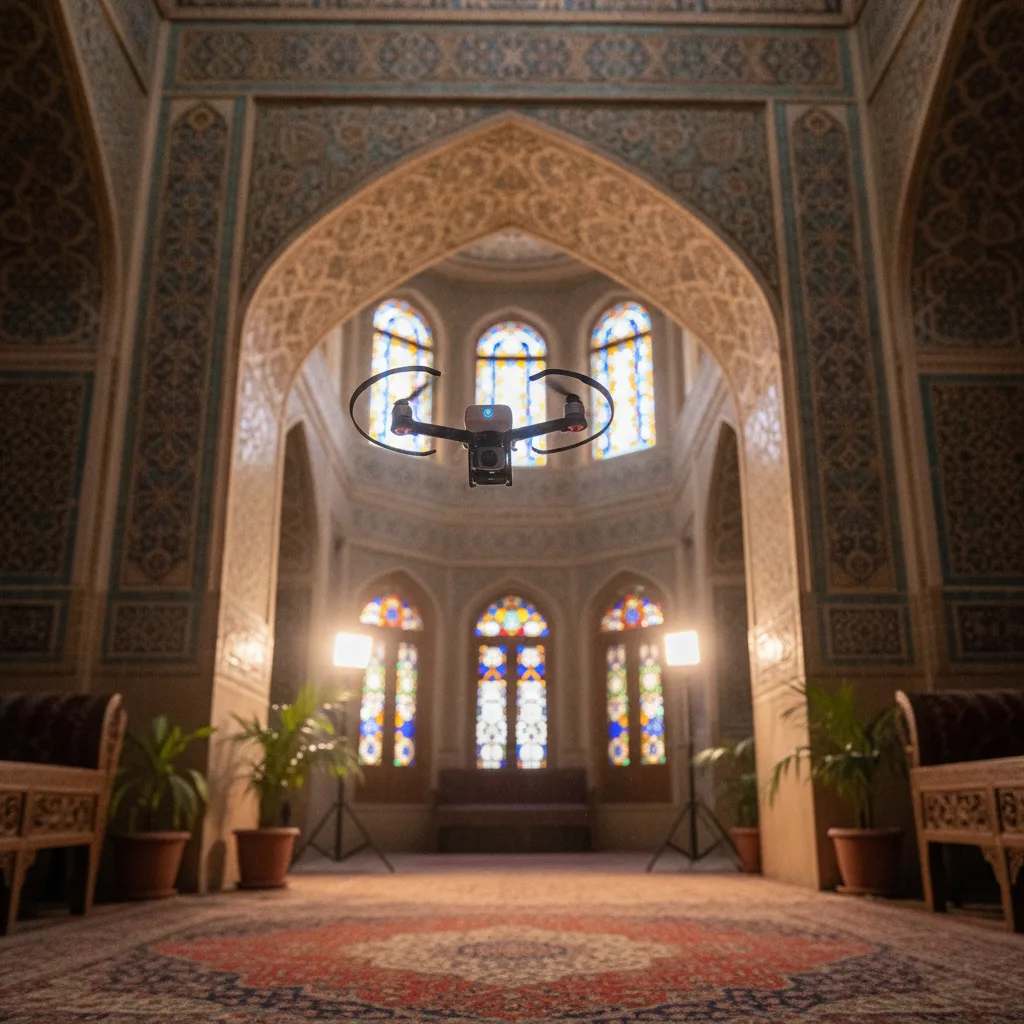
Production crews deploy lightweight, ducted cinewhoops designed to absorb minor contact without marking surfaces. The flight path can start over an outdoor courtyard fountain, drift through carved wooden doors, circle an interior gallery, and exit through an upper balcony window. To capture the full setting, production teams pair this indoor flight with 6K cinematic drone videography outdoors, recording sunset establishing shots over Isfahan’s historic bridges and domes from a safe altitude.
Commercial Real Estate Developments in Muscat
Real estate firms launching master-planned communities or coastal high-rises in Muscat need geographic context, sharp architectural lines, and visual assets suitable for print catalogs and high-resolution displays. A dual operator cinema drone setup is the proper tool for this job. Two-person crews execute steady orbital paths around rising towers, perform vertical climbs to show ocean views from upper penthouse levels, and capture flat background plates for architectural video production and CGI integration.
Aviation Compliance: Oman CAA Permits and Iran CAO Regulations
Flying commercial drones in the Middle East requires strict compliance with regional aviation authorities. Operating without official approval exposes property owners, plant managers, and production houses to serious legal liabilities.
In Oman, outdoor commercial drone flights are governed by the Civil Aviation Authority (CAA). Outdoor operations require submitting an Oman CAA drone permit AWR-033 request through the Sarb portal, backed by security clearances, pilot certifications, commercial registration, and liability insurance. Processing outdoor approvals typically takes 10 to 20 working days. Flying an unpermitted drone outdoors in Oman carries administrative fines ranging from 500 OMR up to 50,000 OMR under national Civil Aviation Law, alongside potential equipment seizure.
However, the Oman CAA provides a key exemption for tight project deadlines: drone filming inside fully enclosed buildings, industrial warehouses, and private halls does not require outdoor airspace permits. Provided the facility owner gives written permission and proper site safety rules are enforced, an fpv cinewhoop indoor fly-through can be planned and shot on short notice, bypassing outdoor permit wait times entirely.
In Iran, the Civil Aviation Organization (CAO) oversees all commercial drone operations. Drones must undergo online registration to obtain official national ID tags. Under Article 21 of the regulations, foreign nationals are prohibited from importing drones into the country, which means international companies must hire licensed local operators. Securing outdoor flight approvals in historic city centers like Isfahan involves coordination with local municipal and security authorities, requiring permit submissions 3 to 4 weeks before the planned shoot date.
Budgeting, Crew Allocation, and Regional Production Costs
Understanding drone videography pricing and packages depends on location permissions, flight risks, crew requirements, and post-production needs. Factoring in these elements early ensures realistic project budgeting.
In Oman, a basic half-day outdoor shoot using a single cinematic drone ranges from 250 to 450 OMR. A full-day production featuring dual-operator cinema setups or complex indoor FPV filming runs between 600 and 1,200 OMR, depending on permit requirements, safety staffing, and post-production color work. In Iran, commercial drone day rates range from $300 to $1,000 USD, depending on site permissions and local security requirements.
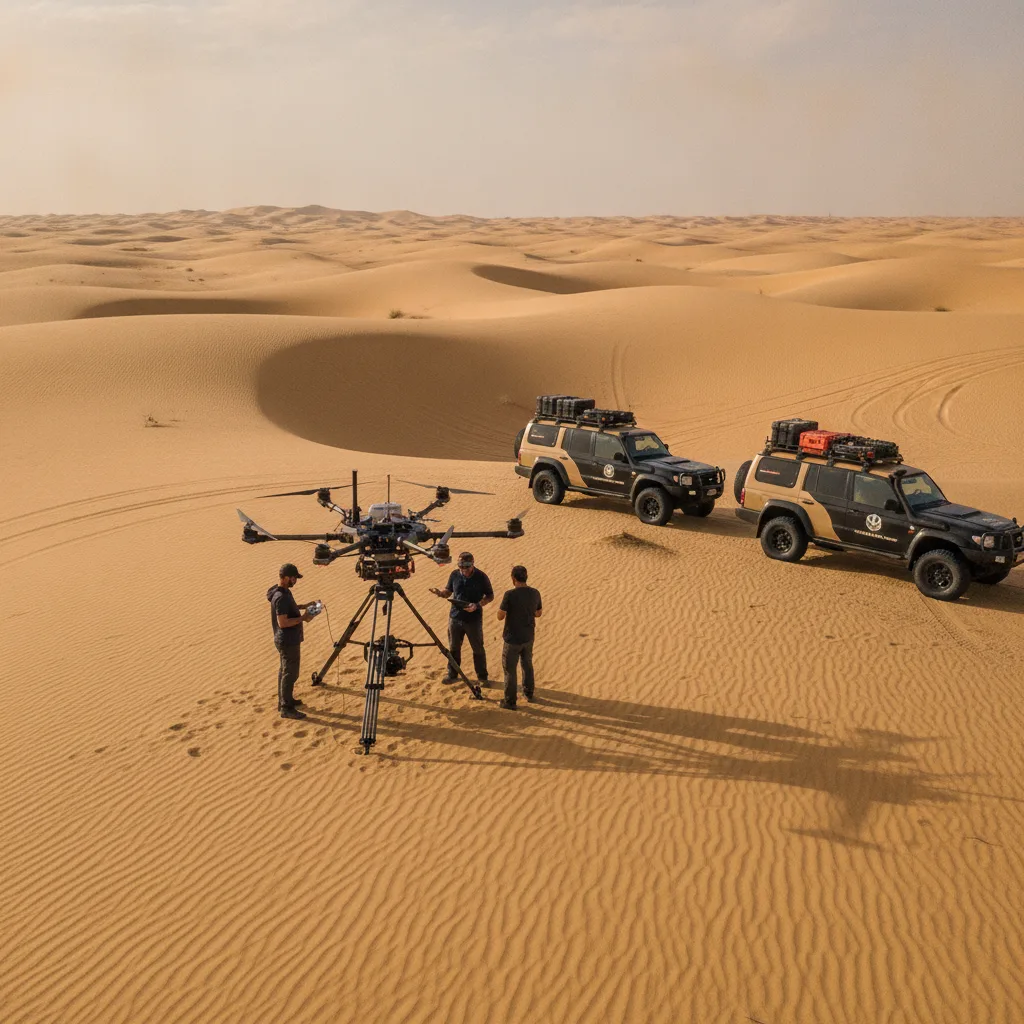
Crew size is a frequently overlooked cost factor. Standard safety regulations require a minimum two-person crew for commercial FPV projects: the pilot operating the goggles and a dedicated Visual Observer. Because the pilot’s vision is completely enclosed by the video headset, the Visual Observer maintains direct visual line-of-sight with the drone at all times, monitoring the surrounding area, watching for unexpected obstacles, and keeping bystanders safe.
High-end 6K cinematic drone work also relies on a two-person crew: a pilot flying the aircraft and a gimbal operator controlling the camera. Trying to cut costs by hiring a single operator to fly and control the camera simultaneously often yields jerky camera movements, missed framing, and lower overall production value.
Post-production workflows for FPV footage require specialized handling. Raw FPV video must go through digital gyro-stabilization software to clean up high-frequency micro-jitters, followed by precise color grading to match action camera output with primary cinema camera footage. Working with a full-service production house like Art Sun Studio ensures these technical grading and stabilization steps are integrated directly into the main edit workflow alongside sound design and visual effects.
FPV Drone vs Cinematic Drone Videography Operational Checklist
To keep your production safe, compliant, and on schedule, review this operational checklist before locking in shoot dates:
- Enforce a two-person FPV crew: Flying FPV without a dedicated visual observer violates aviation safety protocols and risks an immediate shutdown by site safety officers or local authorities.
- Mandate ducted frames for interior shoots: Custom racing drones feature open carbon fiber propellers spinning at high speeds. Indoor commercial shoots require ducted cinewhoops with full propeller guards to protect personnel, equipment, and walls.
- Plan outdoor permit lead times early: Allow 10 to 20 working days for CAA Oman outdoor permit approvals and 3 to 4 weeks for CAO clearances in Iran. Use indoor permit exemptions when timelines are tight.
- Budget for dedicated color management: Action cameras record with dynamic range profiles distinct from cinema cameras. Post-production must include dedicated color transform mapping and manual grading to keep visual tones consistent across your film.
Frequently Asked Questions
Can FPV drones carry heavy cinema cameras like a RED Komodo or Sony FX6?
Large custom FPV drones, called cinelifters, can carry full-frame cinema cameras and prime lenses. However, cinelifters are heavy, loud, and present higher operational risks, making them best suited for outdoor action scenes or automotive track shoots. For tight indoor facility tours, hotel interiors, and retail spaces, lightweight ducted cinewhoops with high-bitrate action cameras remain the safer, more practical choice.
What happens if adverse weather or high winds hit an outdoor shoot in Muscat?
If coastal winds exceed safe flight operational thresholds on shoot day, flight operations are paused to protect personnel and gear. Professional production teams build one to two buffer days into the master production schedule to accommodate weather shifts while coordinating with local authorities if flight windows need slight adjustment.
How do post-production teams match FPV action camera footage with primary 6K cinema footage?
Post-production teams extract raw gyro data from the FPV flight to run frame-accurate stabilization software. Specialized color transform matrices and custom LUTs are then applied to align high-bitrate action camera footage with primary cinema cameras during professional CGI and VFX video production.
Why is an indoor FPV shoot faster to execute than an outdoor aerial shoot in Oman?
Indoor filming inside fully enclosed facilities, warehouses, and private venues is exempt from outdoor airspace permit requirements under Oman CAA regulations. As long as the property owner grants written permission and safety protocols are met, an indoor FPV production can move directly into filming without waiting 10 to 20 working days for CAA outdoor clearance.
Selecting the Right Aerial System for Your Commercial Project
Choosing between FPV cinewhoops and traditional cinema drones depends on your narrative goals, physical shoot location, and regulatory timeline:
- Choose FPV cinewhoop videography for: Immersive continuous indoor tours, warehouse equipment fly-throughs, tight architectural paths, and rapid turnarounds using indoor CAA permit exemptions.
- Choose cinematic drone videography for: Sweeping landscape establishing shots, real estate elevation reveals, master-planned developments, wide architectural framing, and high-resolution print or broadcast assets.
Executing professional drone videography across the Middle East requires a technical partner that understands flight mechanics, aviation compliance, and cinematic post-production. Founded in Isfahan in 2003 by Ehsan Rezapour, Art Sun Studio operates as a full-service creative studio in Muscat, Dubai, and Isfahan to deliver end-to-end media and visual production services. Working within a structured six-step workflow—Brief, Proposal, Concept, Production, Review, and Delivery—our in-house film teams manage every stage of production, from initial safety assessments and permit coordination to final color grading and sound design.
Bring clear spatial storytelling to your next commercial film. Contact the creative team at Art Sun Studio in Muscat or Isfahan to arrange a project consultation and schedule your shoot.