
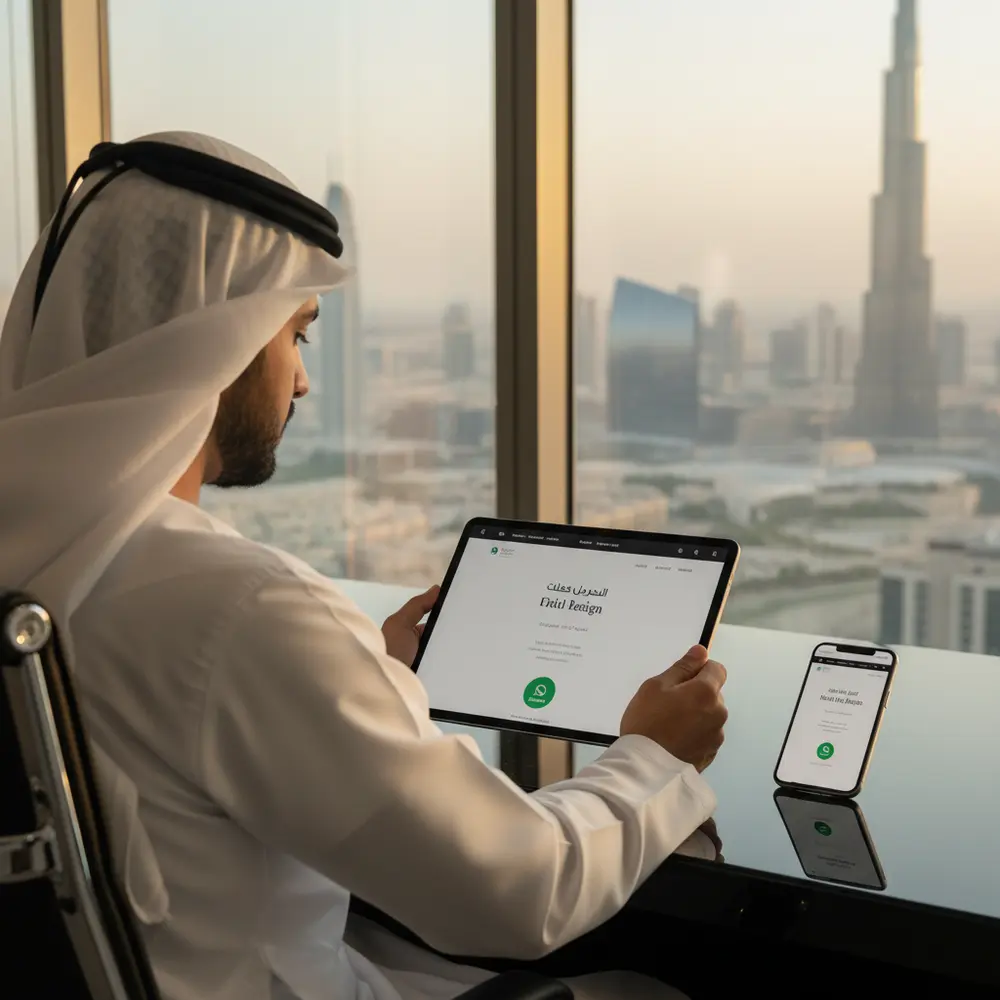
Website Redesign Steps for Higher ROI in Dubai.
Website Redesign Steps for Higher ROI in Dubai
The digital landscape in the United Arab Emirates is moving at an unprecedented pace. For Dubai businesses, a website is no longer just a digital brochure; it is the primary engine for lead generation, brand storytelling, and revenue growth. However, many UAE companies find themselves stuck with aging platforms that fail to engage the modern, tech-savvy consumer. This is where a strategic overhaul becomes necessary. Understanding the specific website redesign steps for higher ROI in Dubai is essential for any brand looking to dominate the Abu Dhabi market or capture the attention of Sharjah brands. A redesign is not merely an aesthetic update; it is a calculated business move designed to improve user experience, boost search engine rankings, and ultimately increase the bottom line.
In a city known for innovation and luxury, your digital presence must reflect excellence. If your current site is slow, difficult to navigate on mobile, or failing to convert visitors into customers, you are leaving money on the table. Digital marketing in UAE has become highly competitive, and a lackluster website acts as a bottleneck for all your other marketing efforts. By following a structured approach to redesigning your portal, you can ensure that every dirham spent on advertising yields a better return. This comprehensive guide explores the critical phases of a successful redesign tailored specifically for the unique dynamics of the United Arab Emirates market.
Phase 1: Auditing Performance and Setting Clear ROI Benchmarks
Before a single line of code is written or a new layout is designed, you must understand what is currently working and what is not. For Dubai businesses, this begins with a deep dive into data. Analyze your current traffic sources, bounce rates, and conversion paths. Are users dropping off at the checkout page? Are mobile users leaving faster than desktop users? Identifying these friction points is the first step toward a higher Return on Investment (ROI).
Setting specific goals is equally important. Instead of a vague desire for a “better website,” define what success looks like for your UAE companies. This could be a 30% increase in lead form submissions, a 20% reduction in page load time, or a higher ranking for localized keywords in the Abu Dhabi market. Artsun advertising agency emphasizes that without a data-driven foundation, a redesign is just guesswork. By establishing these benchmarks early, you create a roadmap that ensures the final product aligns with your commercial objectives.
Phase 2: Mobile-First Design and the UAE User Experience
The United Arab Emirates has one of the highest smartphone penetration rates in the world. Consequently, the mobile experience is not just an alternative; it is the primary way your customers will interact with you. Website redesign steps for higher ROI in Dubai must prioritize a mobile-first philosophy. This means ensuring that navigation is thumb-friendly, images are optimized for fast loading on 5G networks, and forms are easy to fill out on small screens.
User Experience (UX) goes beyond just responsiveness. It involves understanding the cultural nuances of the region. For instance, incorporating Right-to-Left (RTL) language support for Arabic speakers is a critical component for reaching a wider audience across Sharjah brands and beyond. If your site doesn’t offer a seamless transition between English and Arabic, you are alienating a significant portion of the local market. Investing in professional web design services in Dubai ensures that your interface is intuitive, culturally relevant, and optimized for conversion.
Phase 3: Technical SEO and Protecting Your Search Equity
One of the biggest risks during a website redesign is the potential loss of existing search engine rankings. Many UAE companies have spent years building their organic presence, only to see it vanish due to poor migration practices. To achieve a higher ROI, your redesign must include a robust SEO strategy from the start. This includes mapping out 300-level redirects for all old URLs to ensure that “link juice” is preserved and users don’t land on broken 404 pages.
Furthermore, the redesign is the perfect time to fix underlying technical issues. This involves optimizing your site architecture, improving internal linking structures, and ensuring that your metadata is updated for modern search intent. Implementing strategic website SEO during the development phase allows you to launch a site that is already primed to rank for competitive terms in the Dubai and Abu Dhabi markets. Digital marketing in UAE relies heavily on being visible at the exact moment a customer is searching for your services.
Phase 4: Content Strategy and High-Impact Visuals
In the luxury-driven market of Dubai, visuals speak louder than words. High-quality imagery, professional videography, and immersive elements can significantly increase the time a user spends on your site. When considering website redesign steps for higher ROI in Dubai, don’t overlook the power of custom media. Stock photos often feel generic and fail to build trust with sophisticated Dubai businesses. Instead, use original photography that showcases your local office, your team, and your successful projects within the UAE.
For brands in the real estate or industrial sectors, incorporating advanced visual technologies can be a game-changer. Utilizing high-end CGI and visual effects can help potential investors visualize projects that are still under development, providing a massive boost to pre-sales and engagement. Content should also be localized. This means using local terminology, referencing UAE-specific landmarks or regulations where applicable, and ensuring the tone of voice resonates with the diverse expatriate and local populations in the region.
Phase 5: Speed Optimization and Core Web Vitals
Google’s Core Web Vitals have made page speed and stability official ranking factors. In the hot, fast-paced environment of Dubai, no one has the patience for a slow-loading website. If your site takes more than three seconds to load, your ROI will plummet as users bounce to a competitor’s site. As part of your redesign, audit your hosting environment. Hosting your site on servers physically located in or near the UAE can significantly reduce latency for local users.
Technical optimization should include image compression, minification of CSS and JavaScript files, and the implementation of advanced caching mechanisms. Artsun advertising agency notes that a fast website doesn’t just rank better; it also builds credibility. When a site feels snappy and responsive, it reflects a brand that is efficient and professional. This is particularly vital for Sharjah brands looking to compete on a global scale while maintaining a strong local presence.
Phase 6: Conversion Rate Optimization (CRO) and Trust Signals
Driving traffic to your site is only half the battle; the real ROI comes from converting that traffic into paying customers. This requires a focus on Conversion Rate Optimization (CRO). Your new design should feature clear, compelling Calls to Action (CTAs). Whether it is “Request a Quote,” “Book a Consultation,” or “WhatsApp Us Now,” your CTAs must be prominently displayed and strategically placed throughout the user journey.
In the UAE, trust is the currency of business. Including trust signals such as client testimonials, local awards, and certifications from UAE government bodies can significantly influence a visitor’s decision-making process. Integration with popular local communication tools is also essential. For many Dubai businesses, WhatsApp is the preferred method of communication. Adding a direct WhatsApp chat feature can drastically increase your conversion rates by lowering the barrier to entry for potential leads. As a leading creative firm, we always recommend prioritizing these direct contact methods to maximize engagement.
Phase 7: Launch, Testing, and Post-Launch Marketing
The launch of your redesigned website is not the end of the journey; it is the beginning of a new phase of growth. Once the site is live, it is crucial to perform rigorous testing across different browsers and devices to ensure everything is functioning as intended. Use heatmapping tools to see how users are interacting with the new layout. Are they clicking where you want them to? Are they scrolling down to your key value propositions?
To truly maximize the ROI of your new platform, you need a multi-channel marketing approach to drive fresh traffic. This often involves a mix of search engine marketing, email campaigns, and targeted social media support to announce your new digital home to the Abu Dhabi market and beyond. A website is a living asset that requires regular updates, security patches, and fresh content to remain effective in the long term. By choosing a partner like Artsun advertising agency, you ensure that your site remains at the cutting edge of technology and design trends.
Frequently Asked Questions
How long does a website redesign typically take for UAE companies?
The timeline for a website redesign depends on the complexity and scale of the project. A standard corporate website for Dubai businesses might take between 8 to 12 weeks, while a complex e-commerce platform or a site requiring extensive custom integrations can take 4 to 6 months. Proper planning and clear communication are key to staying on schedule.
Will a redesign negatively impact my current Google rankings in Dubai?
If handled incorrectly, yes. However, if you follow proper SEO migration protocols—such as setting up 301 redirects, maintaining meta tags, and ensuring mobile-friendliness—a redesign can actually significantly improve your rankings. It is an opportunity to fix old technical errors and optimize for new, high-value keywords in the UAE market.
Why is Arabic localization important for higher ROI?
While English is widely used in business, Arabic is the official language of the UAE. Providing a high-quality Arabic version of your site shows respect for the local culture and opens your business to a massive segment of the population that prefers to browse and shop in their native language. This inclusivity directly leads to higher trust and better conversion rates.
What is the most important factor for website ROI?
The most important factor is the User Experience (UX). If a user cannot find what they are looking for or finds the process frustrating, they will leave. A site designed with the user’s needs at the center will naturally have higher engagement, lower bounce rates, and better conversion metrics, leading to a superior ROI.
Conclusion: Securing Your Digital Future in the UAE
Redesigning your website is a significant investment, but when executed with a focus on ROI, it becomes one of the most profitable decisions a business can make. By following these website redesign steps for higher ROI in Dubai, you ensure that your brand stays relevant in an ever-evolving market. From the initial audit to the final post-launch marketing strategy, every step must be handled with precision and a deep understanding of the local landscape. For businesses looking for comprehensive digital solutions, the goal is always clear: to create a digital presence that not only looks stunning but also functions as a powerful sales and marketing tool. Whether you are targeting the Abu Dhabi market, Sharjah brands, or the global stage, your website is your most valuable asset. Start your transformation today and position your company for long-term success in the vibrant economy of the United Arab Emirates.

