Bold Colors and Gradients in Dubai Design.


Bold Colors and Gradients in Dubai Design: A Vibrant Evolution

Dubai, a city synonymous with ambition, innovation, and futuristic vision, has always been at the forefront of global trends. From its iconic skyline to its luxurious interiors, every aspect of its aesthetic identity speaks volumes about its dynamic spirit. In recent years, a particularly striking visual trend has taken hold, profoundly influencing the cityscape and digital landscapes alike: the pervasive embrace of bold colors and gradients in Dubai design. This isn’t merely a fleeting fad but a deep-seated reflection of the emirate’s confidence, cultural fusion, and unwavering pursuit of the extraordinary. This article will delve into the essence of this vibrant movement, exploring its origins, applications, and the profound impact it has on the visual narrative of Dubai, as well as its neighboring emirates like Abu Dhabi and Sharjah.

The DNA of Dubai Design: From Traditional to Trailblazing

To understand the current infatuation with bold colors and gradients, one must first appreciate the evolution of design in Dubai. Historically, Emirati design drew heavily from Islamic art and architecture, characterized by intricate geometric patterns, earthy tones, and a focus on harmony and balance. While these timeless elements still hold significant cultural value, Dubai’s rapid urbanization and transformation into a global hub have introduced a powerful wave of contemporary influence. The city became a canvas for international architects and designers, eager to push boundaries and create structures that defied conventional norms. This confluence of tradition and modernity created a fertile ground for experimentation, where the muted palettes of the past gradually gave way to a more audacious visual language. The demand for designs that command attention and convey a sense of progress naturally led to the adoption of vibrant hues and sophisticated color transitions. This shift is visible not just in Dubai, but also in the developing skylines and cultural projects across Abu Dhabi and Sharjah, all reflecting a regional inclination towards modern, impactful aesthetics.

Why Bold Colors? Decoding Dubai’s Palette

The prevalence of bold colors in Dubai design is no accident; it’s a deliberate choice rooted in several cultural, psychological, and environmental factors. The city’s desert environment, often bathed in intense sunlight, naturally lends itself to colors that can stand out and convey warmth and energy. However, beyond the environmental context, bold colors symbolize the emirate’s audacious spirit and its ambition to be a global leader. Red signifies energy and passion, blue denotes sophistication and innovation, while gold and metallic shades reflect luxury and prosperity – all core tenets of Dubai’s brand identity. Furthermore, Dubai is a melting pot of cultures, and bold colors resonate across diverse communities, making them universally appealing and impactful. This strategic use of a powerful palette is a key component of what makes bold colors and gradients in Dubai design so distinctive and memorable.

Cultural Influences and Modern Interpretations

While traditional Islamic art often featured specific color palettes derived from natural pigments and spiritual symbolism, modern Dubai design takes these influences and reinterprets them with a contemporary twist. For instance, the deep blues and turquoises often seen in traditional mosaics are now amplified and blended into dynamic gradients on building facades or brand logos. Earthy reds and oranges, reminiscent of desert sunsets, are transformed into vibrant, energetic statements. This modern interpretation respects heritage while boldly stepping into the future, creating a design language that is uniquely Emirati yet globally recognized. From public art installations to corporate branding in Abu Dhabi, the cultural resonance of these colors is palpable.

The Desert’s Canvas: Inspirations from Nature

The vast, mesmerizing landscapes surrounding Dubai offer an undeniable source of inspiration. The fiery oranges and deep reds of a desert sunset, the profound blues of the Arabian Gulf, and the iridescent purples and pinks that paint the sky at dawn all contribute to a natural palette that is inherently bold. Designers tap into these organic spectacles, translating them into urban environments and digital interfaces. The use of shimmering metallics often mirrors the golden sands, while cool blues evoke the refreshing waters of the coastline. This connection to nature ensures that even the most avant-garde designs feel grounded and authentic to the region.

The Art of Gradients: Blending Futures in the UAE

If bold colors provide the foundational energy, gradients add depth, movement, and a sense of seamless transition that perfectly encapsulates Dubai’s forward momentum. Gradients, the smooth blending of one color hue to another, or from one shade to another, symbolize progression, evolution, and the bridging of diverse elements. In a city that is constantly reinventing itself, gradients offer a visual metaphor for growth, fluidity, and the integration of multiple ideas into a cohesive whole. They convey a sense of sophistication and dynamism that solid colors alone cannot achieve, making them an indispensable element in the lexicon of bold colors and gradients in Dubai design.

Seamless Transitions: From Architecture to Digital Interfaces

The application of gradients is incredibly versatile across Dubai. In architecture, facades might transition from a deep blue at the base to a lighter hue at the top, mimicking the sky and creating an illusion of height and lightness. Interior designers use them to create captivating feature walls or mood lighting, drawing the eye and adding a luxurious dimension to spaces. Digitally, gradients are ubiquitous in app interfaces, websites, and advertising campaigns, providing a modern, engaging user experience. They are particularly effective for conveying a brand’s innovative edge and commitment to future-forward thinking. Artsun advertising agency understands this nuanced appeal, integrating subtle and striking gradients into their creative solutions for clients across the UAE, providing expert design solutions that resonate with local tastes and global standards.

Technology and Innovation Driving Gradient Adoption

The rise of digital design tools and advanced printing technologies has significantly contributed to the widespread adoption of gradients. Designers now have unprecedented control over color transitions, allowing for intricate and highly customized gradient effects that were once difficult or impossible to achieve. This technological prowess perfectly aligns with Dubai’s identity as a smart city, embracing innovation in every sector. The precision and vibrancy that can be achieved with modern techniques make gradients an ideal choice for communicating a brand’s cutting-edge nature. Whether for a luxury hotel in Sharjah or a tech startup in Dubai, gradients offer a powerful visual statement.

Applications Across Sectors: Where Bold Colors and Gradients Shine

The influence of bold colors and gradients in Dubai design extends across an impressive array of industries, transforming everything from skyscrapers to corporate identities. This pervasive trend highlights a strategic approach to visual communication, aimed at captivating a diverse, global audience.

Architectural Marvels and Urban Landscapes

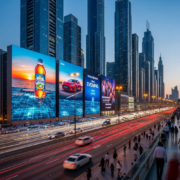
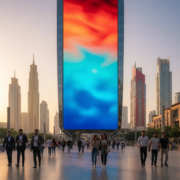
Dubai’s skyline is perhaps the most prominent canvas for this trend. Iconic buildings often feature vibrant color schemes, with facades incorporating gradients that transition from deep, anchoring tones to lighter, ethereal shades as they reach the sky. Public art installations and urban furniture frequently use bold, contrasting colors to create focal points and inject personality into public spaces. Even the intricate lighting designs for bridges and monuments in Abu Dhabi often utilize dynamic color changes and gradient effects to create breathtaking nighttime spectacles. This architectural bravery is a testament to the city’s willingness to experiment and define its own visual rules.

Brand Identity and Marketing Campaigns

In the highly competitive market of the UAE, a distinctive brand identity is paramount. Businesses leverage bold colors and gradients to stand out, communicate their values, and evoke specific emotions. From corporate logos to elaborate marketing collateral, these elements help brands project an image of modernity, dynamism, and luxury. A company looking to convey innovation might use a vibrant blue-to-purple gradient, while a hospitality brand might opt for warm, inviting gradients of gold and orange. Artsun advertising agency specializes in helping businesses craft memorable branding and web design strategies that effectively incorporate these powerful visual trends. They understand how to harness the impact of color and transition to create compelling narratives for clients across Dubai, Abu Dhabi, and Sharjah.

Interior Design and Hospitality

The interiors of Dubai’s hotels, restaurants, and residential spaces also reflect this trend. Feature walls adorned with bold, abstract murals or gradient finishes create dramatic focal points. Furniture and textiles often incorporate vibrant hues, adding pops of color against more neutral backdrops. In the hospitality sector, this creates memorable and luxurious environments that are both visually stimulating and welcoming. The use of carefully curated lighting, often with color-changing capabilities, further enhances the gradient effect, transforming spaces throughout the day and night.

Digital Experiences and UI/UX

In the digital realm, bold colors and gradients are indispensable for creating engaging user interfaces and immersive digital experiences. Websites and mobile applications in Dubai frequently employ vibrant color schemes and smooth gradients to guide user attention, enhance readability, and evoke a sense of professionalism and innovation. These visual elements are crucial for captivating a tech-savvy audience and reflecting the city’s status as a digital hub. For businesses aiming for innovative visual strategies in their online presence, embracing these digital color trends is key.

Mastering the Trend: Best Practices for Integrating Vibrant Hues

While the allure of bold colors and gradients is strong, their effective integration requires careful consideration and a nuanced understanding of design principles. Overuse or improper application can lead to visual chaos rather than impact. Here are some best practices for leveraging this trend in the unique context of the UAE.

Balancing Vibrancy with Harmony

The key to successful integration lies in balance. Bold colors should be used strategically to create focal points, rather than overwhelming the entire design. Pairing vibrant hues with more neutral tones can create a sophisticated contrast that allows the bold elements to truly shine. Similarly, gradients should flow smoothly and purposefully, enhancing depth without becoming distracting. Understanding color theory and composition is vital to ensure that the final output is harmonious and visually appealing.

Understanding Color Psychology in the Middle East

While some color associations are universal, others carry specific cultural significance. For instance, green is often associated with Islam and nature, while blue can signify royalty or spirituality. Designers working in Dubai and the wider UAE must be sensitive to these cultural nuances, ensuring that their color choices not only resonate aesthetically but also respectfully communicate the intended message. This deep cultural understanding allows for the creation of truly impactful designs that speak directly to the local audience.

Tools and Techniques for Gradient Creation

Modern design software offers powerful tools for crafting intricate gradients, from linear and radial to conical and diamond variations. Experimentation with blend modes, opacity, and color stops can yield stunning results. For architects and interior designers, materials like dichroic glass, specialized paints, and LED lighting systems enable the physical manifestation of gradient effects, transforming static surfaces into dynamic canvases. For businesses seeking cutting-edge design, collaborating with agencies that master these techniques is crucial.

The Future is Bright: Sustaining the Trend in Dubai’s Design Scene

The phenomenon of bold colors and gradients in Dubai design is not a passing fad but a testament to the city’s enduring commitment to innovation and visual excellence. As Dubai continues to evolve, so too will its design language, further refining and expanding upon this vibrant trend. The future will likely see even more sophisticated applications, driven by advancements in technology and a deeper understanding of human-centered design principles.

Sustainability and Eco-Conscious Color Choices

As global awareness of sustainability grows, Dubai’s design scene is also embracing eco-conscious practices. This might translate into using natural dyes, recyclable materials, and energy-efficient lighting to create vibrant effects. The choice of colors themselves might shift to reflect a stronger connection to the natural environment, utilizing palettes inspired by local flora and fauna, rather than solely abstract concepts. This integration of sustainability with bold aesthetics ensures the trend remains relevant and responsible.

AI and Personalization in Color and Gradient Design

Artificial intelligence and data analytics are poised to revolutionize how colors and gradients are chosen and applied. AI could analyze vast amounts of data to determine optimal color palettes for specific demographics or purposes, creating hyper-personalized visual experiences. Imagine an interactive building facade in Sharjah whose colors dynamically adjust based on environmental factors or public sentiment, or a digital interface in Dubai that customizes its gradient based on user preference. The possibilities for dynamic, adaptive design are immense, pushing the boundaries of what bold colors and gradients in Dubai design can achieve. For comprehensive marketing services, Artsun advertising agency is at the forefront of integrating these technological advancements into their client offerings.

FAQ

Q1: Why are bold colors so popular in Dubai’s design landscape?

A: Bold colors are popular in Dubai for several reasons. They reflect the city’s ambitious, futuristic vision and its vibrant, multicultural identity. The intense desert sunlight also makes bold colors stand out effectively. Additionally, they symbolize prosperity, energy, and innovation, aligning perfectly with Dubai’s brand as a global hub. This trend extends to Abu Dhabi and Sharjah, showcasing a regional affinity for impactful visual statements.

Q2: What is the primary difference between a gradient and a solid color in design?

A: A solid color uses a single, uniform hue across a surface or element, creating a consistent look. A gradient, on the other hand, is a smooth transition between two or more colors or different shades of the same color. Gradients add depth, movement, and a sense of fluidity that solid colors cannot achieve, making them ideal for conveying dynamism and sophistication, especially in bold colors and gradients in Dubai design.

Q3: How do bold colors and gradients in Dubai design reflect its culture?

A: While drawing on traditional Islamic geometric patterns and historical color palettes, modern Dubai design reinterprets these with contemporary flair. Bold colors signify the city’s confidence and progress, while gradients represent its continuous evolution and the seamless blending of diverse cultures and ideas. They reflect a culture that respects its heritage while fearlessly embracing innovation and the future.

Q4: Can bold colors and gradients be effectively used in professional corporate settings in Dubai?

A: Absolutely. When used strategically and with balance, bold colors and gradients can convey professionalism, innovation, and a forward-thinking attitude. Many corporate brands in Dubai utilize these elements in their logos, marketing materials, and office interiors to stand out in a competitive market and communicate their modern values, offering a sophisticated edge that resonates with international clients.

Conclusion

The embrace of bold colors and gradients in Dubai design is far more than a passing aesthetic choice; it is a fundamental aspect of the city’s visual identity, reflecting its rapid growth, global aspirations, and innovative spirit. From the towering structures that punctuate its skyline to the intricate details of its digital interfaces, these vibrant hues and smooth transitions speak a universal language of progress and ambition. As Dubai, Abu Dhabi, and Sharjah continue to lead the way in architectural and creative innovation, the dynamic interplay of bold colors and gradients in Dubai design will undoubtedly continue to evolve, shaping the aesthetic landscape of the UAE for years to come. For businesses and creatives seeking to capture this unique spirit and make a powerful visual statement, understanding and expertly applying these principles is essential. Embrace the vibrancy, harness the dynamism, and let your designs shine brightly in the heart of the Middle East.



Corporate Video Dubai: Building Trust Through Story.


Corporate Video Dubai: Building Trust Through Story

Corporate Video Dubai: Building Trust Through Story

In the dynamic and fiercely competitive business landscape of the United Arab Emirates, particularly in bustling metropolises like Dubai, Abu Dhabi, and Sharjah, capturing audience attention and fostering genuine trust is paramount. While traditional marketing methods still hold their place, the digital era has ushered in a more powerful, emotive, and ultimately more effective medium: video. Specifically, Corporate Video Dubai has emerged as an indispensable tool for businesses looking to connect with their audience on a deeper level, transforming passive viewers into loyal customers and advocates. It’s not just about showcasing products or services; it’s about weaving narratives, sharing values, and, critically, building an unbreakable bond of trust through compelling storytelling.

This comprehensive guide delves into why Corporate Video Dubai is more than just a marketing trend—it’s a strategic imperative. We will explore how visual storytelling transcends cultural barriers, the myriad ways corporate videos cultivate trust, the types of videos that resonate most, and the practical steps to embarking on your own video journey in the UAE. From the gleaming towers of Dubai to the cultural heart of Abu Dhabi and the industrial vigor of Sharjah, the message is clear: video is the language of modern business, and trust is its most valuable currency.

The Irresistible Power of Visual Storytelling Across the UAE

The human brain is hardwired for stories, and visuals are processed significantly faster than text. In a region as diverse and multicultural as the UAE, where audiences comprise various nationalities and linguistic backgrounds, visual storytelling through corporate video acts as a universal translator. A well-produced video doesn’t just convey information; it evokes emotion, sparks imagination, and leaves a lasting impression that static text or images simply cannot match.

Connecting Beyond Language Barriers

Consider the international audience in Dubai, Abu Dhabi, and Sharjah. A video can communicate complex ideas, showcase intricate processes, or convey brand personality without relying solely on a single language. Subtitles and voiceovers can bridge linguistic gaps, but the core visual narrative often speaks for itself, resonating with a broader demographic. This inherent ability to transcend language makes Corporate Video Dubai an incredibly efficient and inclusive communication tool for businesses operating in a global hub.

Building Emotional Resonance

Trust is not merely a rational decision; it’s deeply emotional. When people feel a connection to a brand, they are more likely to trust it. Corporate videos, especially those that feature real employees, customer testimonials, or behind-the-scenes glimpses, humanize a company. They allow viewers to see the passion, dedication, and values that drive a business, fostering an emotional bond that forms the bedrock of trust. This is particularly effective in Dubai, where consumer engagement and unique brand experiences are highly valued.

Beyond the Script: How Corporate Video Builds Trust Organically

Trust is earned, not given. Corporate Video Dubai offers a transparent window into your organization, demonstrating authenticity in a way few other mediums can. By inviting your audience into your world, you break down perceived barriers and create a sense of openness and honesty.

Humanizing Your Brand and Team

One of the most potent ways video builds trust is by humanizing your brand. People buy from people they like and trust. Introducing your team members, showing their expertise, and sharing their enthusiasm for what they do transforms an abstract corporate entity into a relatable group of individuals. A video showcasing your employees’ commitment to quality or their innovative spirit can speak volumes, particularly when targeting businesses in Abu Dhabi and Sharjah looking for reliable partners.

Showcasing Transparency and Authenticity

In an age of skepticism, authenticity is highly prized. Corporate videos can demonstrate your commitment to quality, ethical practices, and customer satisfaction. A video tour of your facilities, a glimpse into your production process, or an interview with your leadership discussing your company’s mission and values, all contribute to an image of transparency. This open approach builds credibility, assuring potential clients that your brand is reliable and stands by its promises. For businesses in Dubai aiming for international recognition, this level of transparency is crucial.

Leveraging Testimonials and Case Studies

Hearing directly from satisfied customers or seeing tangible results from a case study is incredibly powerful. Video testimonials are far more convincing than written reviews because they allow viewers to see and hear the genuine emotions and experiences of real people. A well-produced client testimonial video can serve as strong social proof, validating your brand’s claims and significantly boosting trust among prospective clients in Dubai, Abu Dhabi, and beyond.

Diverse Types of Corporate Videos for Trust Building in the UAE

The beauty of Corporate Video Dubai lies in its versatility. Different types of videos serve distinct purposes, all contributing to the overarching goal of building and solidifying trust.

Brand Story Videos

These videos delve into your company’s origins, mission, values, and vision. They tell the emotional journey of your brand, explaining “why” you do what you do. A compelling brand story connects with audiences on a fundamental level, fostering loyalty and trust by showcasing the heart and soul of your business. These are particularly effective for businesses seeking to establish a strong identity in the competitive UAE market.

Explainer Videos

Complex services or innovative products can often be difficult to convey through text alone. Explainer videos simplify intricate concepts, making them easily understandable and accessible. By clarifying how your offering solves a problem, you build confidence in your expertise and reliability. This type of video is invaluable for tech companies or service providers in Dubai and Abu Dhabi.

Employee Spotlight & Culture Videos

These videos highlight the people behind the brand and the company culture. They showcase a positive work environment, dedicated employees, and a shared purpose. Such videos not only attract top talent but also assure clients that they are dealing with a company that values its people, leading to greater trust and positive perception. This is an excellent strategy for internal and external branding across Sharjah and the wider UAE.

Client Testimonial Videos

As mentioned, these are goldmines for trust-building. Featuring genuine clients sharing their positive experiences and the tangible benefits they received from your products or services provides authentic social proof that resonates deeply with potential customers. The portfolio of a reputable advertising agency will often feature strong examples of these.

Behind-the-Scenes Videos

Giving viewers a peek behind the curtain—whether it’s showing your meticulous production process, your team collaborating, or the preparation for a major event—fosters transparency and authenticity. It demonstrates the effort and care that goes into your work, building trust through openness.

Corporate Social Responsibility (CSR) & Impact Videos

Highlighting your company’s commitment to social responsibility, environmental sustainability, or community development can significantly enhance your brand image and build trust. In a region where ethical business practices are increasingly valued, showcasing your positive impact can be a powerful differentiator. Many organizations in Abu Dhabi are particularly keen on highlighting their CSR initiatives.

Strategic Planning for Your Corporate Video Dubai Project

Creating an impactful corporate video requires meticulous planning and a clear strategy. Rushing the process can lead to ineffective results. A well-thought-out plan ensures your Corporate Video Dubai achieves its objectives and resonates with your target audience.

Defining Clear Objectives and Target Audience

Before any filming begins, clearly define what you want your video to achieve. Is it to increase brand awareness, generate leads, build trust, educate customers, or recruit talent? Equally important is understanding your target audience: who are they, what are their pain points, and what kind of message will resonate with them? This foundational step ensures all creative decisions align with your strategic goals, whether you are targeting specific industries in Dubai or a broader consumer base across Sharjah.

Budget and Timeline Considerations

A realistic budget and timeline are crucial. High-quality video production involves various costs, including scripting, shooting, editing, equipment, talent, and post-production. Understand what you can realistically spend and set a schedule that allows for thorough planning, production, and revisions. Working with an experienced video production service can help streamline this process and ensure cost-effectiveness without compromising quality.

The Importance of Pre-Production: Scripting and Storyboarding

Pre-production is arguably the most critical phase. This includes developing a compelling script that effectively conveys your message and adheres to your brand voice. Storyboarding visually maps out each scene, shot by shot, ensuring a cohesive narrative flow and efficient shooting process. A strong narrative is what transforms a simple video into a trust-building story.

Partnering with a Professional Production House

The quality of your Corporate Video Dubai directly reflects on your brand. Investing in professional video production ensures high-quality visuals, crisp audio, expert editing, and compelling storytelling. A professional team understands the nuances of lighting, cinematography, and post-production effects that elevate your video from amateur to outstanding. An agency like Artsun advertising agency brings a wealth of experience and expertise to the table, ensuring your vision is realized with precision and impact.

Maximizing Reach and Impact: Distribution Strategies for Your Corporate Video

Creating a stellar Corporate Video Dubai is only half the battle; ensuring it reaches your target audience is equally important. A strategic distribution plan amplifies your message and maximizes your return on investment.

Website Integration and Landing Pages

Your company website is often the first point of contact for potential clients. Embedding your corporate video prominently on your homepage, ‘About Us’ page, or dedicated landing pages can significantly increase engagement, reduce bounce rates, and enhance conversion. Videos on landing pages can increase conversions by 80% or more, directly contributing to trust by providing immediate, digestible information.

Leveraging Social Media Platforms

Platforms like LinkedIn, YouTube, Instagram, and Facebook are powerful distribution channels. Tailor your video content and messaging for each platform. For example, shorter, punchier versions might work well for Instagram, while more in-depth content suits YouTube and LinkedIn, especially for B2B audiences in Dubai and Abu Dhabi. Utilizing targeted advertising on these platforms can ensure your video reaches the most relevant viewers.

Email Marketing Campaigns

Include your corporate video in your email newsletters and marketing campaigns. Simply mentioning “video” in your email subject line can dramatically increase open rates. A video within an email can provide a more engaging and personal experience than text alone, making your message more memorable and fostering a sense of connection.

Presentations, Trade Shows, and Events Across the UAE

Videos are incredibly effective tools for presentations, whether internal or external. At trade shows and industry events in Dubai, Sharjah, or Abu Dhabi, a looping corporate video on your booth screen can attract visitors and effectively convey your brand story without requiring constant verbal explanation. This passive yet engaging marketing tool can significantly boost your presence and message retention.

Optimizing for Video SEO

Just like written content, videos need to be optimized for search engines. Use relevant keywords in your video titles, descriptions, and tags. Create compelling thumbnails and consider adding transcripts or closed captions. This enhances discoverability on platforms like YouTube (the second largest search engine) and Google, ensuring your high-quality video content is found by those actively searching for what you offer.

Choosing the Right Production Partner in the UAE

The success of your Corporate Video Dubai project hinges significantly on selecting the right production partner. Given the unique market dynamics and high standards in the UAE, discerning expertise is key.

Experience, Portfolio, and Local Market Understanding

Look for a production company with a strong portfolio showcasing a range of corporate videos. Their experience should align with your industry and project scope. Crucially, they must possess an in-depth understanding of the local UAE market, cultural sensitivities, and business etiquette in Dubai, Abu Dhabi, and Sharjah. This local insight ensures your video resonates authentically with your target audience.

Creative Vision and Technical Prowess

A good partner will not just execute your ideas; they will bring their own creative vision, offering innovative concepts and solutions to elevate your story. They should also demonstrate technical excellence, utilizing state-of-the-art equipment and post-production techniques to deliver a polished, professional final product. The Artsun advertising agency, for instance, prides itself on combining creative innovation with technical mastery to produce outstanding corporate videos tailored for the UAE market.

Communication and Project Management

Effective communication is vital throughout the production process. Choose a partner that is responsive, transparent, and proactive in their communication. They should have a robust project management system to keep the project on track, on budget, and within scope, providing regular updates and incorporating your feedback efficiently.

Testimonials and Reputation

Always check client testimonials and reviews. A reputable production company will have a track record of satisfied clients and successful projects. Their reputation in the industry speaks volumes about their reliability and the quality of their work. This due diligence ensures you partner with a trustworthy and capable team for your valuable Corporate Video Dubai investment.

FAQ: Your Questions About Corporate Video in the UAE Answered

Q1: Why is corporate video more effective than other marketing tools in Dubai?

A1: In Dubai’s fast-paced and visually-driven market, corporate video stands out due to its ability to convey complex messages quickly, evoke emotion, and build trust through authentic storytelling. It captures attention more effectively than text, offers higher engagement rates, and is easily shareable, making it ideal for reaching diverse, international audiences and fostering deep connections in a competitive environment.

Q2: How long should a corporate video be for optimal impact?

A2: The optimal length for a corporate video largely depends on its purpose and where it will be distributed. For social media or quick brand introductions, 60-90 seconds is often ideal. For in-depth brand stories or explainers, 2-3 minutes can work well. Testimonials might be shorter, around 1-2 minutes. The key is to keep it concise, engaging, and to the point, ensuring every second adds value to the narrative without unnecessary fluff.

Q3: What’s the typical process for creating a corporate video in Abu Dhabi?

A3: The process generally involves several stages: 1. Discovery & Strategy: Defining objectives, target audience, and key messages. 2. Pre-Production: Scriptwriting, storyboarding, location scouting (often crucial for showcasing Abu Dhabi’s unique backdrops), casting, and scheduling. 3. Production: Filming the actual footage. 4. Post-Production: Editing, motion graphics, color grading, sound design, voiceovers, and music. 5. Review & Revisions: Client feedback and final edits. 6. Delivery: Providing the final video in various formats for distribution.

Q4: How can a small business benefit from a corporate video in Sharjah?

A4: For small businesses in Sharjah, a corporate video can be a game-changer. It levels the playing field by presenting a professional, credible image, even with a smaller budget compared to larger competitors. It allows a small business to tell its unique story, showcase its expertise, and connect personally with local customers, building trust and standing out in a crowded market. It’s an investment in long-term brand building and customer loyalty.

Q5: What budget should I allocate for a quality corporate video production in the UAE?

A5: Video production costs vary widely based on factors like video length, complexity, equipment used (e.g., drones, specialized cameras), locations, talent, and post-production requirements. A basic high-quality video might start from AED 10,000-20,000, while more elaborate productions with extensive animation, multiple locations, or famous talent can easily exceed AED 50,000-100,000+. It’s best to define your needs and get a customized quote from reputable corporate video production companies in the UAE.

Conclusion: Your Story, Their Trust with Corporate Video Dubai

In the vibrant and forward-thinking markets of Dubai, Abu Dhabi, and Sharjah, where businesses are constantly striving for competitive advantage, the power of visual storytelling through corporate video cannot be overstated. It is no longer a luxury but a fundamental necessity for any organization aiming to build lasting relationships with its stakeholders. From humanizing your brand to showcasing unparalleled transparency and leveraging the authentic voice of your customers, Corporate Video Dubai offers an unparalleled pathway to cultivating deep and enduring trust.

By investing in high-quality, strategically planned corporate videos, businesses can break through the digital noise, forge emotional connections, and articulate their unique value proposition with clarity and impact. This isn’t just about making a video; it’s about crafting a narrative that resonates, inspires, and ultimately secures the invaluable asset of trust within your audience.

Ready to transform your brand’s narrative and build unwavering trust through compelling visual stories? Don’t let your message get lost in the noise. Partner with experts who understand the intricate art of corporate video production in the UAE. Contact Artsun advertising agency today to discuss how we can help your business in Dubai, Abu Dhabi, or Sharjah harness the power of video to connect, engage, and thrive.


Gamified 3D Web Design Trends for 2025.


Gamified 3D Web Design Trends for 2025: Engaging Users in Dubai, Abu Dhabi, and Sharjah

The digital landscape is in a constant state of evolution, and as we look ahead to 2025, one of the most exciting shifts on the horizon is the integration of gamification into immersive 3D web environments. Gone are the days of static, flat websites; today’s users, especially those in dynamic markets like Dubai, Abu Dhabi, and Sharjah, demand engaging, interactive, and memorable experiences. This comprehensive guide delves into the cutting-edge

Gamified 3D Web Design Trends for 2025

, exploring how these innovations are set to transform user interaction, brand loyalty, and online presence across various industries. From virtual product showcases to interactive learning platforms, the synergy of gaming principles and three-dimensional interfaces promises a future where websites are not just accessed, but truly experienced.

The Rise of Immersive Experiences: Why Gamification and 3D?

In a world saturated with digital content, capturing and retaining user attention has become the ultimate challenge. Traditional web design, while functional, often falls short in creating emotional connections or fostering deep engagement. This is where the powerful combination of gamification and 3D web design steps in. Gamification, the application of game-design elements and game principles in non-game contexts, injects an element of fun, challenge, and reward into user journeys. When coupled with 3D environments, these experiences transcend mere information delivery, transforming websites into interactive worlds that users can explore, manipulate, and personalize.

The demand for such immersive experiences is particularly pronounced in forward-thinking regions like Dubai, Abu Dhabi, and Sharjah, where businesses are constantly striving to differentiate themselves and offer unparalleled digital interactions. From luxury real estate virtual tours that allow prospective buyers to “walk through” properties before construction even begins, to retail platforms offering virtual try-ons and interactive product customizers, the potential is boundless. These aren’t just novelties; they are strategic tools designed to increase dwell time, improve conversion rates, and build stronger brand loyalty. By making interaction feel less like a chore and more like an adventure, businesses can create digital footprints that are not only effective but also inherently memorable.

Key Gamified Elements Driving 3D Web Design in 2025

As we anticipate the

Gamified 3D Web Design Trends for 2025

, it’s clear that certain gamified elements will take center stage, leveraging the unique capabilities of 3D environments to create unparalleled user engagement:

Interactive Narratives and Quests

Instead of presenting information linearly, websites will increasingly incorporate narrative-driven experiences. Users might embark on a “quest” to learn about a product, collecting virtual items or solving puzzles that unlock deeper content. This approach transforms browsing into an exploratory adventure, fostering curiosity and active participation. Imagine an educational platform in Sharjah where students navigate a virtual ancient city, completing historical challenges to earn knowledge points.

Customizable Avatars and Virtual Spaces

Personalization goes beyond merely tailoring content; it extends to allowing users to create and control their own digital representations (avatars) within 3D web environments. These avatars can then interact with virtual spaces, like a branded metaverse or a product showroom. This not only enhances a sense of ownership but also encourages self-expression, making the digital experience feel more personal and engaging. Businesses might offer virtual showrooms where customers in Abu Dhabi can design and furnish a virtual living room with their products.

Points, Badges, and Leaderboards (PBLs) in 3D

The classic gamification mechanics of points, badges, and leaderboards will be seamlessly integrated into 3D interfaces. Users earn points for completing tasks, unlock unique 3D badges for achievements, and see their progress reflected on visually rich leaderboards. These elements provide clear goals, instant feedback, and a sense of accomplishment, encouraging users to delve deeper into the website’s offerings. A finance app, for instance, could gamify financial literacy through a 3D interface, rewarding users with badges for completing investment simulations.

Dynamic Rewards and Progress Tracking

Beyond simple points, 2025 will see more sophisticated reward systems. These could include access to exclusive 3D content, virtual discounts applicable in the real world, or unique digital collectibles. Real-time progress tracking, visually represented within the 3D environment, will keep users informed of their journey and motivate them to continue interacting. For businesses seeking cutting-edge web design expertise, implementing these dynamic systems can significantly boost user retention.

Technological Underpinnings: Tools and Platforms for 2025

The realization of these sophisticated

Gamified 3D Web Design Trends for 2025

is heavily reliant on advancing web technologies and development tools. The infrastructure supporting these immersive experiences is becoming more robust and accessible, paving the way for widespread adoption:

WebXR and Browser-Based 3D Frameworks

WebXR, an umbrella term for WebVR and WebAR, is at the forefront, enabling virtual and augmented reality experiences directly within web browsers without the need for dedicated apps. Frameworks like Three.js and Babylon.js continue to evolve, offering powerful and efficient ways to render complex 3D graphics and animations seamlessly across devices. These tools allow developers to create rich, interactive 3D worlds that are easily accessible to a global audience, from Dubai to the rest of the world.

AI-Powered Personalization and Procedural Generation

Artificial intelligence will play a crucial role in enhancing gamified 3D experiences. AI can personalize challenges, adapt narratives based on user behavior, and even procedurally generate unique 3D content or levels to keep experiences fresh and tailored. This means a website can dynamically adjust its 3D environment and gamified elements to suit individual user preferences, maximizing engagement and relevance.

Cloud Rendering and Performance Optimization

Delivering high-fidelity 3D graphics and complex gamified interactions efficiently across diverse devices, especially mobile, remains a challenge. Cloud rendering technologies will become more prevalent, offloading intensive processing to remote servers and streaming optimized content to the user’s browser. This ensures smooth performance, faster loading times, and a consistent experience, critical for attracting and retaining users in markets like Abu Dhabi where high-speed internet is the norm.

Low-Code/No-Code Platforms for 3D Gamification

To democratize the creation of gamified 3D web experiences, expect to see the rise of more user-friendly, low-code, and no-code platforms. These tools will empower designers and marketers without extensive coding knowledge to build and deploy interactive 3D content, accelerating innovation and reducing development costs. Agencies specializing in digital marketing solutions will find these platforms invaluable for rapid prototyping and deployment.

Industry-Specific Applications and Case Studies

The impact of

Gamified 3D Web Design Trends for 2025

will reverberate across numerous sectors, transforming how businesses engage with their customers and deliver value. Here are a few examples:

E-commerce: Virtual Showrooms and Product Configurators

For online retail, 3D gamification means much more than just product images. Customers can enter virtual showrooms, explore products in 3D, and even “try on” clothes or visualize furniture in their own homes using AR. Interactive configurators allow users to customize products (e.g., a car, a piece of jewelry) in a 3D environment, seeing changes in real-time and earning points for exploring different options. This significantly enhances the online shopping experience, reducing uncertainty and driving purchase intent, especially for luxury goods in Dubai.

Education and Training: Immersive Learning Worlds

Educational platforms can transform lessons into interactive quests within 3D environments. Students could explore a virtual human body to learn anatomy, navigate historical events through a timeline, or conduct virtual experiments. Gamified elements like quizzes, challenges, and rewards would reinforce learning, making education more engaging and effective. Think of a medical training portal in Sharjah where future doctors practice surgical procedures in a realistic 3D simulation.

Real Estate: Interactive Property Tours and Design Tools

The real estate sector, particularly vibrant in Dubai, stands to benefit immensely. Beyond static virtual tours, 3D gamified websites will allow prospective buyers to virtually “walk through” properties, customize layouts, change finishes, and even place virtual furniture to visualize their future home. Earning badges for exploring different neighborhoods or unlocking exclusive property details adds a layer of engagement that traditional listings cannot match. Companies like Artsun advertising agency are already exploring how to leverage these trends for property developers.

Healthcare: Gamified Health and Wellness Apps

Healthcare providers can use gamified 3D web design to make health management more engaging. Apps could feature a virtual avatar that represents the user’s health journey, with progress bars for fitness goals, badges for healthy habits, and interactive 3D visualizations of personalized health data. This can motivate users to stick to wellness routines and better understand complex medical information.

Tourism and Hospitality: Virtual Destination Exploration

Imagine exploring the iconic landmarks of Abu Dhabi or the bustling markets of Dubai from your browser, completing virtual challenges to unlock hidden facts or planning your itinerary within an immersive 3D map. Tourism websites can offer gamified experiences that allow potential visitors to “pre-experience” destinations, stimulating interest and facilitating booking decisions. For organizations seeking custom web development for these kinds of immersive platforms, the future is now.

Challenges and Considerations for Implementing Gamified 3D Web Design

While the potential of

Gamified 3D Web Design Trends for 2025

is immense, implementing these sophisticated experiences comes with its own set of challenges that businesses in Dubai, Abu Dhabi, and Sharjah must consider:

Performance Optimization and Loading Times

Rich 3D graphics and complex interactivity can be resource-intensive. Ensuring fast loading times and smooth performance across a wide range of devices and internet speeds is crucial to prevent user frustration and abandonment. Optimization techniques, including efficient asset management, progressive loading, and leveraging cloud rendering, will be key.

Accessibility and Inclusivity

Designing immersive 3D experiences that are accessible to users with disabilities is paramount. This includes providing alternative input methods, ensuring clear visual hierarchies, and offering options for reducing motion sickness or cognitive overload. An inclusive approach ensures a broader audience can enjoy the benefits of gamified 3D design.

Content Creation and Maintenance Complexity

Developing high-quality 3D assets, compelling narratives, and engaging gamified mechanics requires specialized skills and resources. The ongoing creation of new content and maintenance of these dynamic environments can be more complex and costly than traditional web design. Partnering with an innovative design agency can mitigate these challenges.

Cost Implications and ROI

The initial investment in gamified 3D web design can be higher than for conventional websites due to specialized development, design, and content creation. Businesses need a clear strategy to measure the return on investment (ROI) through metrics like increased engagement, conversion rates, and brand loyalty to justify these expenditures.

User Experience (UX) Design Principles

Even with advanced technology, poor UX can ruin an immersive experience. Designers must prioritize intuitive navigation, clear feedback mechanisms, and a balance between challenge and reward to ensure users find the gamified 3D environment enjoyable and easy to use. Expert user experience (UX) design services are critical for success.

Future-Proofing Your Digital Presence with Gamified 3D

The trajectory towards more interactive, immersive, and engaging web experiences is undeniable. For businesses in competitive markets like Dubai, Abu Dhabi, and Sharjah, embracing the

Gamified 3D Web Design Trends for 2025

isn’t just about being cutting-edge; it’s about future-proofing their digital presence and securing a leadership position in their respective industries.

Staying ahead of the curve means not only understanding these trends but actively integrating them into your digital strategy. This involves a commitment to innovation, a willingness to experiment with new technologies, and a focus on delivering genuinely valuable and enjoyable user experiences. Measuring the effectiveness of gamified elements through robust analytics will be crucial for continuous improvement and demonstrating clear ROI.

Ultimately, the goal is to create a digital ecosystem where users are not passive recipients of information but active participants in a brand’s story. By fostering deep engagement, loyalty, and a sense of community, businesses can build stronger relationships with their audience and unlock new avenues for growth. Artsun advertising agency, for example, is at the forefront of helping businesses in the UAE navigate these emerging trends and build future-ready digital platforms.

FAQ: Gamified 3D Web Design Trends for 2025

Q1: What exactly is gamified 3D web design?

Gamified 3D web design combines principles of game design (like points, badges, quests, and rewards) with three-dimensional interactive web environments. It transforms a website from a flat, informational space into an immersive, engaging, and often exploratory experience where users actively participate and interact with content in a 3D setting, accessible directly through a web browser.

Q2: Is gamified 3D web design suitable for all types of businesses?

While the benefits are widespread, the suitability depends on the business goals and target audience. It’s particularly impactful for industries that benefit from strong visual presentation, user engagement, and storytelling, such as e-commerce, real estate, education, tourism, and entertainment. However, even B2B companies can leverage elements of gamification in 3D for interactive product demos, training, or client onboarding. A tailored strategy is key.

Q3: What are the main benefits of adopting these trends for businesses in Dubai, Abu Dhabi, and Sharjah?

For businesses in the UAE, the benefits are significant: increased user engagement and dwell time, enhanced brand loyalty, stronger differentiation in a competitive market, improved conversion rates through interactive experiences (e.g., virtual try-ons), better data collection on user behavior, and a cutting-edge reputation. It positions brands as innovators in a region that values progress and luxury experiences.

Q4: How important is mobile compatibility for these 3D gamified designs?

Extremely important. A significant portion of web traffic comes from mobile devices. Therefore, any gamified 3D web design must be optimized for mobile performance, responsive layouts, and touch-screen interactions. While desktop offers the richest experience, mobile accessibility ensures a wider reach and consistent user experience across platforms. Developers often use cloud rendering and optimized assets to achieve this.

Q5: Where can businesses in Dubai, Abu Dhabi, or Sharjah find expertise for these advanced web design trends?

Businesses in the UAE looking to implement

Gamified 3D Web Design Trends for 2025

should seek out specialized digital agencies with a proven track record in innovative web development, 3D design, and user experience (UX). Agencies like Artsun advertising agency, with their focus on cutting-edge digital solutions, can provide the necessary expertise from strategy and design to development and deployment, ensuring a seamless and impactful implementation for your brand.

Conclusion

The digital frontier of 2025 is poised for a dramatic transformation, driven by the immersive power of

Gamified 3D Web Design Trends for 2025

. These innovations represent more than just aesthetic upgrades; they signify a fundamental shift in how users interact with and perceive online brands. By blending the engagement of gaming with the visual richness of three-dimensional environments, businesses can create unparalleled digital experiences that captivate, educate, and convert.

For forward-thinking enterprises in Dubai, Abu Dhabi, and Sharjah, embracing these trends is not merely an option but a strategic imperative. It’s about building a future-ready online presence that resonates with a demanding, digitally-savvy audience, fostering deeper connections and standing out in a crowded marketplace. The era of passive browsing is ending; the age of active participation and immersive exploration has truly begun. It’s time to build digital worlds, not just websites.

Ready to transform your digital presence and leverage the power of gamified 3D web design? Contact our experts today to explore how these cutting-edge trends can elevate your brand and engage your audience in Dubai, Abu Dhabi, and Sharjah like never before.


Top AI Marketing Companies in Dubai 2025.


Top AI Marketing Companies in Dubai 2025: Shaping the Future of Digital Advertising

The landscape of digital marketing is undergoing a seismic shift, propelled by the relentless march of artificial intelligence (AI). In a city renowned for its innovation and forward-thinking vision, Dubai is at the forefront of this transformation. As we look towards 2025, the demand for sophisticated AI-powered marketing solutions is skyrocketing, driving agencies to new heights of technological prowess. This article delves into the dynamic world of AI marketing in the UAE, highlighting what defines the Top AI Marketing Companies in Dubai 2025 and how they are revolutionizing how businesses connect with their audiences.

The AI Revolution in UAE Marketing: Why Dubai Leads the Way

The United Arab Emirates, particularly Dubai, has firmly established itself as a global hub for technological innovation and digital transformation. With ambitious smart city initiatives and a government keen on embracing cutting-edge technologies, the environment is ripe for AI adoption across all sectors, especially marketing. Businesses in Dubai, Abu Dhabi, and Sharjah are increasingly recognizing that AI is not just a buzzword but a critical tool for gaining a competitive edge, understanding customer behavior, and optimizing marketing spend.

AI’s impact on marketing in the UAE is profound. It’s moving beyond simple automation to sophisticated data analysis, predictive modeling, and hyper-personalization at scale. From multinational corporations to local enterprises, companies are seeking partners who can harness the power of AI to deliver measurable results. This burgeoning demand fuels the growth of specialized agencies, making the quest for the Top AI Marketing Companies in Dubai 2025 a significant undertaking for any business looking to thrive in a digital-first economy.

Key Criteria for Identifying Leading AI Marketing Companies

In a rapidly evolving market, discerning the truly exceptional AI marketing companies requires a clear set of criteria. The agencies that will stand out as the Top AI Marketing Companies in Dubai 2025 will possess a unique blend of technological expertise, strategic vision, and a deep understanding of the local and regional market dynamics.

Innovation and R&D Investment

Leading companies don’t just use existing AI tools; they invest heavily in research and development to create proprietary AI models, algorithms, and platforms. They are constantly exploring new frontiers, from advanced machine learning for sentiment analysis to neural networks for hyper-realistic content generation. This commitment to innovation ensures their clients always have access to the most advanced solutions.

Proven Track Record and Client Success Stories

The true measure of an AI marketing company’s effectiveness lies in its ability to deliver tangible results. The top players will have a robust portfolio of successful campaigns, demonstrating significant ROI for their clients. Case studies showcasing improved lead generation, enhanced customer engagement, and optimized conversion rates are crucial indicators of their capabilities.

Comprehensive Range of AI-Powered Services

Exceptional AI marketing companies offer a holistic suite of services. This includes AI-driven predictive analytics, personalized customer journey mapping, automated content optimization, programmatic advertising, and intelligent chatbot implementation. They understand that AI is not a standalone solution but an integrated component of a broader digital strategy.

Expertise and Talent Pool

At the core of any leading AI company is its team. The Top AI Marketing Companies in Dubai 2025 will boast a diverse team of data scientists, AI engineers, marketing strategists, and creative minds who can seamlessly blend technological prowess with marketing acumen. Their ability to attract and retain top talent is a testament to their leadership in the field.

Ethical AI Practices and Data Security

As AI becomes more pervasive, ethical considerations and data privacy are paramount. The best companies will prioritize transparent AI models, responsible data handling, and strict adherence to local and international data protection regulations. They build trust by ensuring that AI is used ethically and responsibly.

Spotlight on Top AI Marketing Companies in Dubai 2025: Pioneers of Precision

While predicting specific company names for 2025 can be challenging due to rapid market shifts, we can certainly identify the characteristics and capabilities that will define the Top AI Marketing Companies in Dubai 2025. These will be the pioneers that transform data into actionable insights, enabling businesses to connect with audiences on an unprecedented level of personalization and efficiency.

These companies will excel in leveraging AI for:

  • Hyper-Personalization: Moving beyond basic segmentation, they use AI to deliver one-to-one marketing experiences, tailoring messages, offers, and content to individual preferences in real-time. This includes dynamically generated landing pages and personalized email campaigns.
  • Predictive Analytics: They employ advanced machine learning algorithms to forecast consumer behavior, identify emerging trends, and predict campaign performance, allowing for proactive adjustments and optimized resource allocation.
  • Automated Content Creation and Curation: AI-powered tools assist in generating compelling ad copy, social media posts, and even video scripts, significantly speeding up content production while maintaining brand voice and relevance.
  • Programmatic Advertising Excellence: Utilising AI to manage and optimize ad placements across various digital channels, ensuring maximum reach and impact at the most efficient cost, often through real-time bidding strategies.
  • Enhanced Customer Experience (CX): Implementing AI-powered chatbots, virtual assistants, and sentiment analysis tools to provide instant support, gather feedback, and improve overall customer satisfaction, thereby strengthening brand loyalty.

Agencies that are currently excelling in digital marketing strategies and showing a strong inclination towards AI integration will be among those that emerge as leaders. For instance, an agency like Artsun advertising agency, with its focus on cutting-edge solutions, is well-positioned to leverage these advancements, offering clients in Dubai and beyond innovative approaches to their marketing challenges.

The Transformative Power of AI Across Marketing Disciplines

AI’s influence permeates every facet of marketing, enhancing capabilities and driving efficiency across the board. The Top AI Marketing Companies in Dubai 2025 will be experts in applying AI across these diverse disciplines.

Predictive Analytics and Customer Journey Mapping

AI’s ability to analyze vast datasets allows marketers to anticipate customer needs and behaviors with remarkable accuracy. By mapping complex customer journeys and identifying key touchpoints, AI helps businesses understand where and when to engage, optimizing the path to conversion. This precision is invaluable for businesses operating in competitive markets like Dubai, Abu Dhabi, and Sharjah, allowing them to allocate resources more effectively and improve campaign performance.

Hyper-Personalization and Content Generation

The days of one-size-fits-all marketing are over. AI enables hyper-personalization, delivering tailored content and offers to individuals based on their past interactions, preferences, and real-time behavior. Furthermore, AI-powered tools can assist in generating diverse content formats, from social media captions to product descriptions, and even dynamic video snippets, adapting them to specific audience segments and cultural nuances prevalent in the UAE. This capability is vital for maintaining relevance and engagement in a diverse consumer landscape.

Automated Campaign Management and Optimization

AI takes the guesswork out of campaign management. It can automate bidding strategies in programmatic advertising, optimize ad spend across multiple channels, and even adjust creative elements based on real-time performance data. This not only saves time and resources but also ensures campaigns are continuously performing at their peak, delivering superior results for businesses seeking the most effective digital marketing strategies. The efficiency gains offered by AI are a game-changer for businesses aiming for top rankings and conversions.

Enhanced Customer Experience (CX) with AI

AI-driven chatbots and virtual assistants provide instant, 24/7 customer support, resolving queries and guiding customers through their purchasing journey. AI also excels at sentiment analysis, allowing businesses to understand customer emotions and feedback from vast amounts of unstructured data, leading to proactive service improvements and fostering stronger customer relationships. Integrating AI into customer-facing platforms, including custom web design and development projects, can significantly elevate user interaction and satisfaction.

Navigating the Challenges and Ethical Considerations of AI Marketing

While the promise of AI in marketing is immense, its adoption also presents certain challenges and ethical considerations that the Top AI Marketing Companies in Dubai 2025 must adeptly navigate. Responsible AI implementation is as crucial as its technological prowess.

Data Privacy and Compliance

With AI heavily reliant on data, ensuring compliance with data privacy regulations like GDPR and local UAE laws is paramount. Companies must implement robust data governance frameworks, prioritize transparency in data collection, and obtain explicit consent from users. Missteps in this area can lead to significant reputational and financial penalties.

Bias in Algorithms

AI algorithms are only as unbiased as the data they are trained on. If historical data reflects existing societal biases, the AI can perpetuate or even amplify them, leading to unfair or discriminatory marketing practices. Leading AI marketing companies must actively work to identify and mitigate algorithmic bias, ensuring equitable and inclusive outreach to all segments of the population in Dubai, Abu Dhabi, and Sharjah.

Transparency and Accountability

The “black box” nature of some AI models can make it difficult to understand how decisions are made. Top companies will strive for greater transparency, explaining how AI influences marketing outcomes and maintaining human oversight to ensure accountability. This is especially important for clients who need to understand the rationale behind AI-driven recommendations.

Talent Gap and Upskilling

The rapid evolution of AI technology creates a demand for specialized skills that are often in short supply. Bridging this talent gap requires continuous investment in training and upskilling for marketing professionals. Companies that invest in their human capital will be better equipped to leverage AI effectively. This also extends to providing comprehensive branding solutions that incorporate the latest AI insights while maintaining human creativity.

The Future Outlook: What to Expect from AI Marketing in Dubai Beyond 2025

Looking beyond 2025, the trajectory of AI marketing in Dubai promises even more sophisticated and integrated solutions. The innovation ecosystem in the UAE is primed for continuous growth, and AI will remain at its heart.

We can anticipate the rise of more advanced Generative AI models that can autonomously create highly persuasive and contextually relevant marketing content, from full-length articles to immersive virtual experiences. The integration of AI with augmented reality (AR) and virtual reality (VR) will lead to highly interactive and personalized advertising experiences, transforming how consumers engage with brands. Imagine virtual showrooms powered by AI, allowing customers to try on clothes or test drive cars from the comfort of their homes, tailored precisely to their preferences.

Furthermore, AI will play an increasingly vital role in sustainable marketing practices, optimizing logistics, reducing waste in advertising, and identifying environmentally conscious consumer segments. Ethical AI frameworks will become even more robust, with a stronger emphasis on privacy-preserving AI and explainable AI (XAI).

The competitive landscape will continue to evolve, requiring agencies to not only adopt but truly master AI technologies. Agencies like Artsun advertising agency will need to constantly innovate their creative design services and strategic offerings to stay ahead, ensuring they remain among the Top AI Marketing Companies in Dubai 2025 and beyond.

Frequently Asked Questions (FAQ)

Q1: What specific AI technologies are most impactful in marketing today?

A1: Today’s most impactful AI marketing technologies include Machine Learning (ML) for predictive analytics and personalization, Natural Language Processing (NLP) for content generation and chatbots, Computer Vision for image and video analysis, and Reinforcement Learning for dynamic ad optimization. These technologies are foundational for the Top AI Marketing Companies in Dubai 2025.

Q2: How can businesses in Dubai, Abu Dhabi, or Sharjah benefit from partnering with an AI marketing company?

A2: Businesses can benefit immensely from increased efficiency in campaign management, hyper-personalized customer engagement, data-driven decision-making, optimized marketing spend, and superior ROI. AI marketing companies help unlock deeper consumer insights and automate repetitive tasks, allowing human teams to focus on strategy and creativity.

Q3: Is AI marketing suitable for small and medium-sized enterprises (SMEs) in the UAE?

A3: Absolutely. While often associated with large corporations, AI marketing tools and services are increasingly accessible and scalable for SMEs. AI can help SMEs in Dubai, Abu Dhabi, and Sharjah compete more effectively by optimizing limited budgets, targeting niche audiences with precision, and automating tasks that would otherwise require significant manual effort. Many top AI marketing companies offer tailored solutions for businesses of all sizes.

Q4: What are the main challenges for AI marketing adoption in the UAE?

A4: Key challenges include the initial investment cost, the need for skilled talent, ensuring data privacy and compliance with local regulations, and managing the integration of AI tools with existing marketing infrastructure. Overcoming these requires strategic planning and collaboration with experienced AI marketing partners.

Q5: How do I choose the right AI marketing partner in Dubai?

A5: When selecting an AI marketing partner, consider their proven track record, their investment in innovative AI technologies, the depth of their team’s expertise, their commitment to ethical AI practices, and their ability to tailor solutions to your specific business needs and market context. A comprehensive consultation and portfolio review are essential steps, ensuring they can deliver effective SEO services and broader AI strategies.

Conclusion

The future of marketing in Dubai is undeniably intertwined with artificial intelligence. The emergence of the Top AI Marketing Companies in Dubai 2025 signifies a new era of precision, personalization, and efficiency in digital advertising. These pioneering firms are not just adopting technology; they are reshaping the very fabric of how businesses interact with their customers, driving unprecedented growth and innovation across the UAE.

For businesses looking to thrive in this technologically advanced landscape, embracing AI is no longer an option but a necessity. Partnering with a leading AI marketing company in Dubai will be crucial for unlocking competitive advantages, optimizing marketing investments, and delivering exceptional customer experiences. The journey ahead promises exciting advancements, and by making informed choices, businesses can ensure they are well-positioned to capitalize on the transformative power of AI.

Ready to propel your business into the future with cutting-edge AI marketing solutions? Don’t get left behind. Explore how expert AI marketing strategies can revolutionize your brand’s presence and performance. Contact us today to discuss your specific needs and discover how we can help you navigate the AI marketing landscape in Dubai and beyond.


Website Speed Optimization for UAE Users.


Website Speed Optimization for UAE Users: Boosting Performance in Dubai, Abu Dhabi, and Sharjah

In today’s hyper-connected world, where digital experiences shape perceptions and drive commerce, the speed of your website is no longer a luxury—it’s a critical necessity. This holds especially true for businesses targeting the discerning and digitally savvy audience across the United Arab Emirates. From the bustling metropolis of Dubai to the cultural heart of Abu Dhabi and the thriving commercial hub of Sharjah, users expect instant access to information and seamless interactions. Slow-loading websites not only frustrate visitors but also inflict significant damage on conversion rates, search engine rankings, and ultimately, your brand’s reputation. This comprehensive guide will delve into the intricacies of Website Speed Optimization for UAE Users, exploring why it matters, the key strategies to implement, and how achieving optimal performance can propel your business forward in this dynamic region.

Understanding the UAE Digital Landscape and User Expectations

The UAE boasts one of the highest internet penetration rates globally, coupled with a robust digital infrastructure. With widespread access to high-speed broadband and 5G networks, residents in Dubai, Abu Dhabi, and Sharjah are accustomed to blazing-fast online experiences. Mobile device usage is exceptionally high, with a significant portion of internet traffic originating from smartphones and tablets. This context sets a high bar for website performance:

  • Immediacy is Key: UAE users, particularly the younger demographic, have very short attention spans online. A delay of even a few seconds can lead to high bounce rates.
  • Mobile-First Mentality: Many users in the UAE interact with websites primarily through their mobile devices. A site that isn’t optimized for mobile speed will fail to engage this crucial segment.
  • Competitive Environment: The digital marketplace in the UAE is fiercely competitive. If your website is slow, competitors offering a faster experience will quickly capture your potential customers.
  • Advanced Infrastructure: With significant investments in digital infrastructure, users expect websites to leverage these capabilities, not be hindered by poor optimization.

Understanding these expectations is the first step towards successful Website Speed Optimization for UAE Users. Ignoring them can mean losing a significant competitive edge in regions like Dubai and Abu Dhabi, where every millisecond counts.

Why Website Speed Matters for UAE Businesses

The impact of website speed extends far beyond mere user satisfaction. For businesses operating in the UAE, a slow website can have tangible, negative repercussions across various crucial metrics:

Impact on User Experience and Bounce Rate

Studies consistently show that users abandon websites that take too long to load. A site that loads in 3 seconds experiences a 32% higher bounce rate compared to one that loads in 1 second. This percentage skyrockets with every additional second of delay. For businesses targeting discerning customers in Dubai or Abu Dhabi, where alternatives are plentiful, a high bounce rate translates directly into lost opportunities and revenue.

Conversions and Revenue

Every millisecond counts when it comes to conversions. E-commerce sites, lead generation pages, and service providers will see a direct correlation between faster load times and improved conversion rates. A significant percentage of online shoppers abandon their carts if the checkout process is too slow. Optimizing your website’s speed can literally mean millions in increased revenue for businesses across Sharjah and the wider UAE.

Search Engine Optimization (SEO) Rankings

Google has explicitly stated that page speed is a ranking factor, especially with the introduction of Core Web Vitals. These metrics (Largest Contentful Paint, First Input Delay, Cumulative Layout Shift) directly measure user experience related to loading, interactivity, and visual stability. Websites that perform poorly on these metrics are less likely to rank high in search results, making it harder for potential customers in Dubai, Abu Dhabi, and Sharjah to find you. Effective Website Speed Optimization for UAE Users is therefore integral to a robust SEO strategy.

Brand Perception and Trust

A fast, responsive website projects professionalism, reliability, and attention to detail. Conversely, a slow, clunky site can create an impression of outdated technology or a lack of care, eroding user trust. In a market as dynamic and image-conscious as the UAE, maintaining a positive brand perception is paramount. Your website is often the first point of contact, and its speed significantly influences that initial impression.

Key Strategies for Website Speed Optimization for UAE Users

Achieving optimal website speed requires a multi-faceted approach, addressing various technical elements from the server to the browser. Here are the crucial strategies for businesses focusing on the UAE market:

Leveraging a Content Delivery Network (CDN)

For a geographically dispersed audience like that across the UAE, a CDN is indispensable. A CDN works by caching your website’s static content (images, CSS, JavaScript) on servers located around the world. When a user in Dubai accesses your site, the content is delivered from the closest server to them, significantly reducing latency and load times. This is perhaps one of the most impactful strategies for Website Speed Optimization for UAE Users.

Image Optimization and Compression

Images often account for the largest portion of a website’s total page weight. Unoptimized images can drastically slow down your site. Strategies include:

  • Compressing Images: Using tools to reduce file size without sacrificing noticeable quality.
  • Resizing Images: Ensuring images are served at the exact dimensions they are displayed on the website.
  • Choosing the Right Format: Using modern formats like WebP where supported, which offer superior compression.
  • Lazy Loading: Deferring the loading of off-screen images until the user scrolls near them.

Implementing these techniques can shave seconds off your load time, making a huge difference for mobile users in Abu Dhabi and Sharjah.

Minifying CSS, JavaScript, and HTML

Minification involves removing unnecessary characters from your code (like whitespace, comments, and extra line breaks) without changing its functionality. This reduces file sizes, leading to faster download times. Combining multiple CSS or JavaScript files into one can also reduce the number of HTTP requests your browser needs to make, further improving speed.

Browser Caching

Browser caching instructs a user’s browser to store static elements of your website (like logos, stylesheets, and scripts) locally. When the user revisits your site, their browser doesn’t need to re-download these elements, resulting in a much faster experience. This is especially beneficial for return visitors from across the UAE.

Optimizing Server Response Time and Hosting

Your server’s response time is a foundational element of website speed. A slow server will negate all other optimization efforts. To improve it:

  • Choose a Reputable Hosting Provider: Opt for hosting known for its performance and reliability. Ideally, choose a provider with servers physically located in the UAE or a nearby region to minimize latency for users in Dubai, Abu Dhabi, and Sharjah.
  • Server-Side Caching: Implement caching at the server level (e.g., Varnish, Redis) to quickly serve frequently requested pages.
  • Database Optimization: For dynamic sites, ensure your database queries are efficient and optimized.

Investing in quality hosting and server optimization is a non-negotiable step for any business serious about its online presence in the UAE.

Mobile Optimization and Responsive Design

Given the mobile-first nature of UAE internet usage, your website must be fully responsive, adapting seamlessly to different screen sizes. More importantly, it needs to load quickly on mobile networks, which can sometimes be less stable than Wi-Fi. Prioritizing mobile-specific optimizations, such as using smaller images for mobile views and simplifying mobile layouts, is crucial for engaging the vast mobile audience across the Emirates.

Reducing Redirects and Plugin Overload

Excessive redirects create additional HTTP requests and slow down page loading. Audit your website for unnecessary redirects and consolidate them where possible. Similarly, while plugins offer great functionality, too many or poorly coded plugins can be a major drain on resources. Regularly review your plugins, remove unused ones, and ensure the remaining ones are optimized for performance. When seeking expert help for these intricate optimizations, considering a firm that specializes in digital marketing strategies and web design solutions for the region, like Artsun advertising agency, can be highly beneficial.

Tools and Metrics for Measuring Website Speed in the UAE

You can’t optimize what you don’t measure. Several powerful tools can help you analyze your website’s performance and identify areas for improvement, with a specific focus on how they perform for UAE users:

  • Google PageSpeed Insights: This free tool analyzes your website’s content and provides suggestions to make it faster. It gives you scores for both mobile and desktop, along with actionable recommendations based on Core Web Vitals, which are critical for SEO in Dubai, Abu Dhabi, and beyond.
  • GTmetrix: Offers detailed performance reports, including waterfall charts that show the loading time of each element on your page. You can often choose test servers located closer to the UAE to get a more accurate picture for your target audience.
  • WebPageTest: Provides advanced testing options, allowing you to simulate different network conditions, browsers, and even geographic locations, which is excellent for understanding performance across various emirates and internet speeds.
  • Lighthouse (built into Chrome DevTools): An open-source, automated tool for improving the quality of web pages. It provides audits for performance, accessibility, progressive web apps, SEO, and more.
  • Core Web Vitals Report in Google Search Console: This report directly shows how your pages are performing against Google’s key user experience metrics, helping you pinpoint specific pages that need Website Speed Optimization for UAE Users.

Regularly utilizing these tools will provide invaluable insights into your website’s health and guide your optimization efforts, ensuring your site is performing optimally for your target audience in Sharjah, Dubai, and Abu Dhabi.

The Business Impact: ROI of Website Speed Optimization for UAE Businesses

Investing in Website Speed Optimization for UAE Users is not just a technical chore; it’s a strategic business decision with a clear return on investment (ROI). For businesses operating in the competitive UAE market, the benefits translate directly into measurable gains:

  • Increased Conversion Rates: Faster loading times reduce friction in the user journey, leading to more completed purchases, form submissions, and inquiries. A percentage point increase in conversion rate can mean millions in additional revenue.
  • Higher Search Engine Rankings and Organic Traffic: Websites that meet Google’s Core Web Vitals criteria are favored in search results. Improved rankings mean higher visibility, more organic traffic, and reduced reliance on paid advertising, which is a significant cost saving for businesses in Dubai and Abu Dhabi.
  • Lower Bounce Rates and Longer Session Durations: Engaged users stay longer on your site, explore more pages, and are more likely to convert. This positive interaction signals to search engines that your site provides value, further boosting SEO.
  • Enhanced Brand Reputation and Customer Loyalty: A fast, seamless website experience builds trust and positions your brand as modern, efficient, and user-centric. This fosters loyalty and encourages repeat business, crucial in a market like Sharjah where customer relationships are highly valued.
  • Competitive Advantage: In a market where many businesses might overlook the nuances of speed optimization, being the fastest can be a powerful differentiator. It sets you apart from competitors and positions you as a leader in your industry.

Understanding and proactively improving your website’s speed is therefore not merely a technical task but a fundamental pillar of sustainable growth and profitability in the UAE’s digital economy. For businesses looking to maximize their performance marketing efforts, website speed is an invaluable asset.

Choosing the Right Partner for Website Speed Optimization in the UAE

While many businesses understand the importance of speed, the technical intricacies of comprehensive Website Speed Optimization for UAE Users can be daunting. It often requires specialized knowledge in server configuration, front-end development, and ongoing monitoring. This is where partnering with an experienced digital agency can make all the difference.

When selecting a partner, look for one with a proven track record in the UAE market, understanding the local hosting options, user behaviors, and competitive landscape in cities like Dubai, Abu Dhabi, and Sharjah. An ideal agency will:

  • Conduct thorough website audits to identify specific bottlenecks affecting your site’s performance.
  • Develop a tailored optimization strategy, prioritizing the most impactful changes.
  • Implement technical solutions, including CDN integration, image optimization, code minification, and server-side enhancements.
  • Monitor performance metrics regularly, providing transparent reports and making continuous adjustments.
  • Offer holistic professional SEO services that integrate speed optimization as a core component.

For businesses seeking to elevate their online presence and ensure their website delivers a lightning-fast experience to users across the Emirates, collaborating with experts like Artsun advertising agency can provide the specialized expertise and dedicated resources needed to achieve and maintain top-tier performance.

FAQ: Common Questions About Website Speed Optimization for UAE Users

Q1: How does website speed specifically affect SEO rankings in the UAE?

A1: Google prioritizes user experience, and speed is a significant factor. For UAE users, Google’s Core Web Vitals (LCP, FID, CLS) are crucial. Websites that perform well on these metrics are more likely to rank higher in search results, especially for mobile searches. A slow website will likely be demoted, making it harder for users in Dubai, Abu Dhabi, and Sharjah to find you organically.

Q2: What is the biggest single factor slowing down most websites for UAE users?

A2: While it varies, unoptimized images and excessive, unminified JavaScript files are frequently the biggest culprits. Large image files increase page weight, while bloated JavaScript can block the rendering of content. For UAE users specifically, not using a local or regionally optimized CDN can also cause significant latency issues.

Q3: Is it necessary to host my website on a server physically located in the UAE for optimal speed?

A3: While not strictly “necessary” if you have an excellent global CDN, hosting your website on servers physically located in the UAE or a nearby region (e.g., Europe or another GCC country) can significantly reduce latency for your target audience in Dubai, Abu Dhabi, and Sharjah. This is because the physical distance data has to travel is minimized, leading to faster server response times. It’s highly recommended for a truly optimized experience.

Q4: How often should I monitor my website’s speed?

A4: Website speed should be monitored regularly, ideally weekly or monthly, and certainly after any major website updates or content additions. Tools like Google PageSpeed Insights and GTmetrix can be set up for periodic checks. Continuous monitoring helps identify new bottlenecks promptly and ensures your site maintains optimal performance for UAE users.

Q5: Can Website Speed Optimization for UAE Users be a one-time fix?

A5: No, website speed optimization is an ongoing process. Websites are dynamic; new content, plugins, themes, and third-party integrations can all impact performance. Furthermore, web technologies and user expectations evolve. Regular audits, updates, and continuous optimization efforts are essential to maintain peak performance and ensure your site remains fast and responsive for users across the UAE.

Conclusion

In the vibrant and rapidly evolving digital landscape of the UAE, website speed is more than a technical specification; it’s a fundamental pillar of online success. For businesses aiming to capture and retain the attention of users in Dubai, Abu Dhabi, and Sharjah, investing in comprehensive Website Speed Optimization for UAE Users is non-negotiable. From enhancing user experience and improving conversion rates to boosting your search engine rankings and fortifying your brand’s reputation, the benefits are clear and measurable.

By implementing strategic optimizations such as leveraging CDNs, meticulously optimizing images, minifying code, ensuring robust hosting, and prioritizing mobile performance, your website can transform from a potential bottleneck into a powerful engine for growth. Don’t let a slow loading time be the reason customers turn to your competitors. Embrace speed as a core component of your digital strategy.

Ready to supercharge your website’s performance and dominate the UAE digital market? Contact us today to discuss how expert Website Speed Optimization can drive tangible results for your business!


Snackable Video Content That Algorithms Love.


Snackable Video Content That Algorithms Love: Your Guide to Viral Success in Dubai, Abu Dhabi & Sharjah

In the rapidly evolving digital landscape, attention spans are shrinking, and competition for eyeballs is fiercer than ever. For businesses aiming to connect with their audience, especially in dynamic markets like Dubai, Abu Dhabi, and Sharjah, mastering the art of concise, impactful video content is no longer an option—it’s a necessity. This is where snackable video content that algorithms love comes into play. These short, engaging videos are designed to capture immediate attention, deliver a quick message, and keep viewers scrolling for more. More importantly, they are precisely what social media algorithms favor, amplifying reach and boosting engagement for brands that get it right. From product showcases to quick tutorials and behind-the-scenes glimpses, snackable video content has become the secret sauce for viral success, making it an indispensable tool for any modern marketing strategy in the UAE.

Understanding Snackable Video Content: Why Shorter is Sweeter for Algorithms

What exactly defines “snackable” video content? In essence, it refers to short-form videos—typically ranging from a few seconds to around a minute—that are easy to consume, highly engaging, and deliver value or entertainment quickly. Think TikToks, Instagram Reels, YouTube Shorts, and even short stories on platforms like Snapchat and Facebook. The allure of snackable content lies in its immediate gratification; viewers don’t need to commit to a long watch time to get the gist or enjoy the moment. This format perfectly aligns with modern consumption habits, where people often scroll through feeds during short breaks or while multitasking.

For algorithms, the preference for snackable video content is rooted in key metrics. Platforms like TikTok and Instagram thrive on user engagement and retention. Shorter videos are more likely to be watched to completion, which signals to the algorithm that the content is valuable and engaging. High completion rates, coupled with repeat views and shares, tell the algorithm that this particular piece of content is resonating with its audience, thus prompting it to push the video to a wider audience. In a bustling, fast-paced city like Dubai, where residents and visitors are constantly on the move, quick, impactful content is essential to cut through the noise and capture attention effectively.

The Psychology Behind Short-Form Engagement

The human brain is wired to seek novelty and reward. Snackable videos provide constant bursts of these, keeping viewers hooked. The rapid succession of different videos on a feed creates an almost addictive loop, where each “snack” offers a fresh experience. This psychological mechanism is expertly exploited by platform algorithms, which learn user preferences and serve up more of what they like, creating highly personalized and engaging feeds. Businesses that understand this dynamic can leverage it to create powerful connections with their target demographic in markets across Abu Dhabi, capitalising on the natural human inclination for quick, satisfying content.

The Algorithm’s Playbook: What Platforms Look For

To truly create snackable video content that algorithms love, it’s crucial to understand the underlying principles that govern content distribution on major platforms. While each platform has its unique nuances, several common threads dictate what gets amplified and what fades into obscurity.

Watch Time and Completion Rate: The Ultimate Metrics

As mentioned, algorithms prioritize content that keeps users on the platform for longer. For short-form video, this translates directly to watch time and completion rate. If a 15-second video is watched entirely by a significant percentage of viewers, the algorithm interprets this as a strong signal of quality and relevance. The more times a video is watched from start to finish, the more likely it is to be recommended to new users. This metric is particularly crucial for platforms like YouTube Shorts and Instagram Reels, where the goal is to keep the “infinite scroll” going.

Engagement Signals: Likes, Shares, Comments, Saves

Beyond passive consumption, active engagement is a powerful indicator of content quality. Likes show approval, comments spark conversation, shares expand reach, and saves indicate that content is valuable enough to revisit. Algorithms weigh these interactions heavily. Videos that generate a high volume of these signals are seen as more valuable and are therefore given preferential treatment in feed placements and recommendations. Encouraging viewers to interact through questions, polls, or calls to action within the video itself can significantly boost these metrics.

Reposts and Duets: Leveraging User-Generated Content

Some platforms, notably TikTok, excel at fostering user participation through features like Duets and Stitches. When users repost, remix, or react to your content, it not only expands your video’s reach but also signals to the algorithm that your content is inspiring and shareable. This form of user-generated content (UGC) is incredibly potent, as it carries an inherent level of authenticity and social proof. For businesses in Sharjah looking to build a community, encouraging UGC related to their brand can be a game-changer.

Freshness and Consistency: Regular Uploads Keep Algorithms Happy

Algorithms reward creators who consistently provide fresh content. Irregular posting can lead to reduced visibility, as the algorithm might deprioritize your content in favor of more consistent creators. A steady stream of new snackable videos ensures that your channel remains active and relevant in the eyes of the algorithm. This doesn’t mean sacrificing quality for quantity, but rather finding a sustainable publishing schedule that keeps your audience engaged and the algorithm fed. Many businesses in Abu Dhabi find that consistent, high-quality content is key to maintaining a strong online presence.

Crafting Compelling Snackable Videos: Strategies for Maximum Impact

Knowing what algorithms want is one thing; consistently producing snackable video content that algorithms love is another. Here are practical strategies to elevate your short-form video game.

Hook Them Immediately: The First 3 Seconds Are Crucial

In the world of snackable content, you have mere milliseconds to grab attention. The first 1-3 seconds of your video are paramount. Use a strong visual hook, an intriguing question, a surprising sound, or a rapid montage to stop the scroll. Avoid lengthy intros or unnecessary branding at the beginning. Get straight to the point and make your opening irresistible. This is especially vital for audiences in Dubai, where content saturation demands immediate engagement.

Storytelling in Microcosm: Even Short Videos Need a Narrative

Even with limited time, every snackable video should tell a mini-story. This doesn’t mean a complex plot, but rather a clear beginning, middle, and end, even if implicit. It could be a problem-solution, a before-and-after, a quick demonstration, or a comedic punchline. A clear narrative arc, no matter how brief, makes the content more coherent and satisfying to watch, increasing completion rates.

Visual Appeal and High Production Value: Quality Matters, Even If Simple

While authenticity is key, a certain level of visual quality is expected. Good lighting, clear audio, stable camera work, and engaging editing can significantly impact how your video performs. You don’t need Hollywood equipment; modern smartphones are capable of excellent video production. Focus on clear visuals, vibrant colors, and dynamic cuts. Artsun advertising agency understands the importance of visual quality in capturing audience attention in competitive markets like Dubai and Abu Dhabi.

Sound and Music Selection: Trends and Emotional Connection

Sound is often as important as visuals in snackable video. Trending audio clips can instantly boost discoverability, as algorithms often favor videos using popular sounds. Beyond trends, choose music and sound effects that evoke the desired emotion and enhance your message. Ensure background music doesn’t overpower dialogue and that sound quality is crisp. This sonic branding can make your content more memorable and shareable, particularly with diverse audiences in Sharjah.

Clear Call-to-Action (Subtle or Direct)

What do you want viewers to do after watching your video? Whether it’s to visit your website, follow your account, tag a friend, or comment, include a clear (but often subtle) call-to-action (CTA). For instance, a quick “Link in Bio” text overlay or a direct verbal prompt at the end can guide viewers to their next step. Ensure the CTA is relevant to the content and easy to understand.

Leveraging Trends and Virality: Riding the Algorithm Wave

The ephemeral nature of trends is a double-edged sword: they offer immense potential for viral reach but also require swift and strategic execution. Learning to harness trends is crucial for creating snackable video content that algorithms love.

Trend Spotting: How to Identify Trending Sounds, Challenges, and Formats

Stay perpetually informed about what’s hot. Actively monitor the “For You Page” or “Explore” sections of platforms like TikTok and Instagram. Pay attention to trending sounds, challenges, and video formats that are consistently popping up. Tools and dedicated sections within these apps often highlight popular trends. Swift identification and adaptation are key; jumping on a trend early maximizes its potential impact.

Authenticity Over Perfection: Relatability Often Trumps Polish

While visual quality is important, don’t let the pursuit of perfection hinder your ability to produce content. Often, the most viral snackable videos are authentic, raw, and relatable. Audiences, particularly younger demographics, appreciate genuine content over overly polished, commercial-feeling videos. Show your brand’s personality, embrace humor, and don’t be afraid to be a little less formal. This resonates strongly with the diverse and often discerning audiences across Dubai, Abu Dhabi, and Sharjah.

User-Generated Content (UGC): Encourage and Repurpose

UGC is gold. Encourage your audience to create content featuring your product or service. Run contests, use specific hashtags, or directly ask for submissions. When users create content for you, it’s not only free marketing but also highly trustworthy. Repurpose this UGC (with permission, of course) on your own channels, showcasing real customer experiences. This builds community and social proof, two factors highly valued by algorithms.

Hashtags and Keywords: Optimizing for Discoverability

Don’t overlook the power of text. Use relevant hashtags that align with your content and current trends. Research popular hashtags in your niche and include a mix of broad and specific tags. For platforms like YouTube Shorts, adding relevant keywords to your title and description can also boost discoverability, ensuring your snackable video content that algorithms love reaches the right audience.

Measuring Success and Adapting Your Strategy for Growth

Creating content is only half the battle; understanding its performance and adapting your strategy accordingly is vital for sustained growth. Data-driven decisions are what separate successful campaigns from fleeting attempts.

Key Performance Indicators (KPIs): Views, Engagement Rate, Shares, Saves, Follower Growth, Website Clicks

Focus on metrics that matter. Beyond mere views, track engagement rate (likes, comments, shares per view), saves (indicating high value), follower growth directly attributed to your videos, and critically, any website clicks or conversions driven by your snackable content. These KPIs provide a holistic view of your content’s effectiveness and its impact on your business objectives.

A/B Testing: Experiment with Different Hooks, CTAs, and Formats

The digital landscape is constantly changing, and what works today might not work tomorrow. Regularly A/B test different elements of your snackable videos. Experiment with various opening hooks, types of music, lengths, calls to action, and even posting times. Analyze which variations perform best and iterate on your successes. This continuous optimization is essential for staying ahead in competitive markets like Dubai.

Audience Insights: Understanding Demographics and Preferences

Dive into your platform’s analytics to understand who is watching your videos. Demographics (age, gender, location), interests, and peak viewing times can all inform your content strategy. Tailoring your snackable content to the specific preferences of your target audience in Abu Dhabi or Sharjah will lead to higher engagement and better results. Professional agencies like Artsun advertising agency are adept at analyzing these metrics to craft highly effective digital strategies.

Industry-Specific Applications and Case Studies in the UAE

The versatility of snackable video content means it can be effectively applied across a multitude of industries, especially within the diverse economic landscape of the UAE. Businesses in Dubai, Abu Dhabi, and Sharjah can leverage this format in unique and impactful ways.

Retail & E-commerce: Product Showcases, Unboxings, Tutorials

For retailers, snackable videos are perfect for dynamic product showcases. Imagine a 15-second Reel highlighting a new fashion collection from a boutique in City Walk, Dubai, showing different ways to style an item. Unboxing videos, short tutorials on using a new gadget, or quick “get ready with me” videos featuring beauty products can drive significant interest and sales. Local e-commerce stores in Sharjah can use short, visually appealing videos to demonstrate product features and benefits, leading directly to purchases.

Hospitality & Tourism: Destination Highlights, Hotel Tours, Food Reviews

The UAE is a global tourism hub, and snackable video content is an invaluable tool for this sector. Hotels in Downtown Dubai can offer quick virtual tours of their suites, highlighting amenities and breathtaking views. Tour operators can create 30-second clips showcasing the thrill of a desert safari in Abu Dhabi or a visit to the Louvre Abu Dhabi. Restaurants can entice diners with fast-paced videos of dishes being prepared or mouth-watering food presentations, sparking immediate cravings.

Real Estate: Property Tours, Lifestyle Vignettes

In the bustling real estate markets of Dubai and Abu Dhabi, short video tours of properties can generate immense interest. A 60-second video can perfectly capture the essence of a luxury apartment overlooking the Burj Khalifa or a family villa in Al Barsha. Lifestyle vignettes showing potential buyers enjoying the amenities or neighborhood can evoke aspiration, proving that snackable video content that algorithms love is not just for entertainment but also for serious business.

Services & B2B: Explainer Videos, Behind-the-Scenes

Even B2B services can benefit. A financial advisory firm in Dubai can create short animated explainers demystifying complex financial concepts. A marketing agency might share quick “day in the life” videos of their team, showcasing their company culture and expertise. Behind-the-scenes glimpses of an architectural project in Sharjah can build trust and demonstrate professionalism. These short formats make complex services accessible and engaging.

Partnering for Success: Expert Guidance for Your Snackable Video Strategy

While the principles of snackable video content seem straightforward, consistently creating high-performing videos that align with your brand, engage your audience, and appease ever-changing algorithms requires a dedicated approach. Many businesses, particularly in competitive environments like Dubai, Abu Dhabi, and Sharjah, find immense value in partnering with expert digital marketing and content creation agencies.

Artsun advertising agency specializes in crafting effective digital strategies that leverage the power of short-form video. Their team understands the nuances of various platforms, the intricate workings of their algorithms, and the cultural context of the UAE audience. They can help businesses identify trending topics, conceptualize compelling video ideas, execute high-quality video production expertise, and analyze performance data to ensure continuous improvement.

Whether you’re a startup looking to make an initial splash or an established enterprise aiming to revitalize your social media presence, Artsun advertising agency provides tailored solutions. They can help you develop a robust content calendar, optimize your videos for maximum discoverability, and translate views into tangible business results. By entrusting your snackable video content strategy to experts, you free up internal resources and gain access to specialized knowledge that can significantly accelerate your brand’s growth and visibility across Dubai, Abu Dhabi, and Sharjah.

FAQ: Your Questions About Snackable Video Content Answered

Q: How short should snackable videos be?

A: The ideal length can vary slightly by platform, but generally, snackable videos should be between 15 seconds and 60 seconds. For platforms like TikTok and Instagram Reels, shorter is often better, with high-performing videos frequently falling into the 7-20 second range. The key is to deliver your message efficiently and ensure a high completion rate.

Q: Do I need expensive equipment for snackable video content?

A: Not necessarily! Modern smartphones are equipped with excellent cameras capable of producing high-quality video. Good lighting (natural light is often best), clear audio (a simple lavalier mic can make a huge difference), and a stable shot (using a tripod or gimbal) are more important than a fancy camera. Focus on compelling content and good execution over costly gear.

Q: How often should I post snackable videos?

A: Consistency is more important than sporadic bursts. For platforms like TikTok and Reels, daily posting (1-3 times a day) can be highly effective for rapid growth, as algorithms favor active creators. However, if that’s not sustainable, aim for at least 3-5 times a week with high-quality content. Listen to your audience and monitor analytics to find your optimal posting frequency.

Q: What’s the biggest mistake businesses make with snackable videos?

A: The biggest mistake is treating snackable video content like traditional advertising. Short-form video thrives on authenticity, entertainment, and value, not hard selling. Businesses often fail by making their videos too corporate, too salesy, or by not understanding the platform’s native culture. Instead, focus on engaging, educating, or entertaining your audience first, then subtly integrate your brand.

Q: How can snackable video content benefit my business in Dubai specifically?

A: In a cosmopolitan city like Dubai, snackable video content is crucial for cutting through the high volume of digital marketing. It allows businesses to quickly showcase luxury products, highlight unique experiences, offer glimpses of vibrant cultural events, and connect with a diverse, international audience with short attention spans. The visual nature of video is also highly effective in bridging language barriers, making it ideal for reaching Dubai’s multicultural population and tourists, ultimately driving increased brand visibility and engagement in this competitive market.

Conclusion: The Future is Short, Engaging, and Algorithm-Approved

The era of snackable video content is not just a passing trend; it’s a fundamental shift in how consumers engage with brands online. For businesses in Dubai, Abu Dhabi, and Sharjah, mastering snackable video content that algorithms love is paramount for securing a prominent place in the digital landscape. By embracing brevity, creativity, and strategic distribution, brands can unlock unparalleled opportunities for reach, engagement, and conversion.

Understanding the algorithm’s preferences, crafting compelling narratives, leveraging trends, and consistently analyzing performance are the pillars of a successful snackable video strategy. This dynamic format allows brands to tell their story, showcase their offerings, and build a vibrant community in a way that resonates deeply with modern audiences. Don’t underestimate the power of a few seconds of engaging video; it could be the key to unlocking your brand’s next viral success.

Ready to master snackable video content and captivate your audience across Dubai, Abu Dhabi, and Sharjah? Let Artsun advertising agency guide you in crafting a winning strategy that turns casual viewers into loyal customers. Visit us today to transform your digital presence and achieve algorithmic acclaim!


AI in Billboards: Dubai’s Real-Time Ad Revolution.


AI in Billboards: Dubai’s Real-Time Ad Revolution

The urban landscape is constantly evolving, and with it, the way brands connect with their audiences. Nowhere is this transformation more evident than in the gleaming metropolises of the United Arab Emirates. Dubai, a global hub of innovation and future-forward thinking, is at the forefront of a monumental shift in outdoor advertising. The integration of Artificial Intelligence (AI) into billboards is not just an incremental improvement; it’s a profound real-time ad revolution that is redefining engagement, efficiency, and impact. This groundbreaking fusion promises advertising experiences that are not only dynamic and relevant but also hyper-personalized, catering to the fleeting moments and evolving demographics of a vibrant city. This article delves into how AI is powering this paradigm shift, specifically highlighting Dubai’s pioneering role and exploring the implications for businesses and consumers across the UAE, including key cities like Abu Dhabi and Sharjah.

The Evolution of Out-of-Home (OOH) Advertising: Paving the Way for AI

For decades, billboards stood as static giants, delivering unchanging messages to passersby. While effective in building brand awareness through sheer repetition and grand scale, their inherent limitations in adaptability and targeting were clear. The message remained the same, regardless of who was looking or what time of day it was. The early 21st century brought about the advent of digital out-of-home (DOOH) screens, marking the first significant leap. These digital canvases introduced flexibility, allowing multiple advertisers to share a single location, and enabling scheduled content changes throughout the day. However, even these digital screens, while visually appealing, largely operated on pre-set schedules, lacking true real-time responsiveness. They were dynamic in display but static in their intelligence. The next logical step, and indeed the current reality, is the infusion of artificial intelligence, turning these smart screens into intelligent communicators.

From Static to Dynamic: The Digital Leap

The transition from painted boards to LED screens was foundational. It allowed for vibrant, animated content, immediate updates, and the ability to run multiple campaigns simultaneously. This opened up new revenue streams for media owners and provided advertisers with greater creative freedom and flexibility. Cities like Dubai, Abu Dhabi, and Sharjah quickly embraced DOOH, integrating large, high-resolution screens into their futuristic skylines and bustling commercial districts. These digital installations became prominent features of the urban fabric, showcasing everything from luxury brands to public service announcements. The infrastructure laid by this digital transformation was crucial, providing the hardware upon which AI’s software intelligence could be built. Without the ability to change content digitally and instantaneously, the concept of a real-time ad revolution powered by AI would simply remain theoretical. The digital billboards created the canvas; AI is now providing the brushstrokes that adapt in the blink of an eye.

What is AI in Billboards? Defining the Revolution

At its core, AI in billboards refers to the application of artificial intelligence technologies to enhance the functionality, targeting, and effectiveness of outdoor advertising displays. This isn’t just about showing a video instead of a static image; it’s about intelligence making decisions about what content to display, when, and to whom. It transforms a broadcast medium into an interactive, context-aware platform. AI-powered billboards collect and analyze vast amounts of data – from traffic patterns and pedestrian flow to weather conditions, time of day, current events, and even anonymized demographic profiles of the audience present. This data is then processed by sophisticated algorithms in real-time to trigger the most relevant advertisement, ensuring maximum impact and efficiency. The goal is to move beyond mere visibility to genuine engagement and conversion, making every impression count.

Core AI Technologies at Play

The intelligence behind this revolution in Dubai hinges on several key AI technologies. **Computer Vision** allows billboards to “see” and interpret the environment, identifying vehicle types, pedestrian numbers, and even mood estimation (though privacy concerns dictate careful application). **Machine Learning (ML)** algorithms learn from past campaign performance, optimizing content delivery based on what has historically generated the best results. **Predictive Analytics** anticipates future trends, such as upcoming traffic congestion or weather changes, to pre-emptively adjust ad content. Furthermore, **Natural Language Processing (NLP)** could even be integrated to respond to voice commands or ambient conversations (again, with strict privacy protocols). These technologies work in concert to create a responsive, adaptive advertising ecosystem. For instance, a coffee brand ad might appear during morning rush hour, a cooling beverage ad during a hot afternoon, or an umbrella ad during unexpected rain, all triggered by real-time environmental data and audience analysis. This dynamic capability is at the heart of the AI in Billboards: Dubai’s Real-Time Ad Revolution.

The Power of Personalization

While billboards cannot offer the same level of individual personalization as online ads, AI brings a new dimension of contextual personalization to OOH. Instead of a ‘one-size-fits-all’ approach, AI enables billboards to present messages that resonate with the collective demographic or situational context of the audience present at a given moment. Imagine a billboard near a school displaying ads for family-friendly events during pick-up times, then switching to executive car ads during morning commutes. Or a billboard near a shopping mall showcasing promotions for stores frequented by the detected age group or gender mix. This level of responsiveness makes the advertising feel less intrusive and more helpful, increasing its effectiveness. Artsun advertising agency understands these nuances and helps clients leverage AI to create highly personalized and impactful campaigns.

Dubai’s Vision: A Smart City, Smart Advertising

Dubai’s commitment to being a global leader in smart city initiatives provides the perfect ecosystem for the AI in Billboards: Dubai’s Real-Time Ad Revolution. The city’s futuristic outlook, substantial investment in infrastructure, and a population eager to embrace technological advancements make it an ideal testbed and showcase for AI-powered advertising. The vision is not just about isolated smart billboards but integrating them into a broader smart city framework, where traffic management systems, public transport, weather sensors, and even urban planning contribute data to create an intelligent urban media landscape. This holistic approach sets Dubai apart, turning its streets into living, breathing canvases that communicate intelligently with their inhabitants.

Government Initiatives and Infrastructure

The UAE government, particularly in Dubai and Abu Dhabi, has consistently championed innovation through initiatives like Dubai Future Foundation and Smart Dubai. These bodies actively promote the adoption of cutting-edge technologies, including AI, across all sectors. This top-down support, coupled with world-class digital infrastructure – high-speed internet, extensive 5G coverage, and advanced sensor networks – creates a fertile ground for AI in billboards to thrive. Investments in smart traffic systems, surveillance networks, and public data collection are all inadvertently (or directly) contributing to the data streams that fuel AI-driven OOH advertising. The regulatory environment is also adapting, cautiously balancing innovation with privacy concerns, ensuring a sustainable growth path for this technology.

Case Studies and Early Adopters in Dubai, Abu Dhabi, and Sharjah

While specific detailed case studies are often proprietary, many brands operating in the UAE are already experimenting with or fully adopting dynamic content delivery on DOOH screens. Luxury car brands might display different models based on the time of day or the detected traffic flow. Food delivery services could alter promotions based on peak meal times or weather. Retailers might showcase specific product lines when pedestrian traffic is dense around their stores. These early adoptions demonstrate the tangible benefits of dynamic content, setting the stage for more sophisticated AI integration. The competitive advertising landscape in Dubai, Abu Dhabi, and Sharjah further incentivizes brands to seek out innovative solutions that offer a distinct edge, pushing the boundaries of what’s possible with AI in billboards.

Key Benefits of Real-Time AI-Powered Billboards

The advantages of integrating AI into billboards are manifold, offering significant improvements for advertisers, media owners, and even the urban environment. This isn’t merely about technological sophistication; it’s about delivering measurable, impactful results that were previously unattainable in the OOH space.

Enhanced Audience Targeting

The most significant benefit is the ability to target audiences with unprecedented precision for OOH. Instead of broadly appealing to everyone, AI allows advertisers to show ads most relevant to the people currently viewing the billboard. This means less wasted ad spend and a higher likelihood of the message resonating. Whether it’s showing family-oriented ads near schools, business-focused ads in financial districts during working hours, or leisure-related ads near entertainment venues on weekends, AI ensures the right message reaches the right eyes at the right time. This greatly enhances the efficacy of any campaign run in bustling areas of Dubai or the corporate centers of Abu Dhabi.

Optimized Campaign Performance

AI’s real-time analytical capabilities allow for continuous optimization of campaigns. Marketers can track metrics like footfall, dwell time, and even anonymized engagement data. AI can then learn which creatives perform best under what conditions and automatically adjust the rotation or content to maximize effectiveness. This iterative learning process means campaigns become smarter and more efficient over time, yielding a better return on investment (ROI). For businesses in Sharjah looking to maximize their advertising budget, this optimization is a game-changer.

Dynamic Content Delivery

Beyond simple scheduling, AI enables truly dynamic content delivery. Imagine a fast-food billboard that displays different menu items based on the local temperature, promoting cold drinks on a hot day and hot meals when it’s cooler. Or a car dealership ad that highlights SUVs during weekend family outings and sedans during weekday commutes. The content can also be reactive to major events, traffic conditions, or even news headlines, creating a highly topical and engaging ad experience. This flexibility makes AI in billboards a cornerstone of modern advertising strategy in Dubai.

Measurable ROI

Traditionally, measuring the ROI of billboards was challenging. AI changes this by providing a wealth of data. While direct click-throughs are rare for OOH, AI can help correlate billboard exposures with online searches, store visits, app downloads, or even sales uplifts within proximity of the ad. By integrating with other digital marketing channels, AI-powered OOH contributes to a more comprehensive understanding of the customer journey, making campaigns more accountable and demonstrating clear value for advertisers. Artsun advertising agency specializes in building measurable marketing strategies that integrate these advanced capabilities.

Challenges and Considerations for AI Integration

While the promise of AI in billboards is immense, its implementation is not without challenges. Addressing these hurdles is crucial for the sustainable and ethical growth of this real-time ad revolution, particularly in privacy-conscious regions like the UAE.

Data Privacy and Ethical Frameworks

The collection and analysis of audience data raise significant privacy concerns. While AI systems typically rely on aggregated, anonymized data, clear ethical guidelines and robust regulatory frameworks are essential to ensure public trust. Transparency about data collection practices and strict adherence to data protection laws (like the UAE’s Federal Decree-Law on Personal Data Protection) are paramount. The balance between personalized advertising and individual privacy must be carefully managed to avoid backlash and ensure the technology is used responsibly across Dubai, Abu Dhabi, and Sharjah.

Technical Infrastructure and Investment

Deploying AI-powered billboards requires significant investment in advanced hardware (high-resolution screens, sensors, edge computing capabilities) and sophisticated software. Integrating these systems with existing advertising platforms and ensuring seamless data flow is a complex technical undertaking. Maintenance, cybersecurity, and continuous updates are also critical factors. Only well-capitalized cities and businesses can truly leverage this technology effectively initially, though costs are expected to decrease over time.

The Creative Imperative

AI provides the intelligence, but creative content remains king. Advertisers need to rethink their creative strategies to maximize the potential of dynamic, real-time billboards. Content needs to be designed for adaptability, with modular elements that can be swapped in and out based on AI triggers. This requires a new level of collaboration between creative teams and data scientists to craft messages that are both compelling and contextually relevant. Agencies like Artsun advertising agency are already adapting to this new creative paradigm, ensuring that cutting-edge technology is matched with compelling design.

The Future Landscape: Beyond Dubai, Abu Dhabi, and Sharjah

The journey of AI in billboards is just beginning. What Dubai is pioneering today will undoubtedly become the standard for smart cities globally tomorrow. The ongoing advancements in AI, coupled with the increasing sophistication of urban infrastructure, promise an even more integrated and intelligent future for OOH advertising.

Augmented Reality and Predictive AI

Imagine billboards that interact with augmented reality apps on your smartphone, or screens that predict your needs even before you consciously recognize them. The convergence of AI with AR could allow billboards to display interactive 3D models of products or provide navigation to nearby stores directly through your phone’s camera. Predictive AI, fueled by deeper data insights and machine learning, could anticipate trends with greater accuracy, optimizing campaigns not just in real-time but proactively, shaping the urban narrative in unprecedented ways across the UAE and beyond.

Seamless Omnichannel Experiences

The ultimate vision for AI in billboards is a seamless integration into a holistic omnichannel marketing strategy. OOH advertising will no longer be an isolated channel but a vital touchpoint that intelligently connects with online campaigns, mobile apps, and in-store experiences. A customer exposed to an AI-powered billboard ad in Dubai could receive a follow-up promotion on their phone, or even see personalized deals when they enter a nearby store. This interconnected ecosystem, driven by AI, will offer brands a truly unified and highly effective way to engage with consumers at every stage of their journey.

FAQ: AI in Billboards in the UAE

Q1: How does AI personalize billboard content in Dubai?

AI personalizes billboard content by analyzing real-time data from various sources, such as traffic sensors, weather forecasts, time of day, and anonymized demographic profiles of passersby. For instance, a billboard might display ads for cold beverages during peak afternoon heat or switch to luxury car ads during evening rush hour, tailoring content to the immediate environment and audience characteristics in Dubai’s dynamic setting.

Q2: What are the main advantages for businesses using AI in billboards?

Businesses benefit from enhanced audience targeting, leading to more relevant and impactful advertising. AI optimizes campaign performance by learning what works best in specific contexts, improving ROI. It also enables dynamic content delivery, making ads more engaging and adaptable to changing conditions. This leads to more efficient ad spend and stronger brand-consumer connections in cities like Abu Dhabi.

Q3: Is AI in billboards only for large corporations, or can smaller businesses benefit?

While larger corporations may have the initial budgets for extensive AI-powered campaigns, the technology is becoming increasingly accessible. Smaller businesses can benefit by partnering with advertising agencies that specialize in DOOH and AI integration. These agencies can help them leverage AI’s targeting and optimization capabilities on shared digital screens, making even modest budgets more effective in reaching local audiences in Sharjah and other emirates.

Q4: What data points does AI use for real-time adjustments in Abu Dhabi?

AI systems in Abu Dhabi’s billboards utilize a range of data points, including traffic volume and speed, pedestrian density, weather conditions (temperature, humidity, precipitation), time of day, day of the week, local events, and sometimes even aggregated, anonymized mobile data to infer demographic presence (e.g., age ranges, general interests) and adjust content accordingly.

Q5: Are there privacy concerns with AI-powered billboards in Sharjah?

Yes, privacy is a significant consideration. However, AI in billboards in Sharjah (and throughout the UAE) typically uses aggregated and anonymized data, meaning individual identities are not tracked or stored. Strict adherence to the UAE’s personal data protection laws and ethical guidelines ensures that privacy is respected, focusing on collective audience characteristics rather than individual tracking. Transparency about data collection methods is key to building public trust.

Conclusion: Shaping the Future of Advertising in the UAE

The integration of AI into billboards represents a pivotal moment in the history of advertising, ushering in an era of unprecedented intelligence, responsiveness, and personalization. Dubai, with its relentless pursuit of innovation and its vision for a truly smart city, is not merely adopting this technology but leading the charge in defining the AI in Billboards: Dubai’s Real-Time Ad Revolution. This transformation extends beyond Dubai, influencing the advertising landscapes of Abu Dhabi, Sharjah, and indeed, the entire region. For advertisers, it means moving beyond static impressions to dynamic engagements; for consumers, it means more relevant and less intrusive messages; and for the urban environment, it means a more intelligent and responsive visual dialogue. As AI continues to evolve, the future of out-of-home advertising promises to be more integrated, intuitive, and impactful than ever before, cementing the UAE’s status as a global pioneer in smart advertising solutions. To explore how your brand can harness the power of AI-driven billboards and join this real-time ad revolution, connect with leading experts in digital advertising today.


Rebranding Tips for Modern Dubai Brands.


Rebranding Tips for Modern Dubai Brands

In the ever-evolving, glittering metropolis of Dubai, where innovation is a way of life and competition is as fierce as the desert sun, staying relevant is paramount for any business. The cityscape itself is a testament to constant growth and transformation, making it imperative for brands to adapt, evolve, and occasionally, completely reinvent themselves. This article delves into crucial rebranding tips for modern Dubai brands, offering insights that are not only applicable to this dynamic emirate but also resonate across the wider UAE, including Abu Dhabi and Sharjah.

Rebranding is more than just a new logo; it’s a strategic overhaul designed to refresh perception, reconnect with audiences, and position a brand for future success in a market that never stands still. For businesses operating in Dubai, understanding when and how to execute a successful rebrand can be the difference between thriving and being left behind. From understanding market shifts to executing a flawless launch, these tips are designed to guide your brand through a successful transformation journey.

Why Rebrand in the UAE? Understanding the Impetus

The decision to rebrand is rarely taken lightly. It involves significant investment of time, resources, and strategic planning. However, in a market as fluid and forward-thinking as the UAE, particularly in hubs like Dubai, Abu Dhabi, and Sharjah, the reasons for rebranding are often compelling and critical for sustained growth.

Adapting to Market Shifts and Digitalization

The UAE market is characterized by rapid technological adoption, evolving consumer demographics, and changing lifestyle trends. A brand’s original identity might have been perfectly suited for yesterday’s market, but today’s digital-native consumers and their expectations demand a fresh approach. Rebranding allows businesses to align their image and messaging with contemporary digital platforms, ensuring they resonate with a tech-savvy audience and remain competitive in the online sphere. This is particularly true in Dubai, a global city embracing smart initiatives and digital transformation at every level.

Staying Competitive in a Saturated Landscape

Dubai is a magnet for international businesses and startups, leading to an incredibly competitive landscape. Standing out from the crowd requires more than just a great product or service; it demands a distinctive brand identity. If your brand feels dated or indistinguishable from competitors, a strategic rebrand can inject new energy, highlight unique value propositions, and carve out a clearer niche. This competitive edge is vital not just in Dubai, but also in the burgeoning markets of Abu Dhabi and Sharjah where new businesses are constantly emerging.

Addressing Negative Perceptions or Outdated Image

Sometimes, a brand might accumulate negative connotations or simply appear outmoded to its target audience. A rebrand offers a powerful opportunity for a fresh start, allowing a business to shed an undesirable image and cultivate a new, positive perception. It’s a chance to communicate renewed values, improved services, or a commitment to excellence that may have been obscured by an aging identity. For brands aiming for excellence in the luxury-driven markets of Dubai, this refresh can be absolutely transformative.

Expansion into New Markets or Services

As businesses grow, they often expand their offerings or venture into new geographical markets. A brand identity initially designed for a specific product or local market might not adequately represent a broader portfolio or an international presence. Rebranding can create a more inclusive, versatile identity that accommodates new ventures and resonates with diverse audiences, whether they are in Dubai, Riyadh, or London.

Mergers, Acquisitions, and Strategic Alliances

When two or more companies merge, acquire, or form a strategic alliance, a unified brand identity is often essential to project a coherent image. Rebranding in such scenarios helps integrate different corporate cultures, streamline communication, and present a stronger, more unified front to customers and stakeholders. This is a common occurrence in the dynamic business environment of the UAE.

The Strategic Planning Phase: Foundation of a Successful Rebrand

A successful rebrand is built on a bedrock of meticulous strategic planning. Skipping this crucial phase can lead to misaligned messaging, customer confusion, and ultimately, a failed transformation. For modern Dubai brands, a robust plan is the compass guiding the entire journey.

Comprehensive Market Research and Competitor Analysis

Before any creative work begins, an in-depth understanding of the current market landscape is vital. This involves analyzing industry trends, consumer behaviors, and competitor strategies specific to the UAE. What are your rivals doing well? Where are their gaps? How do consumers in Dubai, Abu Dhabi, and Sharjah perceive different brands in your sector? Utilize surveys, focus groups, and data analytics to gather actionable insights. This research informs every subsequent decision, ensuring your rebrand is not just aesthetically pleasing but strategically sound.

Defining Clear Objectives and Goals

What do you aim to achieve with this rebrand? Is it to increase market share in Abu Dhabi, attract a younger demographic in Dubai, or improve brand loyalty across the UAE? Setting specific, measurable, achievable, relevant, and time-bound (SMART) objectives is non-negotiable. These goals will serve as benchmarks for success and help keep the project focused. Without clear objectives, the rebranding effort risks becoming a subjective exercise in design rather than a strategic business decision.

Understanding Your Target Audience Anew

Markets in the UAE are incredibly diverse, encompassing a melting pot of nationalities, income levels, and cultural backgrounds. Your rebrand must resonate with your intended audience. If you’re targeting high-net-worth individuals in Downtown Dubai, your brand identity will differ significantly from one aimed at budget-conscious families in Sharjah. Revisit your customer personas, understand their evolving needs, desires, and communication preferences. Cultural nuances are particularly important in the UAE, and your brand needs to speak to them authentically.

Conducting a Thorough Brand Audit

Before charting a new course, assess your existing brand. What aspects are still strong and worth retaining? What elements are holding you back? A brand audit involves evaluating your current logo, messaging, visual assets, website, social media presence, and even internal culture. This audit helps identify your brand’s core essence – the non-negotiable elements that define who you are – and informs what needs to be changed versus what should be preserved for continuity. It’s about finding the balance between evolution and revolution.

Budgeting and Timeline Management

Rebranding is an investment. Establish a realistic budget that covers everything from research and design to implementation and launch marketing. Simultaneously, develop a detailed timeline with clear milestones and responsibilities. Delays and cost overruns can derail even the best-laid plans. Having a structured approach ensures efficient resource allocation and keeps the project on track, minimizing disruption to your operations.

Crafting the New Brand Identity: More Than Just Aesthetics

Once the strategic foundations are laid, the exciting phase of creating the new brand identity begins. This is where your vision takes tangible form, translating objectives into compelling visuals and resonant messaging. For modern Dubai brands, this stage requires a keen eye for both global trends and local sensitivities.

Logo Design and Visual Elements That Speak Volumes

Your logo is often the most recognizable element of your brand. It needs to be memorable, versatile, and reflective of your new brand promise. Beyond the logo, consider a comprehensive visual language: color palettes, typography, imagery style, and graphic elements. These components must work harmoniously across all platforms, from a billboard on Sheikh Zayed Road to a mobile app interface. In Dubai, visual excellence is expected, and a dated or poorly executed design can severely impact perception. This is where an experienced partner can make all the difference, providing expert design services that blend creativity with strategic insight.

Developing Brand Messaging and Tone of Voice

What does your brand say, and how does it say it? Your new brand messaging should be clear, concise, and compelling, articulating your unique value proposition. The tone of voice – whether it’s authoritative, friendly, luxurious, or innovative – must be consistent across all communications. Given Dubai’s diverse population, consider the nuances of language; sometimes, a bilingual approach (English and Arabic) is essential to connect authentically with both local and expat communities. The messaging must be authentic and align with the brand’s new identity, forming the narrative that underpins all your communications.

Website and Digital Presence Reinvention

In today’s digital-first world, your website and online platforms are often the first point of contact for potential customers. A rebrand necessitates a complete overhaul or significant refresh of your digital assets. This includes responsive web design, intuitive user experience (UX), optimized content for search engines (SEO) to rank well in Dubai and Abu Dhabi, and a cohesive social media presence. Ensure your digital footprint perfectly mirrors your new brand identity and communicates your refreshed message effectively. For this, seeking digital marketing expertise from a dedicated agency is highly recommended.

Physical Assets and Brand Touchpoints

For many businesses, rebranding extends beyond the digital realm. This includes signage, interior design for retail stores or offices, uniforms, packaging, vehicle wraps, and print collateral. Every physical touchpoint is an opportunity to reinforce your new brand identity. Consistency here is crucial. Imagine a sleek new logo on your website, but old branding still adorning your storefront in Sharjah – this inconsistency can erode trust and confuse customers. Ensuring every physical manifestation aligns with the new brand is a testament to thoroughness.

Ensuring Consistency Across All Channels

The success of your new brand identity hinges on its consistent application across every single touchpoint, both internal and external. From email signatures to advertising campaigns, from customer service scripts to product packaging, every element must reflect the refreshed brand. Inconsistency breeds confusion and undermines credibility. An integrated approach, often facilitated by a professional agency like Artsun advertising agency, ensures that your strategic brand identity is flawlessly executed across all channels.

Internal Buy-in and Employee Engagement: Your Brand Ambassadors

A rebrand isn’t just an external statement; it’s an internal transformation. Your employees are your most vital brand ambassadors, and their understanding, acceptance, and enthusiasm for the new brand are critical for its success. Without internal buy-in, even the most brilliant rebrand can falter.

Communicating the ‘Why’ to Employees

Before launching your rebrand to the public, communicate the rationale behind it to your internal team. Explain the market insights, the strategic objectives, and the benefits of the new brand for the company, and crucially, for them. Transparency helps foster understanding and reduces resistance to change. Hold town hall meetings, create internal communication campaigns, and provide FAQs to address concerns and generate excitement. This proactive engagement is particularly important in diverse workplaces found throughout Dubai and the UAE.

Training Staff on New Brand Values and Messaging

Your employees need to live and breathe the new brand. Provide comprehensive training on the new brand identity, including the updated vision, mission, values, messaging, and tone of voice. Equip them with the tools and knowledge to articulate the brand story confidently and consistently to customers. This might involve workshops, updated brand guidelines, and role-playing exercises to ensure they understand how to embody the new brand in their daily interactions, especially in customer-facing roles that are so prevalent in the service-driven Dubai economy.

Cultivating Internal Brand Ambassadors

Identify key individuals within your organization who are passionate and influential. Empower them to champion the rebrand and act as internal advocates, answering questions and motivating their peers. Their enthusiasm can be contagious and significantly aid in embedding the new brand into the company culture. A strong internal alignment ensures that when customers interact with your brand, they experience a consistent and authentic representation of its new identity.

Importance for Seamless Customer Experience

In cities like Dubai, renowned for their high standards of service and customer experience, employee alignment with a rebrand is paramount. If staff members are confused or disengaged with the new brand, it will inevitably translate into a disjointed customer experience. Conversely, a unified, enthusiastic team that understands and embodies the new brand will deliver seamless, consistent service that reinforces the positive changes and strengthens customer loyalty.

Launching and Communicating Your Rebrand: Making a Splash

The launch of your rebrand is your moment to make a statement. It’s not just about unveiling a new look; it’s about announcing a new chapter for your brand. A well-orchestrated launch can generate buzz, engage your audience, and ensure the rebrand is received positively across Dubai, Abu Dhabi, and beyond.

Building Pre-Launch Hype and Teasers

Generate anticipation before the official reveal. Utilize teaser campaigns across social media, email marketing, and even physical spaces to hint at upcoming changes without giving everything away. This creates curiosity and ensures your audience is paying attention when the big reveal happens. A strong pre-launch strategy can significantly amplify the impact of your rebrand, particularly in media-savvy markets like Dubai.

Executing Official Launch Events

Depending on the scale and nature of your brand, consider an official launch event. This could be a press conference, a product unveiling, a customer appreciation event, or an internal celebration. Dubai is known for its spectacular events, offering numerous venues and opportunities for a memorable launch. Ensure the event embodies the new brand’s personality and provides tangible experiences that reinforce its new identity.

Strategic PR and Media Relations

Engage with local and regional media outlets to tell your rebranding story. Craft compelling press releases that explain the ‘why’ behind the rebrand, its significance, and what it means for customers and the market. Leverage industry publications, business journals, and online news portals to maximize reach within the UAE. A well-executed PR strategy can garner positive media coverage and establish credibility for your refreshed brand.

Integrated Digital Marketing Campaigns

Your digital channels are crucial for broadcasting your rebrand. Launch comprehensive campaigns across social media platforms, search engines, and email. Use captivating visuals and clear messaging that showcase your new identity. Target specific demographics in Dubai, Abu Dhabi, and Sharjah through geo-targeted ads to ensure your message reaches the right audience. Monitor engagement and feedback closely to adapt your strategy as needed. For comprehensive branding solutions and expertly managed launch campaigns, partnering with a creative advertising agency is invaluable.

Leveraging Traditional Advertising

While digital is dominant, traditional advertising still holds sway in the UAE. Consider billboards in high-traffic areas of Dubai, print ads in prominent newspapers and magazines, or radio spots to reach a broader audience. The choice of traditional channels should align with your target demographic and the nature of your brand. A balanced approach ensures maximum visibility and impact for your rebrand.

Handling Initial Feedback and Adjusting

Be prepared for feedback – both positive and constructive – immediately after the launch. Monitor social media mentions, customer service inquiries, and public sentiment. Be responsive and transparent in addressing concerns. A rebrand is not a static event; it’s an ongoing process of refinement and adaptation. Use initial feedback to make minor adjustments and reinforce positive aspects of the new brand. For creative advertising campaigns that resonate, continuous refinement is key.

Measuring Success and Post-Rebrand Management

A successful rebrand isn’t just about the launch; it’s about the sustained impact and continuous management of your refreshed identity. Measuring its effectiveness and ensuring its long-term health are crucial steps for modern Dubai brands.

Defining Key Performance Indicators (KPIs) for Rebranding

Before the rebrand even begins, establish clear KPIs that will help you measure its success against your initial objectives. These might include increased brand awareness, improved brand perception, higher customer engagement, increased website traffic, lead generation, or sales growth. For instance, if your goal was to attract a younger audience in Dubai, track demographic data of your new customer base. Regularly review these KPIs to assess the rebrand’s performance.

Conducting Brand Perception Surveys

Post-rebrand, conduct surveys to gauge how your target audience perceives the new identity. Compare these results with pre-rebrand surveys to identify shifts in perception regarding your brand’s attributes, values, and overall image. This quantitative and qualitative data is invaluable for understanding the emotional and rational impact of your rebrand across different markets like Abu Dhabi and Sharjah.

Analyzing Website Analytics and Social Media Engagement

Your digital platforms offer a wealth of data. Monitor website traffic, bounce rates, conversion rates, and time spent on pages. On social media, track engagement rates, follower growth, sentiment analysis of comments, and reach. These metrics provide insights into how effectively your new brand is resonating with your online audience and driving desired behaviors. Pay particular attention to how content related to your rebrand performs.

Tracking Sales and Revenue Growth

Ultimately, a rebrand should contribute to business growth. Monitor sales figures, customer acquisition rates, and average transaction values to see if the rebrand has had a positive impact on your bottom line. It’s important to attribute changes carefully, considering other market factors, but a significant and sustained uplift in these metrics can be a strong indicator of a successful rebrand.

Continuous Monitoring and Adaptation

The market in the UAE is dynamic, and consumer preferences can shift rapidly. Your rebrand should be treated as a living entity, continuously monitored and subtly adapted as needed. This doesn’t mean constant major overhauls, but rather fine-tuning messaging, optimizing visual elements, or evolving content strategies to maintain relevance and effectiveness. Regular brand health checks are essential for long-term success.

Long-Term Brand Guardianship

Designate internal brand guardians responsible for ensuring consistent application of the new brand guidelines across all departments and external communications. This ensures the integrity of your rebrand is maintained over time, preventing dilution or fragmentation of the brand identity. Sustained brand management is key to ensuring your investment in rebranding continues to yield returns in the competitive Dubai market.

FAQ: Rebranding for Modern Dubai Brands

Q1: How often should a brand in Dubai consider rebranding?

A1: There’s no fixed timeline, but modern Dubai brands should consider rebranding every 5-10 years, or whenever there are significant shifts in the market, target audience, business objectives, or competitive landscape. Rapid changes in technology and consumer behavior in the UAE often necessitate more frequent evaluations of brand relevance.

Q2: What’s the biggest mistake brands make during a rebrand in the UAE?

A2: One of the biggest mistakes is failing to conduct thorough market research and define clear objectives. Rebranding based solely on aesthetic preferences without understanding market needs or strategic goals can lead to a costly exercise that alienates existing customers and fails to attract new ones. Another common pitfall is neglecting internal communication and employee buy-in.

Q3: Is it possible to rebrand without losing existing customers?

A3: Yes, it is absolutely possible. The key is strategic communication. Be transparent about the reasons for the rebrand, explain the benefits for customers, and maintain a clear connection to your brand’s heritage or core values. A gradual rollout or a well-articulated message of evolution rather than complete revolution can help retain customer loyalty. Involving customers in the process, if appropriate, can also foster a sense of ownership.

Q4: How important is cultural sensitivity in Dubai rebranding efforts?

A4: Cultural sensitivity is paramount in Dubai and across the UAE. The region is rich in diverse cultures, and any rebranding effort must respect local customs, traditions, and religious values. This includes everything from color choices and imagery to messaging and advertising placements. Brands that demonstrate cultural awareness build trust and rapport, while those that don’t risk alienating significant portions of their audience. Partnering with a local advertising agency can provide invaluable insights into these nuances.

Conclusion: A New Chapter for Your Dubai Brand

Rebranding in a dynamic and competitive market like Dubai is a complex yet immensely rewarding endeavor. It’s a strategic move that, when executed thoughtfully, can breathe new life into your business, enhance its relevance, and secure its position for future growth. From meticulous planning and the crafting of a compelling new identity to engaging your internal team and orchestrating a powerful launch, every step is crucial.

A successful rebrand isn’t just about changing how you look; it’s about redefining who you are and clearly communicating that evolution to the world. For modern Dubai brands, it’s about adapting to the future while staying true to your core. By embracing these rebranding tips for modern Dubai brands, businesses in Dubai, Abu Dhabi, and Sharjah can confidently navigate the path to transformation, ensuring their brand continues to shine brightly in the global spotlight.

Ready to revitalize your brand in Dubai, Abu Dhabi, or Sharjah? Don’t leave your brand’s future to chance. Partner with experts who understand the nuances of the UAE market. Contact Artsun advertising agency today to explore how our comprehensive branding solutions can help you craft a powerful, resonant new identity that captures attention and drives success. Visit our website to learn more and begin your brand’s next chapter!


AI Chatbots in E-commerce: Smarter Dubai Experiences.


AI Chatbots in E-commerce: Smarter Dubai Experiences

The global e-commerce landscape is in a perpetual state of evolution, driven by technological advancements and ever-increasing consumer expectations. In this dynamic environment, the United Arab Emirates, and particularly Dubai, stands out as a beacon of digital innovation and rapid adoption. As businesses in Dubai, Abu Dhabi, and Sharjah strive to capture market share and foster customer loyalty, the integration of Artificial Intelligence (AI) has emerged as a critical differentiator. Among the most impactful AI applications are chatbots, which are fundamentally transforming how e-commerce businesses interact with their customers, leading to undeniably smarter Dubai experiences. This article delves into the profound impact of AI chatbots in e-commerce, exploring their mechanisms, benefits, future potential, and how they are shaping a more intelligent and efficient digital retail environment across the UAE.

The UAE’s Digital Horizon and E-commerce Boom

The UAE has firmly positioned itself as a global leader in digital transformation, with ambitious visions like Dubai’s Smart City initiative paving the way for technological adoption across all sectors. This forward-thinking approach has fueled an unparalleled e-commerce boom, attracting both international giants and local startups alike. Consumers in the region are increasingly tech-savvy, accustomed to instant gratification, and expect seamless, personalized online shopping journeys.

Dubai’s Vision for a Smart City

Dubai’s strategic commitment to becoming the smartest city in the world is not merely a slogan; it’s a blueprint for integrating cutting-edge technology into every facet of urban life, including commerce. This vision encourages businesses to innovate and embrace solutions that enhance efficiency, improve public services, and provide exceptional user experiences. For e-commerce, this translates into a demand for intelligent systems that can keep pace with the city’s ambition, making AI chatbots a natural fit for creating smarter Dubai experiences.

E-commerce Growth Across Dubai, Abu Dhabi, and Sharjah

The growth of e-commerce isn’t exclusive to Dubai; it’s a nationwide phenomenon impacting Abu Dhabi and Sharjah significantly. These emirates are experiencing substantial increases in online shopping activity, driven by expanding internet penetration, a young, digitally-native population, and government initiatives promoting digital economies. As competition intensifies, businesses in all three emirates are recognizing the need to differentiate through superior customer service and operational excellence. AI chatbots in e-commerce offer a scalable solution to meet this demand, providing consistent, high-quality interactions across diverse customer bases and enhancing the overall digital marketplace.

What Are AI Chatbots and How Do They Work in E-commerce?

At their core, AI chatbots are computer programs designed to simulate human conversation, primarily through text or voice interfaces. What differentiates an AI chatbot from a traditional, rule-based chatbot is its ability to understand context, learn from interactions, and adapt its responses, making for a much more natural and effective communication tool. This sophistication is crucial for delivering smarter Dubai experiences.

Beyond Scripted Responses: The Power of AI and NLP

The magic behind modern AI chatbots lies in Artificial Intelligence and Natural Language Processing (NLP). NLP allows chatbots to comprehend, interpret, and generate human language in a meaningful way. Instead of relying solely on pre-programmed scripts and keyword matching, AI chatbots use machine learning (ML) algorithms to analyze user input, identify intent, and provide relevant information. This means they can handle more complex queries, understand nuances, and even infer user emotions, leading to more satisfactory outcomes. For e-commerce, this translates to bots that can truly assist customers rather than just following a rigid decision tree.

Key Functions in an E-commerce Setting

In the realm of e-commerce, AI chatbots perform a multitude of functions that significantly enhance the customer journey and streamline operations:

  • 24/7 Customer Support: They provide round-the-clock assistance, resolving common queries outside business hours, which is vital for a globalized market like Dubai.
  • Instant Query Resolution: From product details and availability to shipping information and return policies, chatbots deliver immediate answers, eliminating wait times.
  • Personalized Product Recommendations: Leveraging past purchases, browsing history, and real-time preferences, chatbots can suggest relevant products, much like a personal shopper.
  • Order Tracking and Management: Customers can effortlessly check their order status, modify details, or initiate returns through a simple chat interface.
  • Lead Generation and Qualification: Chatbots can engage potential customers, answer initial questions, and gather valuable information before handing them over to sales teams.
  • Feedback Collection: They can proactively solicit customer feedback, helping businesses to continuously improve their offerings and services.

By automating these interactions, AI chatbots in e-commerce free up human agents to focus on more complex issues, ensuring that customers always receive prompt and effective support, contributing to smarter Dubai experiences.

Enhancing Customer Experience with AI Chatbots in Dubai E-commerce

The cornerstone of successful e-commerce is an exceptional customer experience (CX). In a competitive market like Dubai, where consumers have a plethora of choices, delivering memorable and hassle-free interactions is paramount. AI chatbots are instrumental in elevating CX to new heights, creating loyalty and driving repeat business.

Personalization at Scale

One of the most significant advantages of AI chatbots is their ability to deliver personalized experiences at scale. Unlike human agents who can only serve one customer at a time, chatbots can simultaneously engage with thousands of users, each receiving tailored attention. In Dubai’s diverse consumer landscape, where tastes and preferences vary widely, this level of personalization is invaluable. Whether it’s recommending a luxury item based on previous purchases or suggesting local fashion trends, chatbots can make customers feel understood and valued, fostering a deeper connection with the brand. This bespoke interaction is a hallmark of smarter Dubai experiences.

Instant Support and Query Resolution

Patience is a dwindling commodity in the digital age. Customers expect immediate answers, and long wait times can lead to frustration and abandoned carts. AI chatbots virtually eliminate this issue by providing instant support for a wide array of queries. From “What are your delivery options to Abu Dhabi?” to “How do I return this item purchased in Sharjah?” or “Tell me more about the specifications of this electronics product,” chatbots deliver rapid, accurate responses. This immediate gratification not only resolves problems efficiently but also significantly improves customer satisfaction, positioning the business as responsive and reliable.

Seamless Multichannel Integration

Modern consumers interact with brands across various channels: websites, social media, messaging apps, and sometimes even voice assistants. Effective AI chatbots are designed for seamless integration across these platforms, ensuring a consistent brand voice and a continuous customer journey. A customer might start a conversation on a brand’s website, then continue it on WhatsApp, and the chatbot will retain the context, avoiding the need for the customer to repeat themselves. This omnichannel approach is crucial for businesses operating in Dubai and the wider UAE, where customers are often digitally active across multiple platforms.

Operational Efficiencies and ROI for Businesses in Abu Dhabi and Sharjah

While customer experience is critical, businesses also seek tangible returns on their technology investments. AI chatbots in e-commerce offer substantial operational efficiencies and a compelling return on investment (ROI) for companies across Abu Dhabi, Sharjah, and Dubai. These efficiencies go beyond mere cost savings, extending into enhanced sales, valuable data insights, and improved resource allocation.

Reducing Customer Service Costs

One of the most immediate and quantifiable benefits of implementing AI chatbots is the significant reduction in customer service costs. By automating routine inquiries and repetitive tasks, chatbots alleviate the burden on human customer support teams. This means businesses can handle a higher volume of inquiries with fewer agents, or reallocate existing staff to address more complex, nuanced customer issues that require human empathy and critical thinking. The cost savings from reduced staffing needs, training, and infrastructure can be substantial, directly impacting the bottom line for e-commerce businesses operating throughout the UAE.

Boosting Sales and Conversions

AI chatbots are not just about support; they are powerful sales tools. Through proactive engagement, personalized recommendations, and instant answers to pre-purchase questions, they can guide customers through the sales funnel more effectively. For instance, a chatbot can detect when a customer is lingering on a product page and offer assistance, suggest complementary items, or even provide a limited-time discount code. This timely intervention can significantly reduce cart abandonment rates and increase conversion rates. Furthermore, 24/7 availability means businesses never miss a sales opportunity, even outside traditional working hours, directly contributing to revenue growth. Implementing effective digital marketing strategies alongside AI chatbots can further amplify these sales gains, ensuring a holistic approach to market penetration and customer engagement.

Data-Driven Insights for Business Growth

Every interaction an AI chatbot has with a customer generates valuable data. This data, when analyzed, provides profound insights into customer preferences, pain points, frequently asked questions, and emerging trends. Businesses can use this information to optimize their product offerings, refine their marketing messages, improve website navigation, and identify areas for service enhancement. For instance, if a chatbot consistently receives questions about a particular product feature that isn’t clearly explained on the website, the business can update its content accordingly. This continuous feedback loop ensures that the business remains agile and responsive to market demands, driving sustainable growth in competitive markets like Dubai, Abu Dhabi, and Sharjah. Leveraging the expertise of an agency like Artsun advertising agency can help businesses interpret these insights and translate them into actionable growth strategies, from improved user experience to targeted advertising campaigns.

The Future Landscape: AI Chatbots and Beyond in UAE E-commerce

The trajectory of AI chatbots in e-commerce points towards even greater sophistication and integration, promising an even more profound impact on smarter Dubai experiences and the broader UAE digital economy. As technology advances, these intelligent assistants will evolve beyond simple conversational agents into proactive, predictive, and indispensable tools.

Voice Commerce and Advanced Personalization

The rise of voice assistants like Amazon Alexa and Google Assistant indicates a growing preference for voice-based interactions. Future AI chatbots will likely seamlessly integrate with voice commerce platforms, allowing customers to browse, purchase, and manage orders through natural language voice commands. This will add another layer of convenience, particularly for on-the-go consumers in the fast-paced UAE lifestyle. Furthermore, personalization will move beyond recommendations to truly anticipatory service, where chatbots can predict customer needs before they even articulate them, offering tailored solutions and proactive support. This level of foresight will be powered by increasingly sophisticated machine learning models, creating genuinely smarter Dubai experiences.

Predictive Analytics and Proactive Engagement

The next frontier for AI chatbots is their ability to leverage predictive analytics. By analyzing vast amounts of data, chatbots will not only respond to queries but also anticipate potential issues and proactively reach out to customers. Imagine a chatbot notifying a customer about a potential delivery delay and offering alternative solutions before the customer even realizes there’s an issue. Or, identifying a customer who frequently browses a specific product category and offering exclusive early access to new arrivals. This shift from reactive to proactive engagement will revolutionize customer service, making interactions feel even more intuitive and considerate. Businesses partnering with forward-thinking agencies for innovative web solutions will be at the forefront of this evolution.

Ethical Considerations and Trust

As AI chatbots become more human-like, ethical considerations surrounding data privacy, transparency, and bias will become increasingly important. Customers in the UAE, like globally, are becoming more conscious of how their data is used. Future developments will need to focus on building trust through clear communication about the chatbot’s AI nature, secure data handling practices, and ensuring fairness in automated decision-making. Adhering to local regulations and global best practices will be crucial for maintaining consumer confidence in AI-driven e-commerce platforms. Artsun advertising agency understands the importance of ethical considerations in the digital realm and can guide businesses in building transparent and trustworthy digital presences.

Implementing AI Chatbot Solutions: Best Practices for UAE Businesses

For businesses in Dubai, Abu Dhabi, and Sharjah looking to harness the power of AI chatbots in e-commerce, strategic implementation is key to maximizing their potential and ensuring smarter Dubai experiences. A well-planned approach will yield superior results compared to haphazard adoption.

Defining Clear Objectives

Before deploying any AI chatbot, businesses must clearly define their objectives. What specific problems are they trying to solve? Is it reducing customer service costs, increasing sales conversions, improving customer satisfaction, or a combination? Clear goals will guide the development process, help in choosing the right features, and provide measurable metrics for success. For example, a luxury retailer in Dubai might prioritize personalized recommendations to enhance brand perception, while a discount retailer in Sharjah might focus on efficient query resolution to handle high volumes. Understanding these objectives is the first step towards a successful integration of AI chatbots in e-commerce.

Choosing the Right Platform and Partner

The market offers a wide range of AI chatbot platforms, each with different capabilities, integration options, and pricing models. Businesses need to carefully evaluate their options based on their specific needs, budget, and scalability requirements. It’s often beneficial to partner with an experienced technology provider or a digital agency that specializes in AI implementation. Such partners can offer invaluable expertise in platform selection, customization, integration with existing e-commerce systems, and ongoing maintenance. Seeking expert digital consulting can significantly streamline this process. Ensuring the chosen solution can handle Arabic language processing effectively is also a critical consideration for the UAE market.

Continuous Optimization and Training

An AI chatbot is not a “set it and forget it” solution. To remain effective and continue delivering smarter Dubai experiences, it requires continuous optimization and training. This involves regularly reviewing chatbot interactions, analyzing unresolved queries, updating its knowledge base, and training its AI models with new data. As products change, policies evolve, and customer questions shift, the chatbot must adapt. Regular performance monitoring and A/B testing can help identify areas for improvement, ensuring the chatbot consistently provides accurate, helpful, and relevant responses. Partnering with a company that offers comprehensive advertising services might also provide insights into customer queries and market trends that can inform chatbot training. Furthermore, integrating website development and optimization strategies ensures that the chatbot functions seamlessly within the overall digital ecosystem.

Frequently Asked Questions About AI Chatbots in E-commerce

Q1: How do AI chatbots differ from traditional chatbots?

Traditional chatbots are rule-based, following pre-programmed scripts and keyword triggers. They can only respond to specific phrases they’ve been taught. AI chatbots, on the other hand, utilize Artificial Intelligence and Natural Language Processing (NLP) to understand context, intent, and even sentiment, allowing them to engage in more natural, fluid conversations and learn from interactions, making them significantly more intelligent and adaptable.

Q2: What’s the typical ROI for implementing AI chatbots in e-commerce?

The ROI for AI chatbots can be substantial, often realized through reduced customer service costs (by automating up to 80% of routine queries), increased sales conversions (through proactive engagement and personalized recommendations), and improved customer satisfaction leading to higher retention rates. While specific figures vary, many businesses report significant cost savings and revenue boosts within the first year of deployment, making AI chatbots in e-commerce a worthwhile investment for smarter Dubai experiences.

Q3: Are AI chatbots suitable for small businesses in Dubai?

Absolutely. While large enterprises often have complex needs, small businesses in Dubai, Abu Dhabi, and Sharjah can also greatly benefit from AI chatbots. They offer a scalable way to provide 24/7 customer support without the overhead of additional staff, helping small businesses compete with larger players by offering superior service and efficiency. Many platforms offer affordable, easy-to-implement solutions tailored for smaller operations.

Q4: How do AI chatbots handle complex customer issues?

AI chatbots are designed to handle routine and frequently asked questions efficiently. For more complex or sensitive issues that require human empathy, problem-solving, or specific authorization, advanced AI chatbots are programmed to seamlessly hand off the conversation to a live human agent. This ensures that customers receive appropriate assistance, combining the efficiency of AI with the nuanced support of human interaction.

Q5: What are the main challenges when deploying an AI chatbot in the UAE?

Key challenges include ensuring effective multilingual support (especially Arabic and English), integrating with existing local e-commerce platforms, maintaining data privacy in accordance with UAE regulations, and continuously training the chatbot to understand local nuances and consumer behavior. Overcoming these challenges requires careful planning, robust technology, and often, local expertise.

The Dawn of Smarter E-commerce Experiences

The integration of AI chatbots into the e-commerce landscape is not just a trend; it’s a fundamental shift in how businesses interact with their customers and manage their operations. For the dynamic and forward-thinking markets of Dubai, Abu Dhabi, and Sharjah, AI chatbots are proving to be an indispensable tool for staying competitive, enhancing customer satisfaction, and driving growth. They enable personalization at scale, provide instant support around the clock, and unlock valuable insights that empower businesses to make data-driven decisions.

As the UAE continues its journey towards a fully digitized economy, the role of AI chatbots in e-commerce will only become more pronounced. They are instrumental in creating smarter Dubai experiences, where every customer interaction is efficient, personalized, and engaging. Businesses that embrace this technology strategically will not only meet but exceed consumer expectations, building stronger brand loyalty and securing their position in the digital future.

If your business is looking to leverage the power of AI chatbots to transform your e-commerce operations and deliver smarter, more engaging experiences, consider exploring the various solutions available. The time to invest in the future of customer interaction is now, ensuring your brand remains at the forefront of innovation in the vibrant UAE market.


Storytelling in Luxury Real Estate Marketing.


Storytelling in Luxury Real Estate Marketing: Crafting Desirability in Dubai, Abu Dhabi, and Sharjah

Introduction: Beyond Bricks and Mortar – The Power of Narrative in Luxury Real Estate

In the vibrant, competitive landscapes of Dubai, Abu Dhabi, and Sharjah, the luxury real estate market isn’t merely about square footage or the number of bedrooms. It’s about aspirations, lifestyles, exclusivity, and the promise of an unparalleled future. Here, where properties are often masterpieces of design and engineering, traditional marketing approaches that focus solely on features and amenities fall short. What truly captivates the discerning high-net-worth individual is an emotional connection, a vision of how their life will transform within those opulent walls. This is precisely where the art of storytelling in luxury real estate marketing becomes not just beneficial, but absolutely essential. It transcends transactional exchanges, transforming a property from a commodity into a dream, an experience, a legacy. By weaving compelling narratives, marketers can evoke desires, build indelible images, and ultimately, connect with buyers on a deeply personal level, turning prospects into passionate homeowners in the UAE’s most sought-after addresses.

Why Storytelling is Paramount in the High-Stakes World of Luxury Real Estate

The luxury real estate sector operates on a different plane. Buyers aren’t just looking for shelter; they’re investing in a lifestyle, a status, and an experience. In such an environment, the conventional sales pitch often misses the mark. This is why storytelling in luxury real estate marketing holds such immense power.

Differentiating in a Competitive Market

In cities like Dubai and Abu Dhabi, where architectural marvels and lavish developments dot the skyline, properties can sometimes blend into a sea of excellence. Every developer promises luxury, stunning views, and world-class amenities. Storytelling provides the crucial differentiator. It allows each property to stand out by presenting its unique identity, its historical context, the vision of its creators, or the kind of extraordinary life it offers. Instead of just listing features, a story creates a distinct personality for the property, making it unforgettable amidst a crowded market.

Building Emotional Connections

Luxury purchases are inherently emotional. Buyers are often searching for a feeling: a sense of belonging, prestige, tranquility, or adventure. A compelling narrative taps into these emotions, painting a vivid picture of what life would be like in that home. It’s about envisioning family gatherings in a grand living room, serene mornings on a private balcony overlooking the Arabian Gulf, or vibrant evenings in a bespoke entertainment area. This emotional resonance is far more persuasive than any technical specification, fostering a deep connection that transforms a house into a dream home.

Creating a Sense of Exclusivity and Aspiration

Luxury is inherently about exclusivity. Storytelling excels at crafting this perception. It can narrate the journey of a property from concept to completion, highlighting the rare materials, the master craftsmen, the unique architectural vision, and the select few who will have the privilege of owning such a gem. This narrative elevates the property beyond mere real estate, positioning it as a coveted possession, a symbol of achievement and discerning taste. It creates an aspirational appeal that drives demand and justifies premium pricing in markets like Sharjah and beyond.

Elements of a Compelling Luxury Real Estate Story

To effectively implement storytelling in luxury real estate marketing, one must understand the fundamental components that make a narrative resonate. It’s not about fabricating tales, but about uncovering and amplifying the authentic essence of a property and its potential future occupant.

The Protagonist: The Ideal Buyer and Their Lifestyle

Every great story needs a protagonist. In luxury real estate, this is the ideal buyer – or rather, the lifestyle they aspire to. The story isn’t about the property itself; it’s about the life the protagonist will lead within it. Is it a successful entrepreneur seeking a serene retreat after global ventures? A family desiring unparalleled amenities and secure spaces for their children? Or an art connoisseur looking for a home that doubles as a gallery? Understanding this protagonist helps tailor the narrative, making it deeply relatable and desirable.

The Setting: The Property’s Unique Character and Location

The property itself serves as the backdrop, but it’s far more than just a physical space. It’s the unique character imbued by its architecture, interior design, and most crucially, its location. Is it a sprawling beachfront villa in Dubai, offering unparalleled access to the sea? A sophisticated penthouse in Abu Dhabi with panoramic city views? Or a serene estate in Sharjah, blending tradition with modern luxury? The story highlights the distinctive features – a hidden garden, a bespoke wine cellar, a private marina berth – and how they contribute to an extraordinary living experience.

The Plot: The Experience of Living There

This is where the narrative truly unfolds. The plot describes the journey of daily life within the property. It paints a picture of waking up to breathtaking sunrises, hosting memorable dinner parties, unwinding in a private spa, or simply enjoying moments of quiet contemplation in a perfectly designed space. The plot addresses the “what if” – what if you lived here? It transforms static images into dynamic experiences, demonstrating the flow and rhythm of a luxurious life. For this, creative advertising services are essential to craft captivating visual and written plots.

The Conflict (Subtle): The Desire for the Exceptional

While not a traditional conflict, in luxury real estate, the “conflict” can be the discerning buyer’s search for something truly exceptional, something that stands apart from the ordinary. The story resolves this by positioning the property as the ultimate answer to that quest for perfection, exclusivity, and unparalleled quality. It’s about overcoming the challenge of finding a home that truly mirrors one’s achievements and aspirations.

The Resolution: The Dream Realized

The resolution is the payoff: the successful acquisition of the property and the subsequent realization of the promised lifestyle. It’s the happy ending where the protagonist finds their ideal home, a sanctuary where dreams are not just lived but continuously cultivated. The story assures the buyer that this property is the culmination of their search, offering not just a place to live, but a life to be cherished.

Strategies for Implementing Storytelling in Your Marketing Efforts

Once the core narrative elements are identified, the next step is to strategically deploy them across various marketing channels. Effective storytelling in luxury real estate marketing requires a multi-faceted approach, leveraging both visual and textual mediums.

Visual Storytelling: Photography, Videography, and Virtual Tours

In luxury real estate, visuals are paramount. High-resolution photography should capture not just rooms, but moods – the play of light, the texture of materials, the inviting warmth of a space. Cinematic videography takes this further, guiding viewers through the property as if they were already there, using drone footage to showcase the grandeur of the estate and its surroundings in Dubai or Abu Dhabi. Virtual tours, especially 3D renderings and VR experiences, offer immersive narratives, allowing potential buyers to explore every detail, from bespoke fixtures to panoramic views, feeling the space come alive before their eyes. These tools don’t just show; they evoke emotion and inspire imagination.

Narrative Copywriting: Weaving Tales with Words

The written word is equally powerful. Gone are the days of sterile listings. Luxury property descriptions should be rich, evocative, and sensory. Instead of “large living room,” describe “a grand salon bathed in natural light, perfect for intimate gatherings or lavish soirées.” Focus on experiences: “Imagine waking to the gentle lapping of waves from your private beach in Sharjah,” or “Picture vibrant evenings spent entertaining on a terrace overlooking the iconic Dubai skyline.” Every word should contribute to the narrative, painting a vivid mental image and stirring desire. Artsun advertising agency excels at crafting such compelling narratives, ensuring every word resonates with the target audience.

Experiential Marketing: Events and Showings as Narratives

The physical viewing of a luxury property is an opportunity for experiential storytelling. Instead of a standard showing, create an curated experience. Perhaps a private twilight viewing where the lights are perfectly set, soft music plays, and champagne is served, allowing the client to envision an elegant evening at home. For a property in a serene location, a daytime showing might include a gourmet brunch on the terrace, emphasizing the peaceful lifestyle. Each showing can be a chapter in the buyer’s potential future, a tangible glimpse into the story of living there.

Digital Storytelling: Websites, Social Media, and Blogs

The digital realm offers expansive platforms for storytelling. A property’s website should be more than a gallery; it should be an interactive narrative hub, featuring dedicated sections for “The Vision,” “The Craftsmanship,” or “The Lifestyle.” Social media platforms like Instagram and YouTube are ideal for sharing bite-sized visual stories, behind-the-scenes glimpses, and testimonials. Blogs can delve deeper into the history of the location, the architect’s inspiration, or features of the local community. For comprehensive digital marketing solutions that integrate powerful storytelling, a partnership with experts can be invaluable. This ensures consistency and impact across all online touchpoints, from compelling web design and development to engaging content.

Case Studies and Examples: Storytelling Success in the UAE’s Luxury Market

The United Arab Emirates, with its ambitious developments and diverse cultural tapestry, offers fertile ground for unique luxury real estate narratives. Examining how different regions within the UAE leverage storytelling provides valuable insights into effective strategies.

Dubai’s Iconic Skyscrapers and Waterfront Villas

Dubai is a global emblem of ambition and luxury. Here, storytelling often revolves around innovation, exclusivity, and unparalleled lifestyle. For a penthouse in a towering skyscraper, the narrative might focus on “living among the clouds,” emphasizing panoramic views, concierge services, and proximity to world-class dining and entertainment – a life lived at the apex of urban sophistication. For a waterfront villa on Palm Jumeirah or Emirates Hills, the story shifts to “private paradise,” highlighting serene sea views, direct beach access, bespoke interiors, and a tranquil escape from the city’s hustle, even within the city itself. The narrative for these properties often includes the vision of the developer, the master planners, and the unique architectural marvels, positioning them as legacies. Artsun advertising agency understands these nuances, helping clients in Dubai craft narratives that resonate with global buyers.

Abu Dhabi’s Cultural Hubs and Island Retreats

Abu Dhabi presents a slightly different narrative. While equally luxurious, its storytelling often intertwines with culture, heritage, and a more understated elegance. Properties around Saadiyat Island, for example, weave tales of “artistic immersion” and “coastal tranquility,” emphasizing proximity to world-class museums like the Louvre Abu Dhabi, pristine beaches, and natural mangroves, offering a lifestyle that blends intellectual enrichment with serene living. For city-center penthouses overlooking the Corniche, the narrative might be “urban sophistication with a cultural heart,” highlighting accessibility to business districts and cultural institutions while maintaining a sense of refined living. The stories here often speak to a sophisticated buyer who values privacy, culture, and a harmonious blend of nature and modern living.

Sharjah’s Heritage and Family-Oriented Luxury

Sharjah, known as the cultural capital of the UAE, offers luxury properties that often tell stories rooted in heritage, family values, and community. Developments here might emphasize “a timeless legacy,” focusing on traditional architectural elements combined with modern amenities, large family-friendly spaces, and proximity to esteemed educational institutions and cultural landmarks. The narrative often highlights the sense of community, peaceful environments, and a connection to Emirati traditions, offering a luxurious yet grounded lifestyle. For high-end villas, the story might be about creating a “family sanctuary,” a place where generations can gather and thrive, enjoying spacious gardens and private amenities. These narratives appeal to buyers seeking stability, cultural depth, and a nurturing environment for their families, all within a framework of refined luxury. Crafting distinct narratives for each emirate is where expert branding strategies truly shine.

Measuring the Impact of Storytelling in Luxury Real Estate Marketing

While storytelling may seem like an intangible art, its impact on luxury real estate marketing can and should be measured. Quantifying the effectiveness of your narrative strategies helps refine approaches and prove ROI. For those seeking to analyze their marketing efforts comprehensively, partnering with SEO optimization experts can provide valuable insights.

Engagement Metrics

One of the most direct ways to measure storytelling’s impact is through engagement. On digital platforms, this includes website dwell time, page views per visit, social media likes, shares, comments, and video watch times. If your narratives are compelling, visitors will spend more time interacting with your content, absorbing the story you’re telling. Higher engagement rates indicate that your stories are resonating and captivating your audience.

Lead Quality and Conversion Rates

A strong narrative doesn’t just attract more leads; it attracts better-qualified leads. Buyers who are genuinely captivated by a property’s story are often more serious, more emotionally invested, and closer to making a purchase decision. Track the conversion rates from inquiries to viewings, and from viewings to offers. A higher conversion rate for properties marketed with strong narratives suggests that storytelling is effectively pre-qualifying buyers and fostering genuine interest.

Brand Perception and Loyalty

Storytelling is a powerful tool for building a luxury real estate brand. Over time, consistent, compelling narratives contribute to a stronger brand identity, distinguishing you from competitors. Monitor brand mentions, sentiment analysis, and repeat client business or referrals. A positive shift in brand perception, often evidenced by how clients describe your properties or agency, indicates that your storytelling efforts are successfully shaping how you are viewed in the market. The Artsun advertising agency understands that effective storytelling builds not just sales, but enduring brand loyalty.

FAQ: Common Questions About Storytelling in Luxury Real Estate

Q1: Is storytelling only for ultra-luxury properties?

While storytelling is exceptionally powerful for ultra-luxury properties in Dubai and Abu Dhabi, its principles can be applied to luxury real estate at any price point. The core idea is to move beyond features and evoke emotion and lifestyle, which resonates with any discerning buyer looking for more than just a house.

Q2: How do I find the unique story for a property?

Start by researching its history, the architect’s vision, the builder’s philosophy, and its geographical context. Walk through the property and imagine different lives being lived there. Interview the current owners (if applicable) about their favorite memories. Consider the unique features, the views, the materials, and the surrounding community in places like Sharjah. The story is often inherent; you just need to uncover it.

Q3: Can storytelling be used for commercial luxury real estate?

Absolutely. For commercial luxury properties (e.g., high-end office spaces, retail destinations, boutique hotels), storytelling can focus on the vision for the business thriving there, the prestige of the address, the innovative design, the impact on client experience, or the legacy it creates for a brand. It shifts from residential lifestyle to business success and brand identity.

Q4: What’s the biggest mistake to avoid when telling a luxury real estate story?

The biggest mistake is inauthenticity or exaggeration. Luxury buyers are highly sophisticated and can spot a manufactured narrative from a mile away. The story must be grounded in truth, enhancing and illuminating the genuine attributes and potential of the property, not inventing them. Avoid clichés and generic descriptions.

Q5: How does storytelling differ across regions like Dubai, Abu Dhabi, and Sharjah?

While the fundamental principles remain, the nuances of storytelling adapt to regional characteristics. In Dubai, narratives often highlight innovation, opulence, and a fast-paced, global lifestyle. Abu Dhabi stories might emphasize culture, tranquility, and a more curated, refined existence. Sharjah’s narratives often lean into heritage, family values, and a strong sense of community. Understanding these cultural contexts is crucial for authentic and impactful storytelling.

Conclusion: The Future is Narrative – Elevating Luxury Real Estate Through Story

In the dynamic and competitive world of luxury real estate, particularly across the glittering skylines of Dubai, the cultural heart of Abu Dhabi, and the heritage-rich landscapes of Sharjah, merely showcasing properties is no longer enough. The discerning buyer seeks more than just an address; they seek a dream, a vision, a life imagined within the walls of their future home. This is the profound power of storytelling in luxury real estate marketing. It transforms inert bricks and mortar into living narratives, evoking emotion, building connection, and creating a sense of unparalleled desirability that transcends mere features and amenities.

By investing in compelling narratives – through stunning visuals, evocative copywriting, immersive experiences, and strategic digital outreach – real estate professionals can elevate properties from mere listings to iconic symbols of a desired lifestyle. As the market continues to evolve, the ability to craft and communicate a compelling story will become the ultimate differentiator, securing top-tier sales and cementing brand loyalty. To truly master the art of connecting with ultra-high-net-worth individuals and selling more than just a property, embrace the power of narrative. For expert assistance in crafting compelling stories that resonate, Artsun advertising agency offers unparalleled creative advertising services and branding strategies to elevate your luxury real estate offerings and captivate your audience.